

Most businesses measure acquisition. They track cost per lead, conversion rate, and customer acquisition cost with precision. What they track far less carefully is what happens to those customers afterward — and that gap is where most of the money gets left on the table.
Customer experience strategy is the discipline of designing, managing, and continuously improving every interaction a customer has with your brand — from the first ad they see to the tenth time they contact support. Done well, it turns first-time buyers into repeat customers, and repeat customers into advocates who bring others with them.
The data on why this matters is direct.
What the Numbers Actually Say
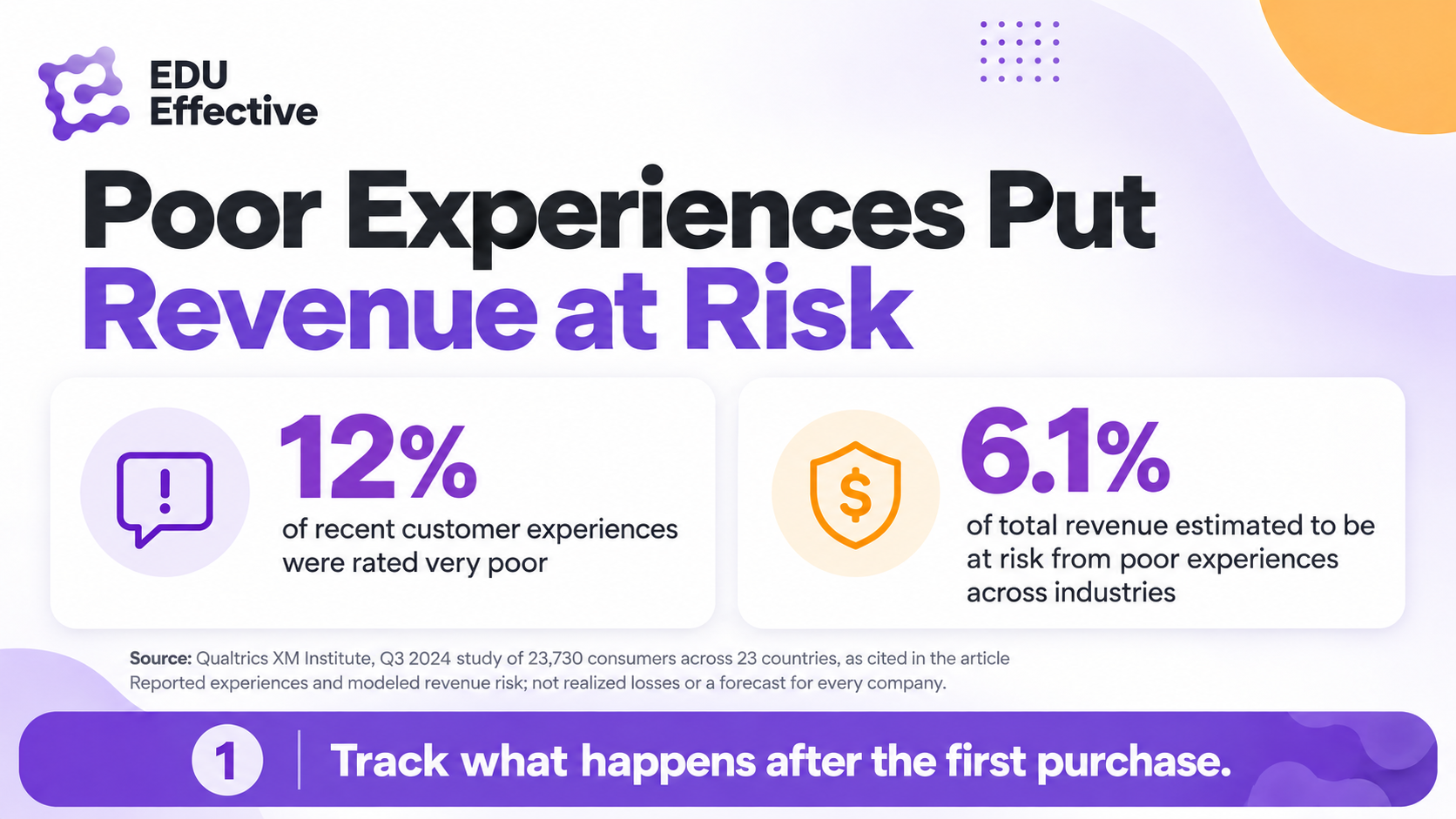
Qualtrics XM Institute ran a global consumer study surveying 23,730 consumers across 23 countries. The findings are useful because they come from reported behavior, not stated intention.
Twelve percent of recent customer experiences were rated as very poor. Over half of those bad experiences led consumers to reduce or stop spending with the organization. Across all industries, organizations risk 6.1% of their total revenue due to poor experiences — with mobile phone providers risking 9% and government services 11%.
The causes were straightforward: service delivery problems (46% of cases) and communication failures (45%). Not pricing. Not product quality. How things were handled.
A separate Qualtrics XM Institute study surveyed over 28,000 consumers and projected that globally, bad customer experiences put $3.7 trillion in sales at risk — calculated by combining the frequency of poor experiences with the proportion of consumers who changed their spending as a result.
For a mid-size company, these are not abstract statistics. If your annual revenue is €10 million and your customer experience is average, approximately €610,000 in revenue is structurally at risk every year from poor interactions alone — not from competition, not from pricing, from experience.
The Loyalty Gap: Why Satisfied Customers Leave
There is a persistent confusion in customer experience work between satisfaction and loyalty. They are not the same thing.
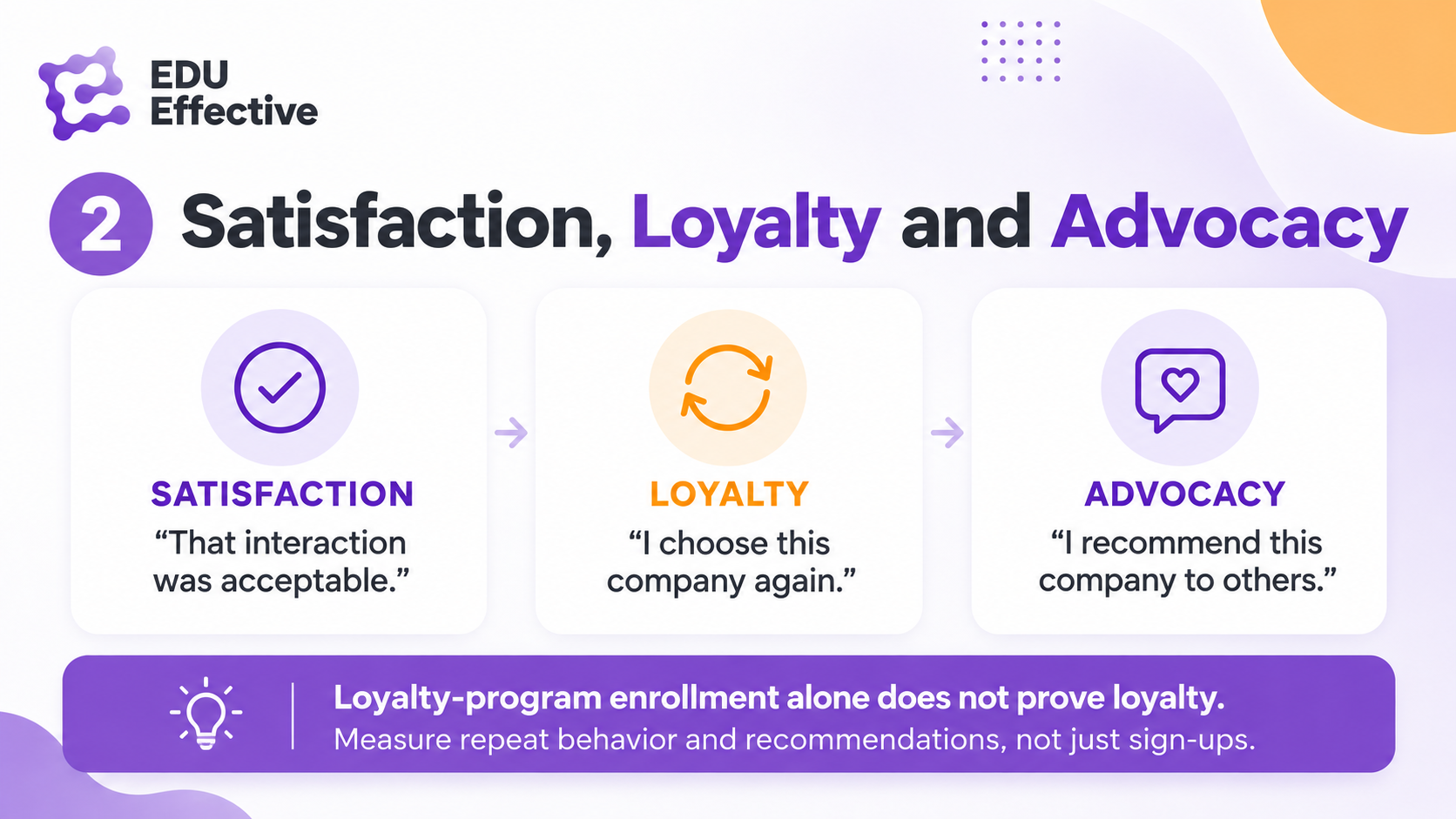
A satisfied customer had an acceptable interaction. A loyal customer chooses you repeatedly, recommends you, and stays when a competitor offers something marginally better. The distance between those two states is where most customer retention programs fail.
Research from Bain & Company — the original work that shaped how the industry thinks about loyalty economics — found that even a 5% increase in customer retention can increase profits by 25% to 95%, depending on the business model. The reason is compounding: retained customers cost less to serve (they already know your processes), spend more over time, and generate referrals that reduce acquisition costs.
The LendingTree consumer survey found that 80% of US consumers belong to at least one loyalty program, and 72% say they shop more often at companies where they are enrolled. But only 52% say they actually spend more because of the program. That 20-point gap — between shopping more frequently and spending more — reveals something important: enrollment is not loyalty. Loyalty programs are tools, not outcomes.
The Three Levers That Actually Drive Loyalty
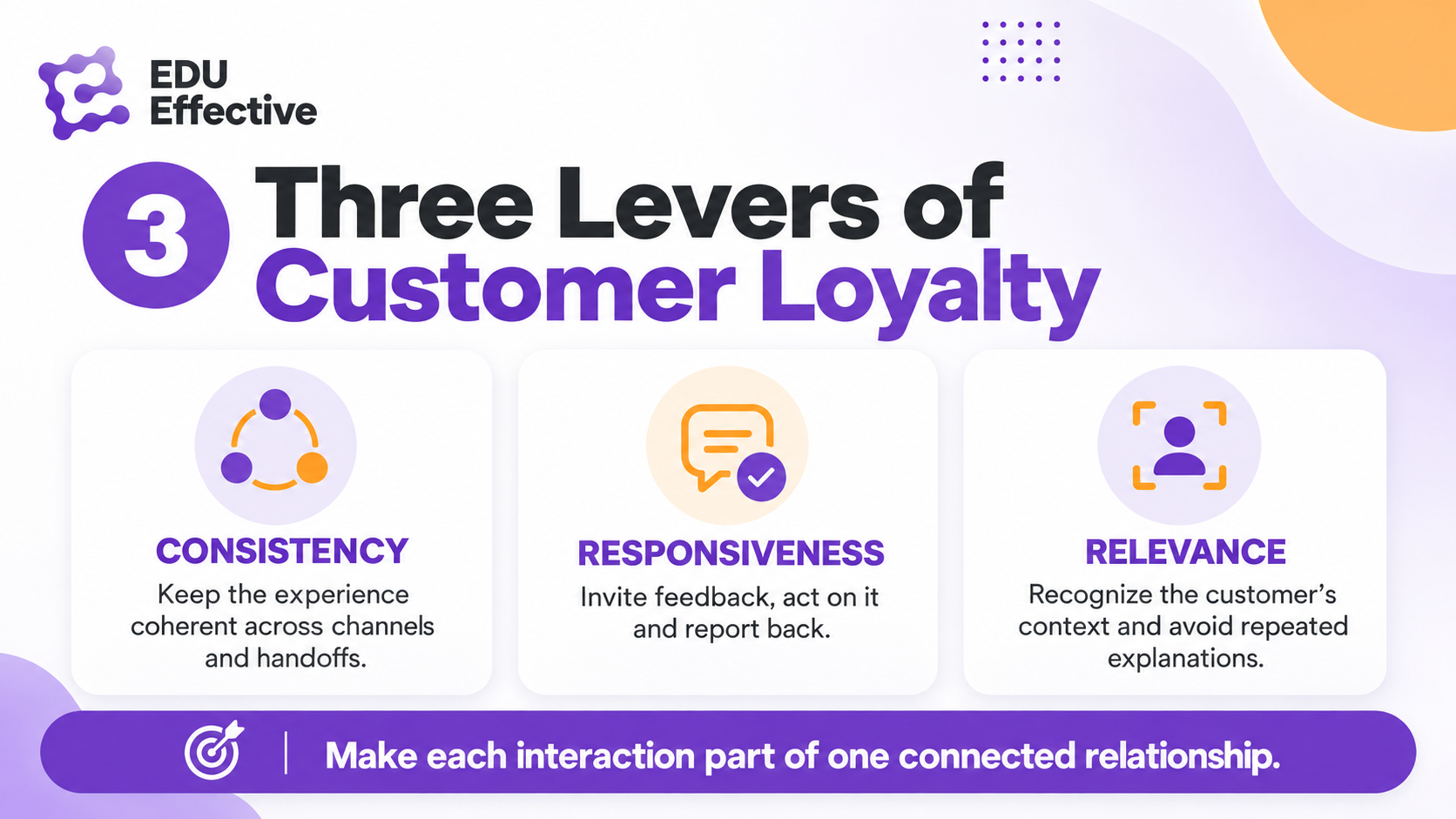
Across studies and industries, customer loyalty correlates most strongly with three operational factors — not marketing spend, not discounts, and not loyalty points.
1. Consistent Quality Across Every Touchpoint
Customer experience research repeatedly shows that inconsistency destroys trust faster than a single bad event. A customer who has great experiences online but a poor one on the phone remembers the phone call. Inconsistency signals that the company’s standards are unreliable.
This is the core challenge of omnichannel service. Aberdeen Group research found that companies with strong omnichannel strategies retain 89% of their customers, compared to 33% for companies with weak cross-channel integration. That is not a small difference. It reflects that customers navigate across channels — they discover you on social media, buy on your website, contact support by email, return a product in person — and each transition is a potential experience gap.
The strategic question is not “is each channel good?” but “does the experience remain coherent when a customer moves between them?”
2. Responsive Feedback Loops
Microsoft research found that 77% of customers view brands more favorably when the brand invites and acts on feedback. Medallia research found that 70% of customers are more loyal to companies they feel listen to them.
The pattern is consistent across multiple studies: customers do not expect perfection. They expect responsiveness. A complaint handled well — acknowledged quickly, resolved clearly, followed up on — frequently produces a more loyal customer than one who never had a problem. This is sometimes called the service recovery paradox, and while it does not hold in all cases, the underlying principle does: how you handle failure shapes customer perception more than the failure itself.
Operationally, this means building feedback collection into the customer journey systematically — not as a one-time survey, but as an ongoing mechanism at key moments: post-purchase, post-support contact, post-renewal. And then visibly acting on what comes back. Customers who see their feedback reflected in product changes or policy updates become disproportionately loyal.
3. Personalization at the Right Moments
ServiceNow found that only 13% of consumers feel they receive highly personalized interactions from companies they do business with. That is a wide gap between what customers notice and value, and what businesses actually deliver.
Personalization in customer experience is not about using someone’s first name in an email. It is about relevance: recognizing where a customer is in their journey, anticipating needs based on their history, and not making them repeat information they have already given you. When a customer has to re-explain their situation to every new support agent, that is not just inconvenient — it signals that the company does not actually track or value the relationship.
The same ServiceNow research found that 69% of customers still want human interaction available in customer service, even as digital channels expand. The preference is not for more automation — it is for automation that knows when to get out of the way.
From Customer to Advocate: The Advocacy Mechanism
A customer advocate does something qualitatively different from a loyal customer: they bring others. They post reviews unprompted, recommend to colleagues, defend the brand in conversations where they were not asked to. Their acquisition cost for the customers they refer is effectively zero.
The Snappy Customer Loyalty Study found that 70% of consumers prioritize brands with loyalty programs when making purchasing decisions. But the same study showed that when consumers engage with a company, they rank quality (67%), price (64%), and customer service (51%) above loyalty rewards (47%). Advocacy is built on experience quality, not program mechanics.
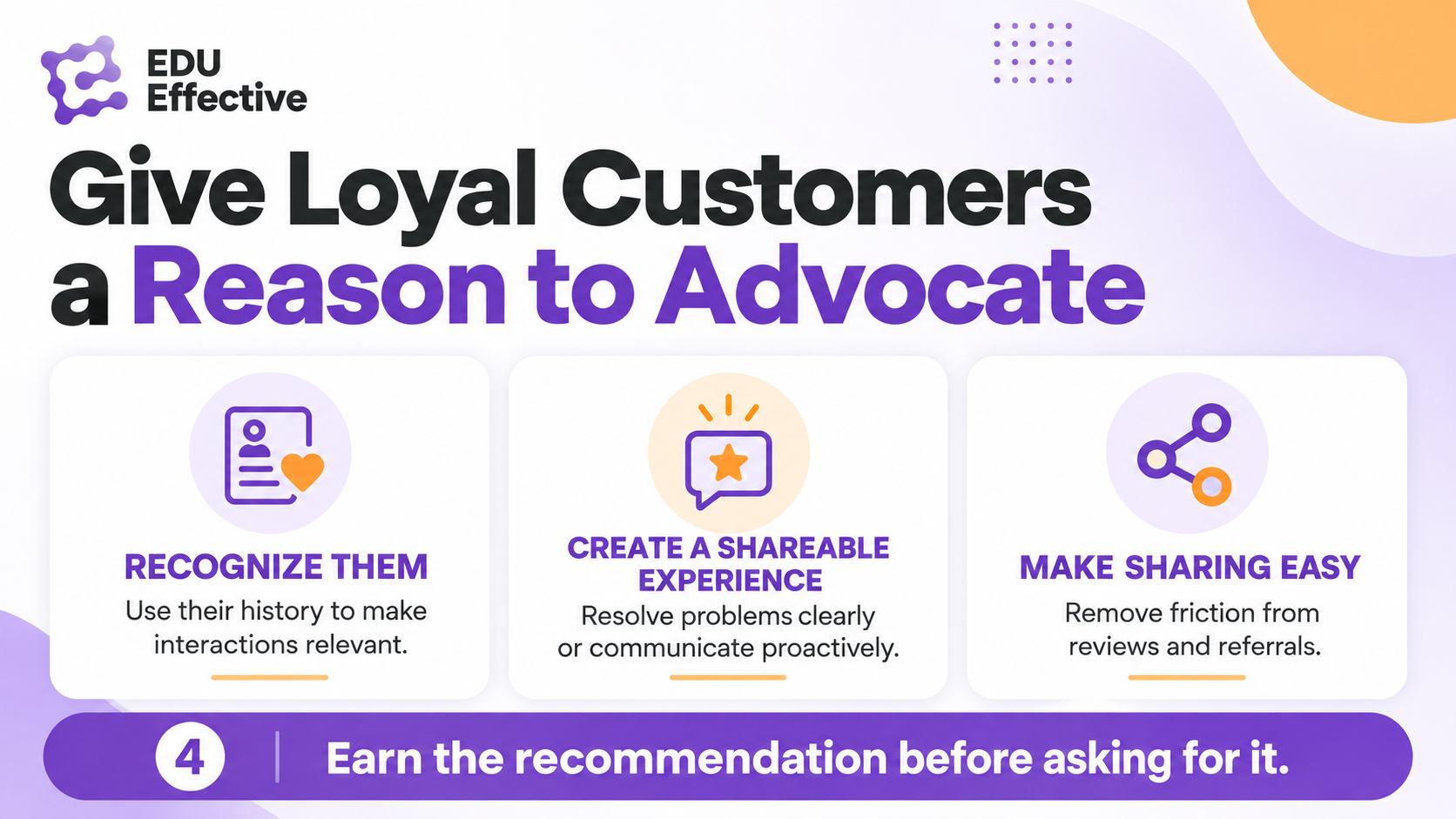
The process of converting a loyal customer into an active advocate typically involves three steps.
Make them feel recognized. Not with automated “Happy Birthday” emails, but with interactions that show the company knows them. Long-standing customers who are treated as new customers every time they call — asked to verify information they have already provided, directed to self-service pages they have already visited — do not become advocates. They become frustrated.
Give them something worth sharing. A product that works as promised is necessary but not sufficient. Advocacy is driven by experiences that exceed expectation — a problem solved faster than anticipated, a proactive communication about something that might affect them, a resolution that didn’t require escalation. These are the stories people tell.
Remove friction from the sharing act itself. Review platforms, referral programs, and social sharing tools matter less for motivating advocacy than for capturing it. A customer ready to recommend you who encounters a 12-step referral process will give up. The easier it is to act on the impulse to advocate, the more advocacy you get.
Measuring What Matters
Customer experience strategy without measurement is a budget category, not a discipline. The metrics worth tracking fall into three groups.
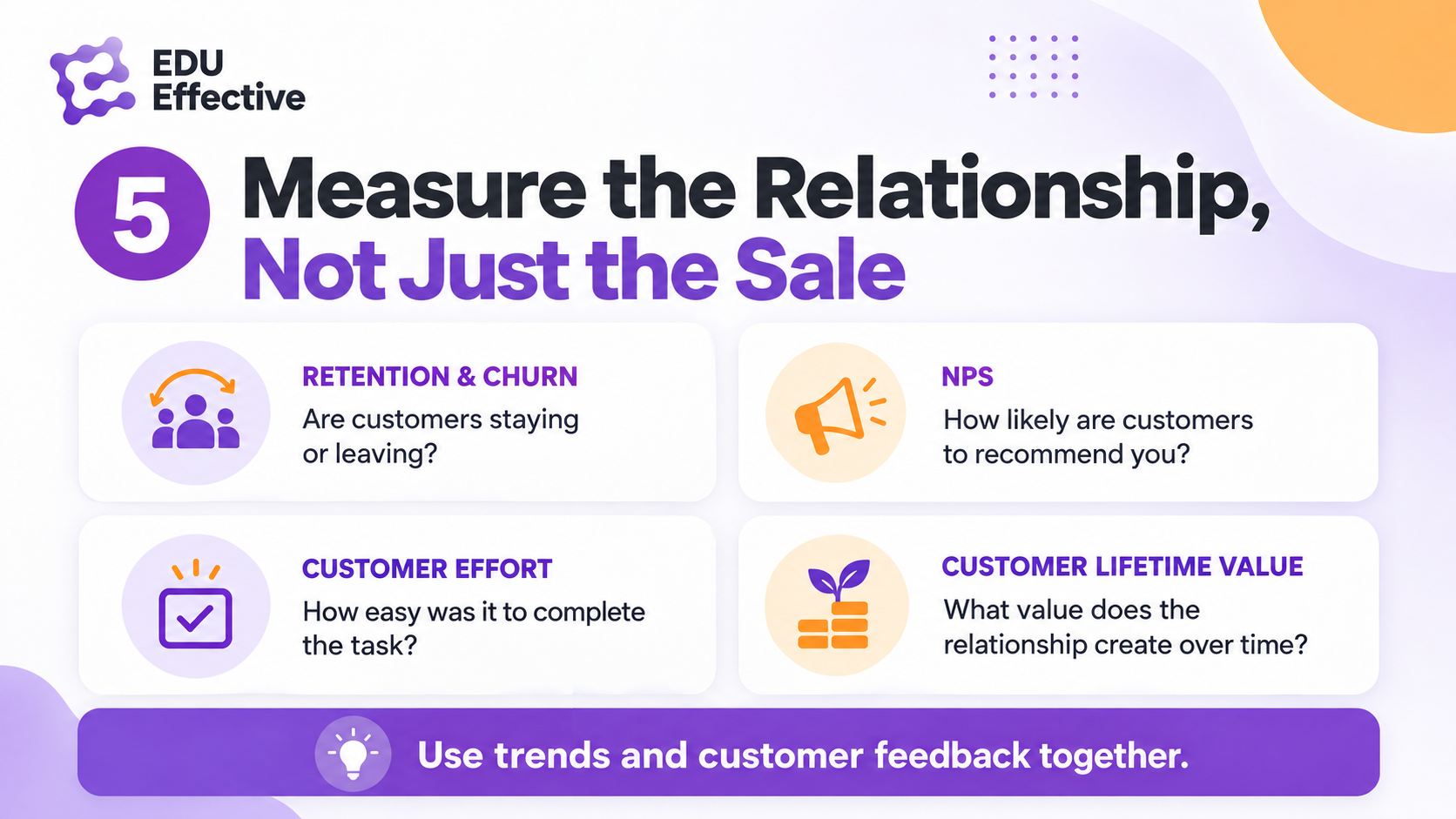
Retention and churn. How many customers who could have left stayed? Churn rate is the clearest signal that customer experience is either working or failing. For subscription models, monthly or annual churn tells you the immediate story. For transaction models, purchase frequency and time-between-purchases are the equivalent.
Net Promoter Score (NPS). Developed by Bain & Company’s Fred Reichheld and published in the Harvard Business Review, NPS asks customers one question: how likely are you to recommend us to a friend or colleague, on a scale of 0–10? Scores of 9–10 are “Promoters,” 7–8 are “Passives,” and 0–6 are “Detractors.” The NPS is Promoters minus Detractors as a percentage.
It has limitations — it is a single-point measurement and susceptible to survey timing effects. But its value is simplicity and comparability. Organizations that track NPS longitudinally build a clear record of whether experience is improving, and by how much.
Customer Effort Score (CES). Measures how easy it was for a customer to accomplish what they came to do. Gartner research on CES found that reducing customer effort is the strongest predictor of loyalty for service interactions — stronger than customer delight. Customers who found something easy are significantly more likely to return than those who found it merely satisfying.
Customer Lifetime Value (CLV). The total revenue a customer generates over their full relationship with the company. This is the metric that connects customer experience investment to business outcomes. An organization that increases average customer tenure by 12 months, or increases purchase frequency by 10%, generates meaningful CLV improvement — and those improvements are directly attributable to retention work.
The Organizational Challenge
Customer experience programs fail most often not because the strategy is wrong, but because the organization is not structured to execute it.
Customer experience quality is produced by every team that touches the customer — marketing, sales, product, support, finance (billing), logistics, legal (contracts). Most of those teams are measured on functional metrics that do not include experience: marketing on leads, sales on closed deals, support on ticket volume. When the incentives do not include customer experience, the experience reflects that.
The companies that consistently outperform on CX share a structural feature: a named owner of the customer experience — often a Chief Customer Officer or VP of Customer Experience — with cross-functional authority and a mandate that includes both collecting feedback and acting on it with other departments. Without that structural accountability, customer experience remains everyone’s responsibility in theory and no one’s in practice.
Practical Starting Points
A company of any size can improve its customer experience strategy with three concrete actions.
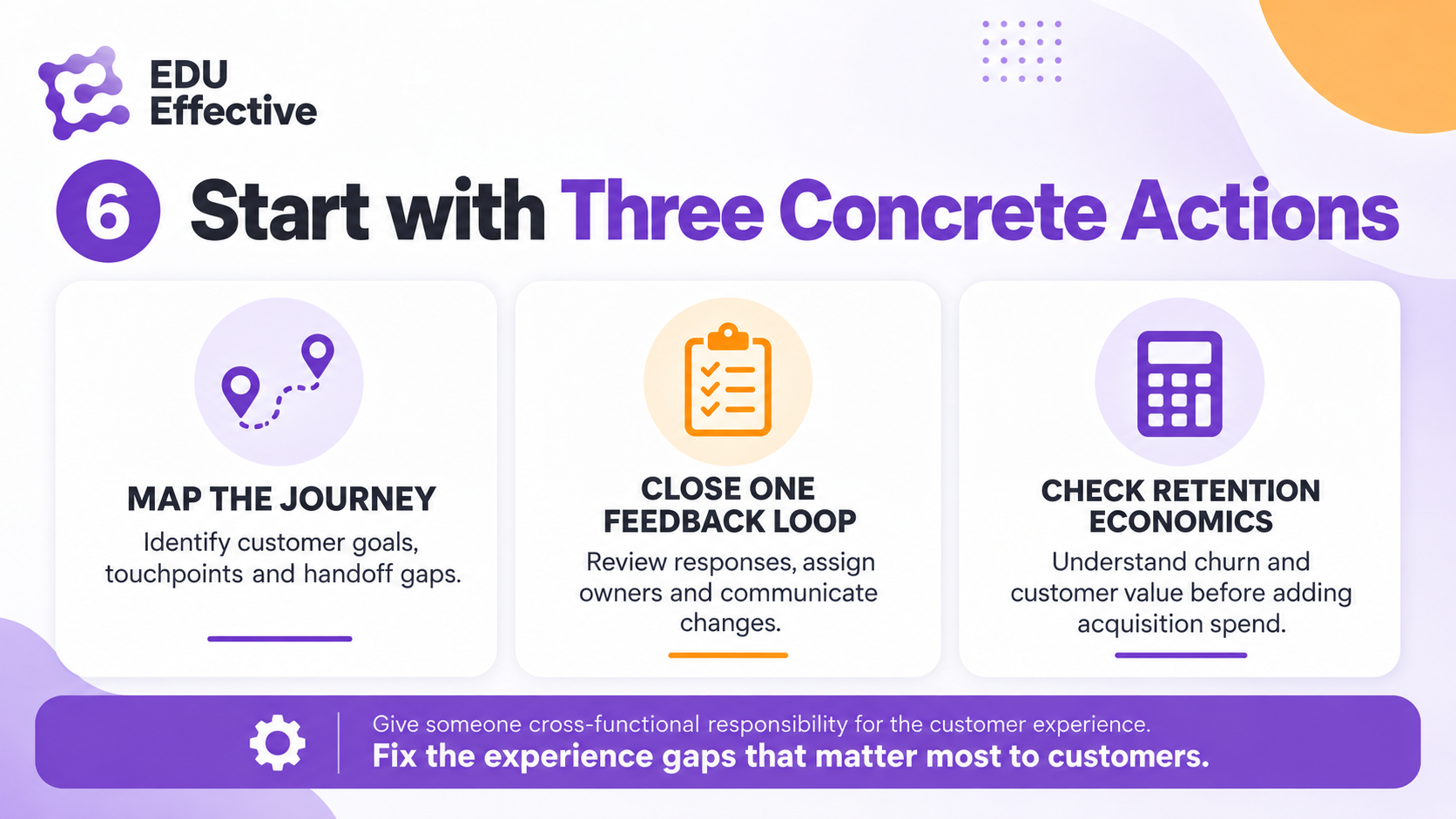
Map the current customer journey. List every touchpoint from first awareness to post-purchase support. For each, identify: what is the customer trying to do? What actually happens? Where do things break down? Most organizations find their worst experience gaps at handoff points — where one team’s responsibility ends and another’s begins.
Establish one feedback loop that closes. Pick one customer journey stage — post-purchase, post-support, post-onboarding — and build a systematic feedback collection and response process. Collect responses, review them weekly, assign owners for recurring themes, and communicate changes back to customers when they act on feedback.
Measure retention before investing in acquisition. Before adding budget to any acquisition channel, calculate current churn rate and average customer lifetime value. If churn is high, new acquisition spending flows into a leaking bucket. One percentage point of churn reduction is almost always cheaper to achieve than an equivalent revenue gain from acquisition.
About EDU Effective Business School
The Effective MBA: Online Marketing is built for professionals who need marketing that produces measurable results. Runs on 15 minutes a day, completes in 10 months or less and is ASIC accredited.
Sources
- Qualtrics XM Institute — Global Bad Experiences Across 20 Industries (23,730 consumers, 23 countries) https://www.qualtrics.com/m/www.xminstitute.com/wp-content/uploads/2024/10/XMI_RR-DS_GlobalBadExperiences20Industry-2025.pdf
- Qualtrics XM Institute — $3.7 Trillion in Sales at Risk https://www.qualtrics.com/blog/customer-experience/
- Bain & Company — Customer Loyalty and Retention Economics https://www.bain.com/insights/
- LendingTree — Consumer Loyalty Program Survey https://www.lendingtree.com/
- Aberdeen Group — Omnichannel Customer Retention Research https://www.aberdeen.com/
- Microsoft — Customer Feedback and Brand Perception Research https://www.microsoft.com/en-us/research/
- Medallia — Customer Loyalty and Feedback Responsiveness Research https://www.medallia.com/