

Two questions dominate every conversation about website performance: how much traffic am I actually getting, and where is it coming from? In 2026, both questions have become more complicated — and more important — than they were just two years ago. A new traffic source has appeared that most analytics setups are not yet measuring correctly, conversion rates from that source are several times higher than traditional search, and the free tools available to track all of it have never been better.
Here is a practical guide to checking your website traffic for free, understanding what the numbers mean, and using that understanding to grow.
First: the important distinction most guides skip
Before listing tools, it's worth clarifying a distinction that trips up a significant number of people — and that older articles get consistently wrong.
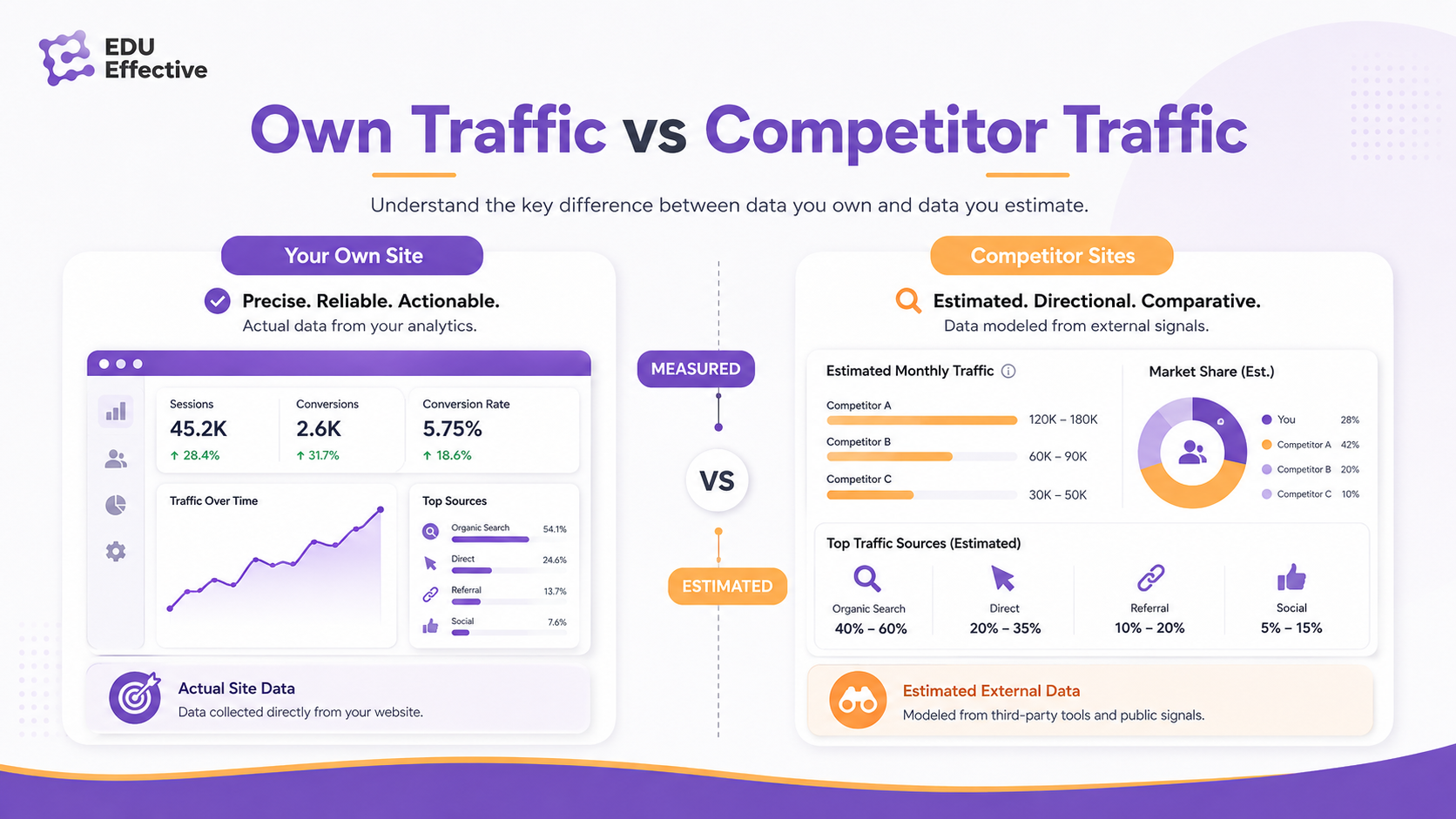
Measuring your own traffic requires a tool installed on your site that reads your actual data: visitor sessions, pages viewed, traffic sources, conversions. Google Analytics 4 and Microsoft Clarity do this. The data is precise because it comes directly from your site.
Checking any website's traffic — including competitors — requires a different kind of tool that estimates traffic from external signals (search data, panel data, ISP data). Similarweb and Ahrefs Traffic Checker do this. The data is approximate because no external tool can see inside another site's analytics.
Most free website traffic checker articles mix these two categories together. The tools serve fundamentally different purposes, and using the wrong one for the wrong job gives you meaningless data.
The best free tools to check and track your own website traffic
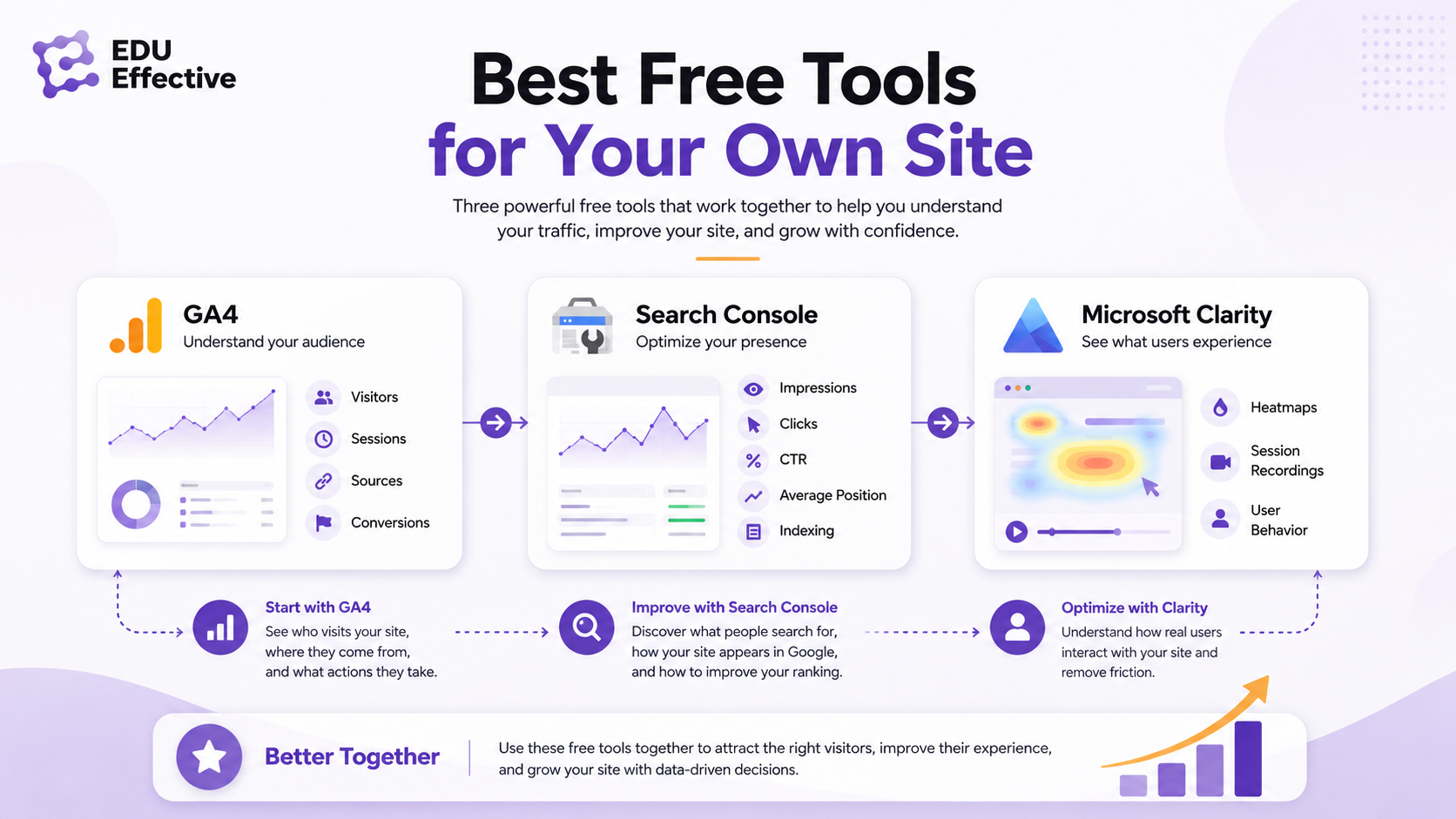
Google Analytics 4 (GA4) is the baseline for measuring your own site's performance, and it remains completely free with no session cap for the vast majority of websites. It tracks the full picture: total visitors and sessions, traffic sources (organic search, direct, referral, social, email, paid, and as of May 2026, AI assistants), pages viewed, engagement time, bounce behaviour, and conversion events.
The setup requires installing a tracking tag on your site — either directly in the code or via Google Tag Manager — and defining the conversion events that matter to your business. Once configured, it provides a depth of data that no paid tool meaningfully surpasses for site-level measurement.
One important note: GA4 replaced Universal Analytics in July 2023, and the interface is meaningfully different. Anyone who learned analytics on the old platform will need to relearn the reporting structure. The underlying data is richer than before, but the learning curve is real.
Google Search Console answers a different question from GA4, and the two tools are complements, not alternatives. Where GA4 tells you what visitors do after they arrive, Search Console tells you how your site performs in Google search before they arrive. It shows your impressions (how many times your pages appeared in search results), clicks, average position, and click-through rate, broken down by query, page, country, and device.
It also flags technical issues — crawl errors, indexing problems, mobile usability failures, and Core Web Vitals performance — that directly affect your visibility in search. Verifying your site takes minutes (you add a small piece of code or a DNS record), and the tool is entirely free. For any site that depends on organic search traffic, Search Console is non-negotiable.
Microsoft Clarity rounds out the free analytics stack by answering a question that neither GA4 nor Search Console can address: what are users actually doing on individual pages? Clarity provides heatmaps showing where users click, where they scroll to, and where they abandon — as well as full session recordings that let you replay exactly how a real visitor navigated your site.
This is the tool that reveals the difference between a page that gets traffic and a page that converts it. Watching session recordings of users failing to find your contact form, or rage-clicking a button that isn't clickable, generates the kind of insight that no quantitative report can replicate. Clarity is free with no session cap and now integrates directly with GA4, connecting qualitative behaviour observations to quantitative traffic data.
The best free tools to check competitors' website traffic
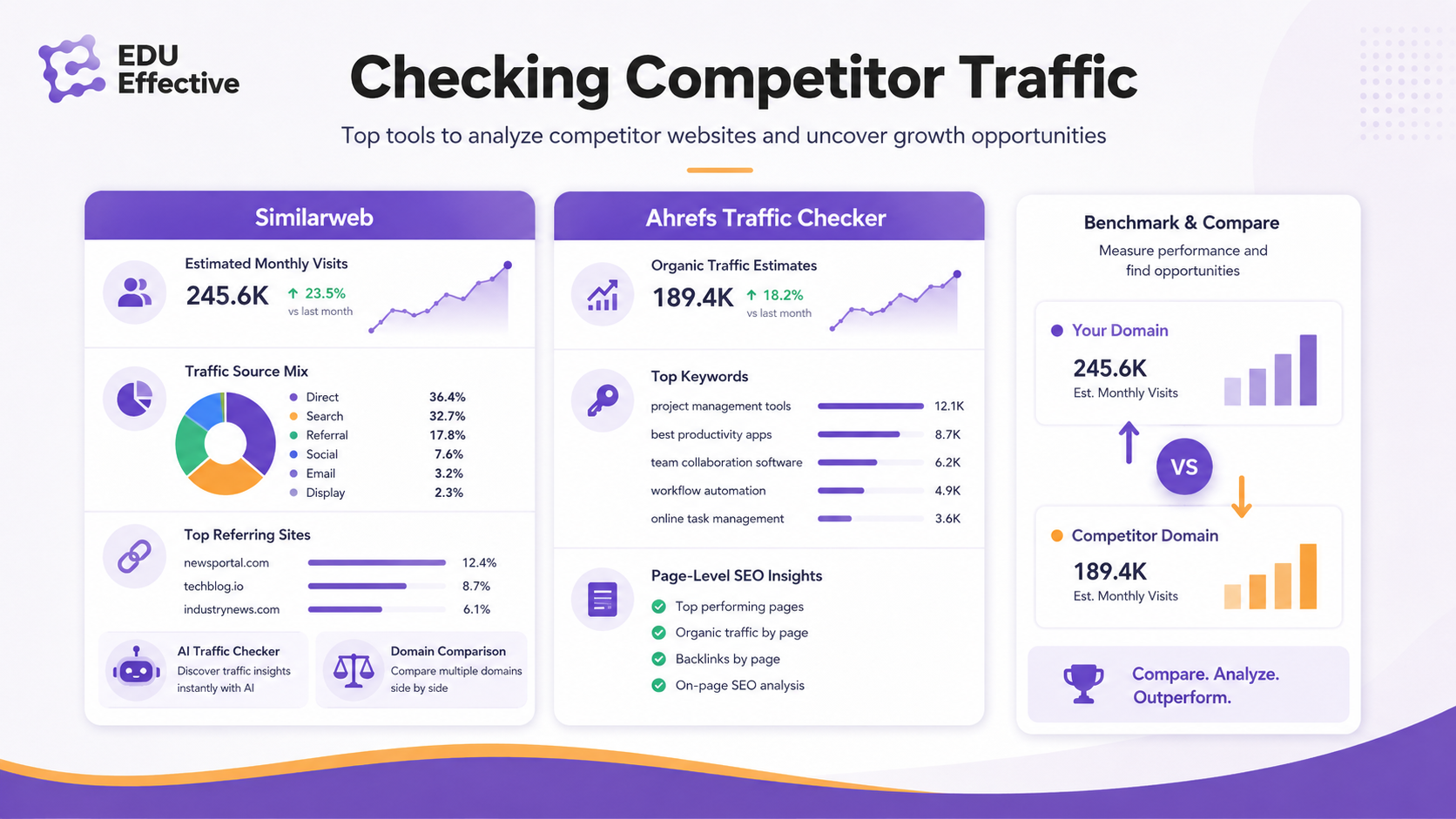
Similarweb is the most widely used free tool for estimating competitor traffic. Its free plan allows you to analyse any domain and see estimated monthly visits, traffic source breakdown (what share comes from search, direct, social, referral, and paid), top referring sites, and top organic keywords. You can compare up to five domains simultaneously.
The estimates are not precise — Similarweb uses a combination of panel data, ISP data, and modelling — but they are directionally useful for benchmarking. Knowing your site receives an estimated 8,000 monthly visits while your closest competitor receives an estimated 50,000 gives you a meaningful frame of reference for your gap analysis, even if neither number is exact.
In 2026, Similarweb has also launched a free AI Traffic Checker that shows estimated AI referral volumes for any domain — which AI platforms are sending traffic, which pages receive it, and what prompts are generating the visits. For competitive research in an era of AI-driven discovery, this is a genuinely new and useful capability.
Ahrefs Traffic Checker is the alternative worth knowing. Its free version shows organic traffic estimates for any site or page, with particular depth on keyword-level data. For SEO-focused competitive research — understanding which keywords are driving a competitor's traffic — Ahrefs is more granular than Similarweb's search data.
The new traffic source you need to be tracking in 2026
Here is the development that most analytics guides published before 2025 miss entirely, and that is now generating material traffic for an increasing number of sites: visitors arriving from AI assistants.
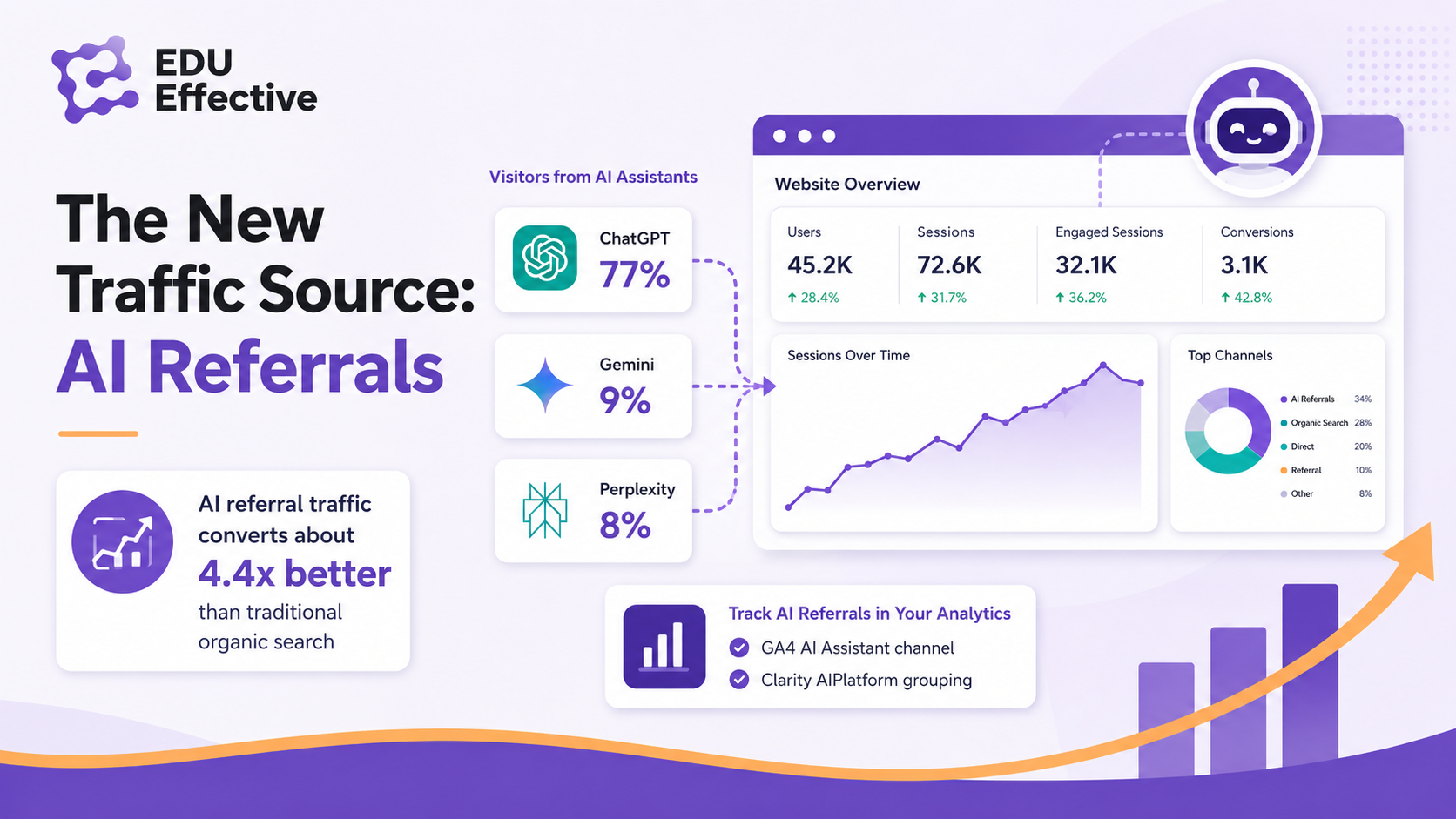
When someone asks ChatGPT, Gemini, Copilot, or Perplexity a question and the AI references or links to your site, that person may click through to you. This traffic is qualitatively different from traditional search traffic: the visitor has already had their question framed and partially answered by an AI, which means they arrive with higher intent and more context. Current data suggests AI referral traffic converts at approximately 4.4 times the rate of traditional organic search.
ChatGPT accounts for roughly 77% of all AI referral traffic currently tracked across the web. Gemini accounts for approximately 9%, and Perplexity approximately 8%.
The challenge is measurement. GA4 added a native "AI Assistant" channel in May 2026 that automatically captures traffic from ChatGPT, Gemini, and Copilot — accessible under Reports → Acquisition → Traffic acquisition, with the channel group set to "Session default channel group." However, a substantial share of AI-referred visits — often more than a third — arrives without a referrer and is logged as "Direct" traffic. If your direct traffic has increased noticeably over the past year without an obvious explanation, AI referrals are a likely contributor.
Microsoft Clarity has added dedicated AIPlatform and PaidAIPlatform channel groupings for more granular AI traffic tracking. Similarweb's free AI Traffic Checker allows you to see which AI platforms are sending traffic to competitor sites, which is useful for understanding where AI discovery is happening in your category.
Free ways to increase website traffic: what actually works
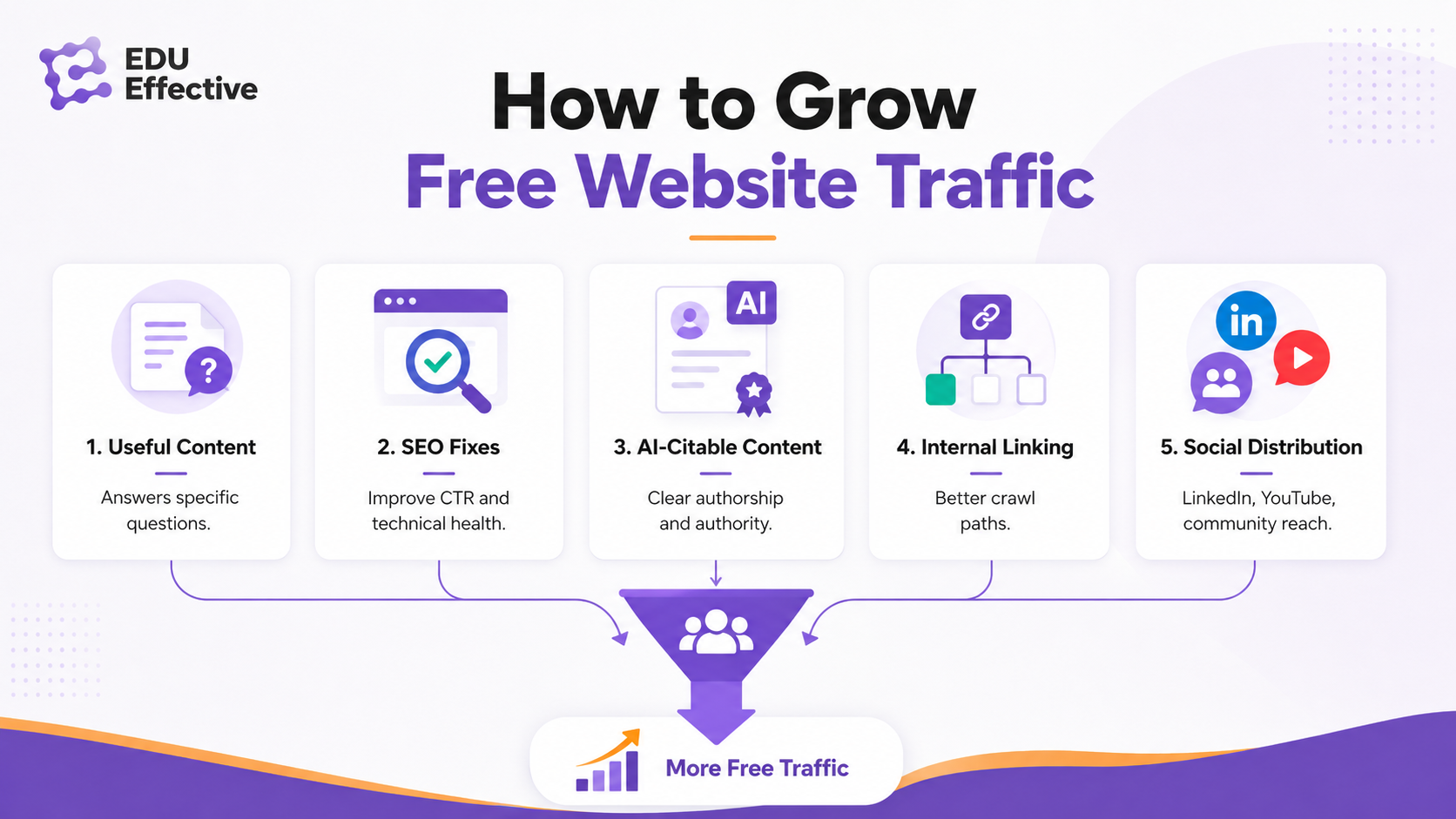
Checking and tracking traffic is useful only if the insights inform action. The most effective free strategies for growing website traffic in 2026 share a common logic: they make your content easy for both search engines and AI systems to find, cite, and recommend.
Publishing genuinely useful, specific content remains the highest-ROI free traffic strategy. Both search engines and AI assistants favour content that answers specific questions clearly and completely. The shift toward AI-assisted search has if anything increased the value of this: AI systems are more likely to cite authoritative, clearly written content than to cite thin pages optimised purely for keyword density.
Optimising for Google Search Console signals — improving click-through rates from search results, fixing crawl and indexing issues, and addressing Core Web Vitals performance problems — compounds over time. Each improvement affects not just ranking but the total traffic harvested from existing positions.
Building a presence in AI-cited sources has emerged as a new organic traffic strategy in 2026. Sites that are frequently cited by AI assistants tend to have clear authorship, well-structured content, specific factual claims, and strong topical authority signals. These are the same factors that have always helped with SEO, applied to a new discovery channel.
Internal linking and site structure improvements cost nothing and consistently improve organic performance by helping both users and crawlers navigate your content more efficiently.
Social distribution and community engagement remain free traffic sources, though their effectiveness varies significantly by platform and category. LinkedIn remains strong for B2B content; YouTube and short-form video continue to generate search-visible traffic for appropriate content types.
The free stack that covers most businesses
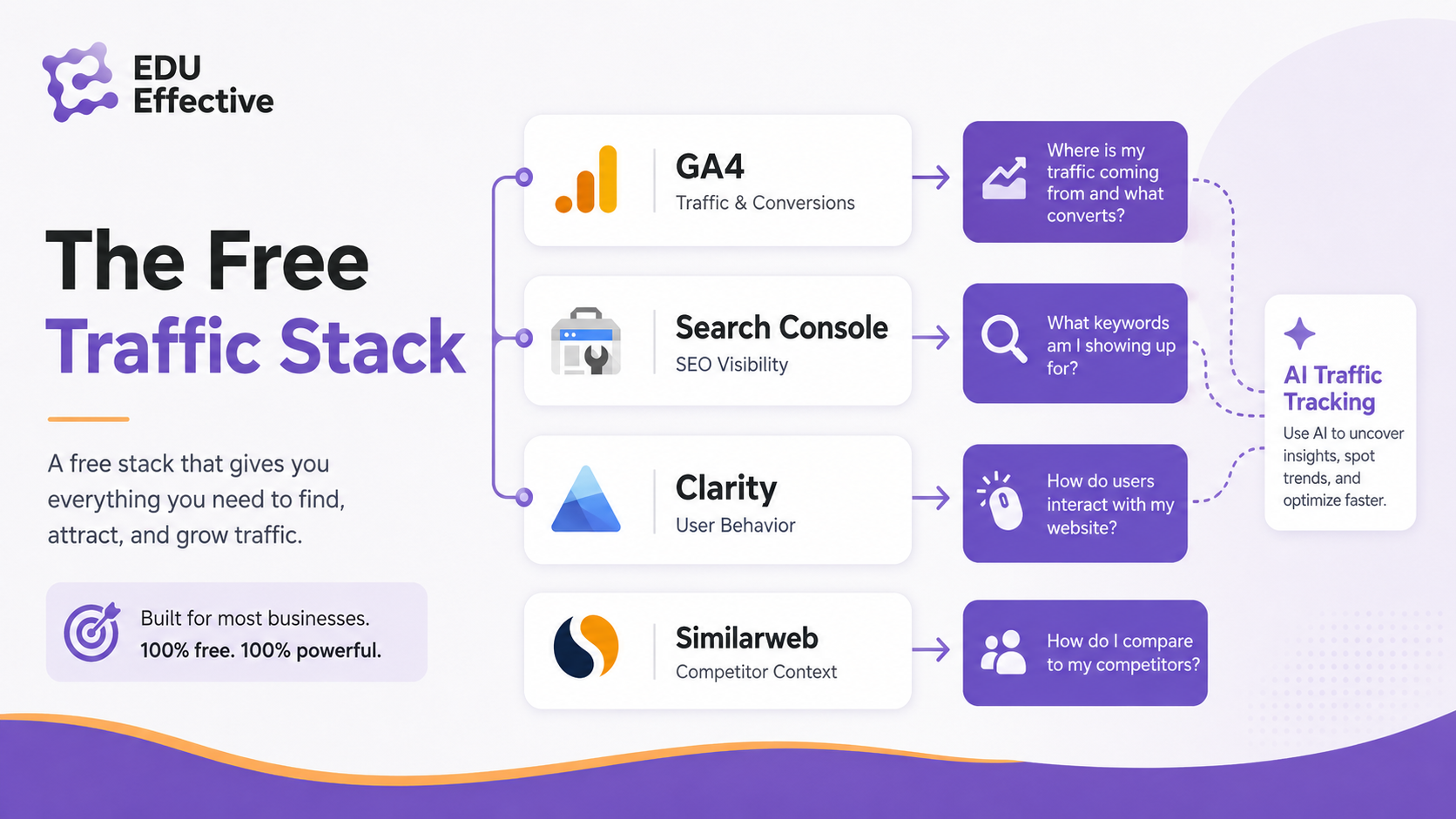
For the majority of websites, three free tools together provide a complete picture:
GA4 covers your own traffic, sources, and conversion behaviour. Google Search Console covers your SEO performance and Google visibility. Microsoft Clarity covers how users actually interact with your content. Add Similarweb when you want competitive context, and use the GA4 AI channel or Clarity's AI groupings to track the fastest-growing traffic source currently not being measured by most sites.
The tools are free. The skill is knowing which question each one answers — and using the answers to make decisions rather than simply to generate reports.
At EDU Effective, our Effective MBA Online Marketing teachs professionals how to use data to make better marketing decisions — not just how to set up dashboards. Explore our programs →
EDU Effective Business School = professional development for your long-term success.
All best-selling Effective MBA programs: Effective MBA: Executive Management & Leadership, Effective MBA: Applied Artificial Intelligence, Effective MBA: Coaching, Leadership & Mentoring, Effective MBA: Mastery in AI, or Effective MBA: Online Marketing, are based on the same educational model, which is beneficial for working adults: 15 minutes a day, 10 months or less, ASIC accredited, from €990.
These are professional programs, not academic ones — built for working adults to apply what they learn directly in their own business, not to collect a scholarly credential.
Join more than 9,000 students in over 120 countries who are investing in their professional development and career success.
You can read the feedback and experiences of our students and the stories of our graduates here.
The easiest way to start working on your personal development and success today:
Apply now — from €990 · Talk to a Study Advisor
Study with NO risk: 14-day money-back guarantee, no questions asked.
Sources
- Outrank.so — How to Monitor Website Traffic: 8 Free Tools (2026) | https://www.outrank.so/blog/how-to-monitor-web-traffic
- AllAboutAI — 12 Best Free Website Traffic Checkers for the Post-Cookie Era (2026) | https://www.allaboutai.com/ai-seo/website-traffic-checker/
- Traffic-Creator — 7 Free Website Traffic Checker Tools for 2026 | https://traffic-creator.com/blog/free-website-traffic-checker
- TOPonSEEK — 10 Free Tools to Check Your Website Traffic in 2026 | https://www.toponseek.com/en/blogs/website-traffic-checker-tools/