

The question comes up more often than most managers expect. Someone on their team is struggling — with performance, with a difficult transition, with something harder to name. The manager thinks: should I suggest coaching? Or is this a situation that needs something more?
The confusion is understandable. Coaching and therapy are both one-on-one conversations focused on change. Both involve a trained professional helping someone think through challenges. Both can address confidence, behavior, relationships, and goals. The terminology overlaps, some of the techniques are shared, and in some cases practitioners hold credentials in both fields.
But the differences are real, consequential, and worth understanding clearly — not just for managers considering coaching for themselves or their teams, but for anyone who holds a role that involves supporting others through change.
The Core Distinction
The clearest way to understand the difference is through what each discipline is designed to do.
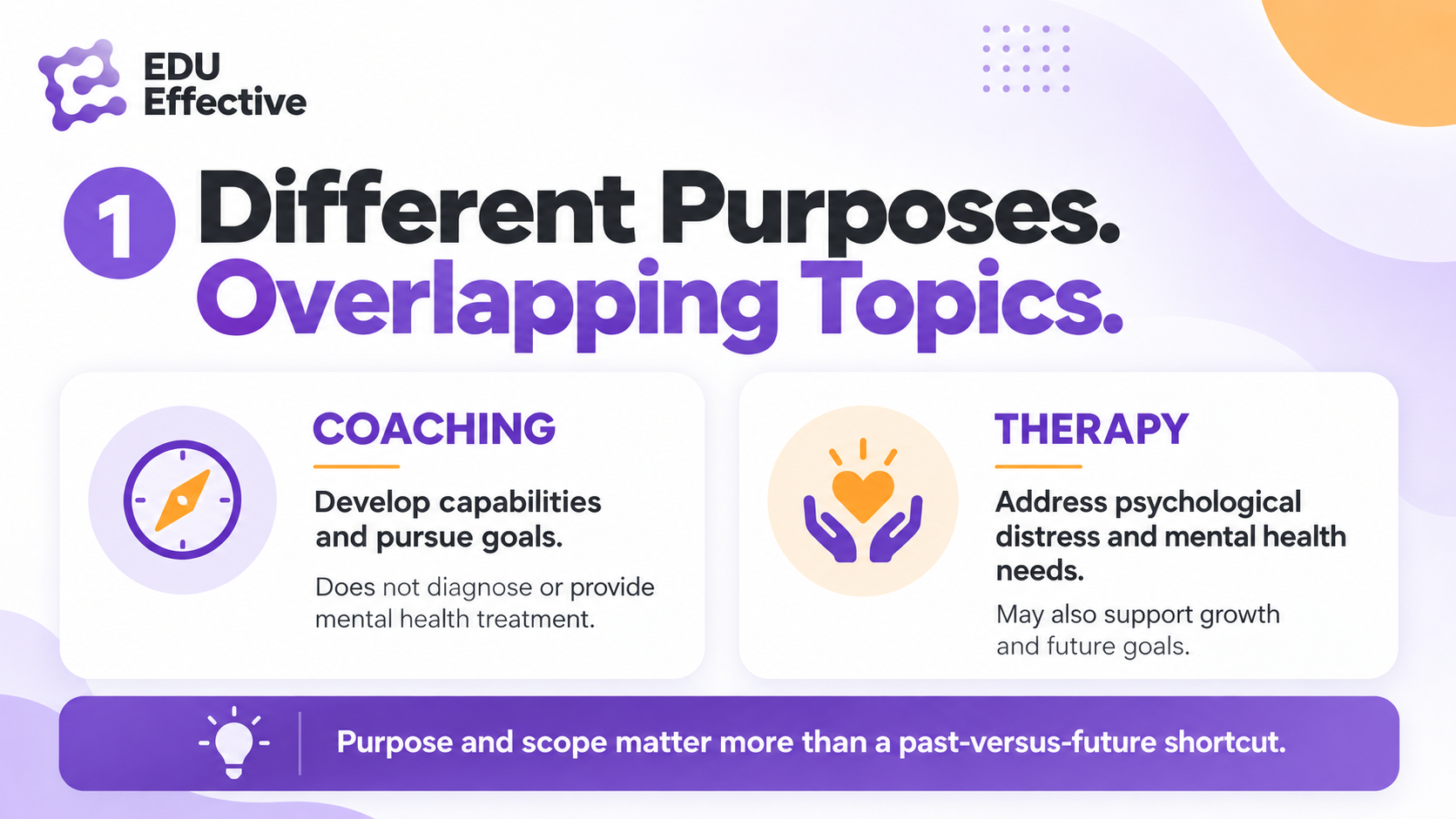
Therapy — whether it is psychotherapy, counselling, or a specific modality like cognitive behavioral therapy (CBT) — is designed to address psychological distress, mental health conditions, and the impact of past experiences on present functioning. It is practiced by licensed professionals: psychologists, psychotherapists, psychiatrists, counsellors. It is regulated. A therapist can and does diagnose. Treatment is typically oriented toward reducing symptoms, healing past wounds, and restoring psychological baseline functioning.
Coaching is designed to help people who are already functioning well move from where they are to where they want to be. The International Coaching Federation (ICF) defines coaching as “partnering with clients in a thought-provoking and creative process that inspires them to maximize their personal and professional potential.” The orientation is forward and goal-focused. The client drives the agenda. The coach does not diagnose.
A useful shorthand: therapy works primarily from the past toward the present; coaching works primarily from the present toward the future.
What Coaching Is — and Is Not
Professional coaching in its current form emerged as a distinct discipline in the late 1980s and early 1990s, drawing on sports psychology, adult learning theory, positive psychology, and organizational development. It grew quickly.
The ICF Global Coaching Study — based on a survey of 14,591 respondents from 157 countries — found an estimated 109,200 coach practitioners worldwide, the first time the figure exceeded 100,000. Between 2019 and 2022, the number of active coaches grew 55%, total coaching revenue grew 60%, and the average session fee rose to $244 USD per hour. Annual revenue across the profession reached an estimated $4.564 billion USD.
This growth reflects genuine demand — but also a structural reality that matters for managers: “coach” is not a legally protected title in most jurisdictions. Anyone can call themselves a coach. A credential from the ICF or a comparable body (European Mentoring and Coaching Council — EMCC, or Association for Coaching — AC) signals adherence to professional standards, a supervised training program, and a code of ethics. Absence of a credential does not automatically mean low quality, but it does mean there is no independent verification.
ICF’s Core Competencies — updated in 2025 after a 14-month research process involving 2,784 subject matter experts — define what professional coaches are expected to do. The competencies include establishing agreements with clients, cultivating trust, maintaining presence, active listening, evoking awareness, and facilitating growth. What they explicitly exclude is diagnosis, psychological treatment, and providing therapeutic support.
The Boundary That Actually Matters
The practical boundary between coaching and therapy is not a line about topics — it is a line about clinical need.
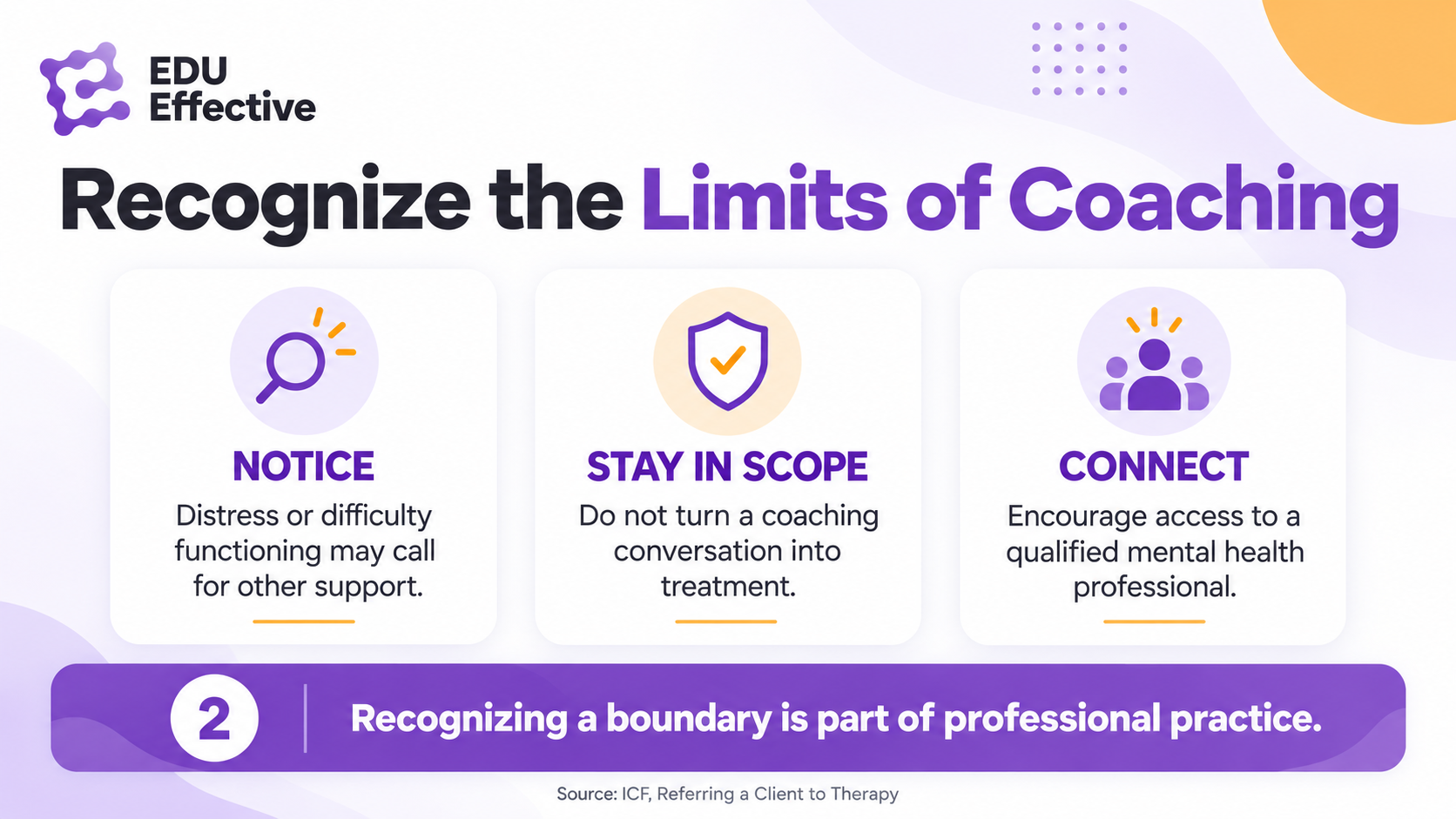
Coaching is appropriate when a client is psychologically stable and wants to develop, improve, or achieve something. The challenge they are working on is developmental, strategic, or performance-related. They have sufficient emotional resources to engage in goal-oriented work.
Therapy is appropriate when a client is experiencing significant psychological distress, symptoms of a mental health condition, or when past trauma is actively interfering with present functioning. The work requires clinical assessment, evidence-based psychological treatment, and a licensed practitioner who can provide it.
Where things get complicated is in the overlap zone: a client who comes to a coach for leadership development but whose performance difficulties turn out to be driven by unresolved anxiety. A client seeking executive coaching who discloses a history of depression that is currently symptomatic. A client whose stated goal is to “be more assertive” but whose behavior patterns reflect something deeper.
Experienced coaches recognize this boundary and act on it. The professional response is not to shift into a therapeutic role — it is to acknowledge what is happening, and, where appropriate, refer the client to a licensed mental health professional. In some cases, coaching and therapy run in parallel with different practitioners and different goals.
The 2026 handout from the Pennsylvania Psychological Association on coaching versus therapy states this directly: a client can receive either coaching or therapy from a practitioner, but not both simultaneously from the same person. The boundary is categorical, not a matter of degree.
What the Research Shows About Coaching Outcomes
The evidence base for coaching effectiveness has grown substantially, though it still has limitations.
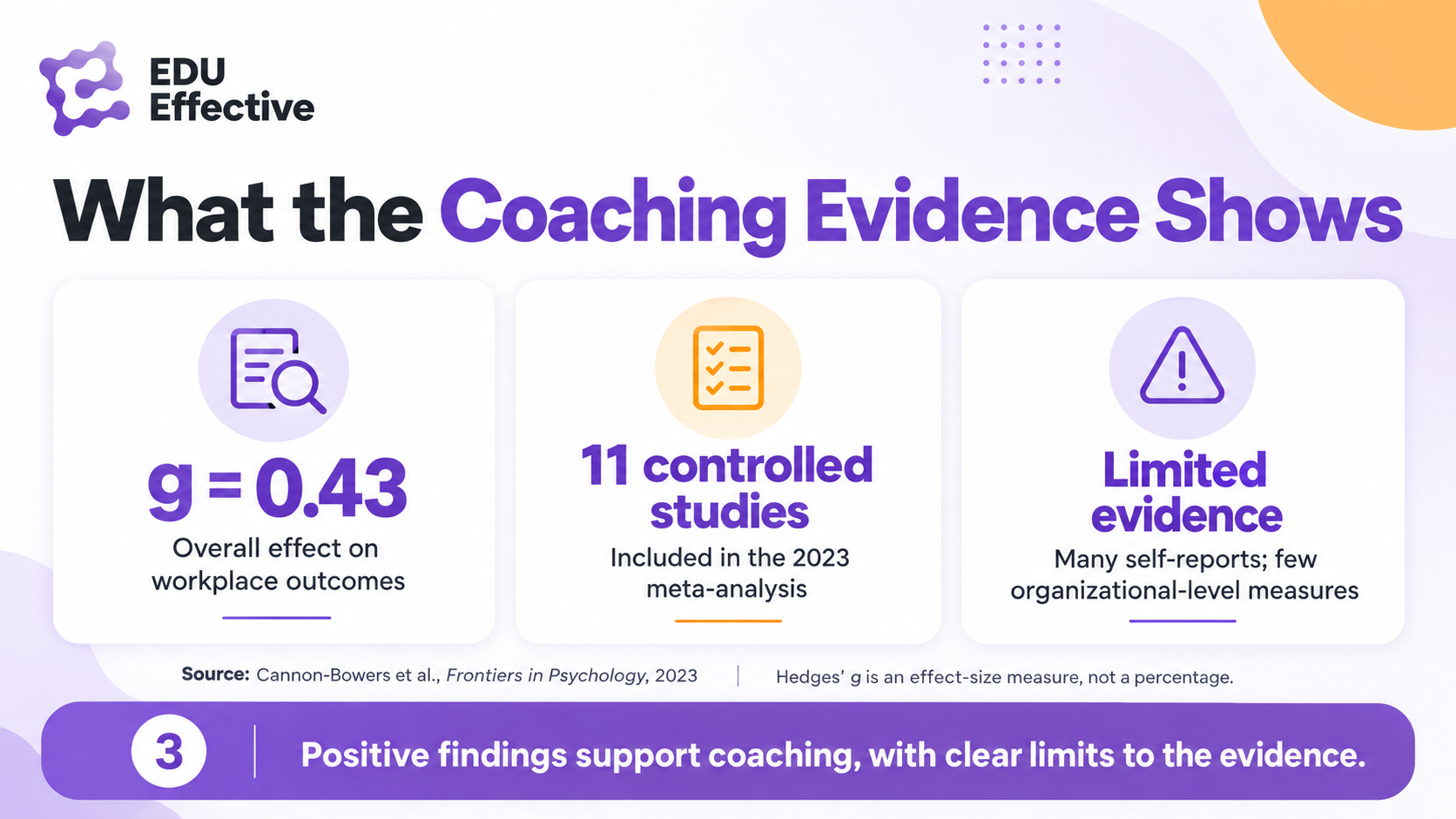
A 2023 meta-analysis published in Frontiers in Psychology (peer-reviewed) examined 11 controlled studies of workplace coaching, screening 114 papers to reach that set. The overall effect of coaching on workplace outcomes was positive and medium-sized: Hedges’ g = 0.43, meaning coaching produced a meaningful improvement across studies. Skill outcomes showed the largest effect (g = 0.72); affective outcomes including motivation and well-being showed a moderate effect (g = 0.41).
Several findings from this research are worth noting for managers making decisions about coaching programs.
Modality did not significantly affect outcomes: face-to-face coaching (g = 0.48) and virtual coaching (g = 0.35) produced similar results, with no statistically significant difference. This matters practically — remote coaching is as effective as in-person coaching when done professionally.
Number of sessions and total hours were not significant predictors of outcome. More coaching is not automatically better coaching. The quality of the relationship and the clarity of the goals matter more.
The authors were clear about limitations: the evidence base is small, most studies involved self-reported outcomes, and very few measured organizational-level results such as business performance or team metrics. The field needs more rigorous longitudinal research.
Why Managers Need to Understand This Distinction
Three situations arise regularly in management roles where clarity on coaching versus therapy is directly relevant.
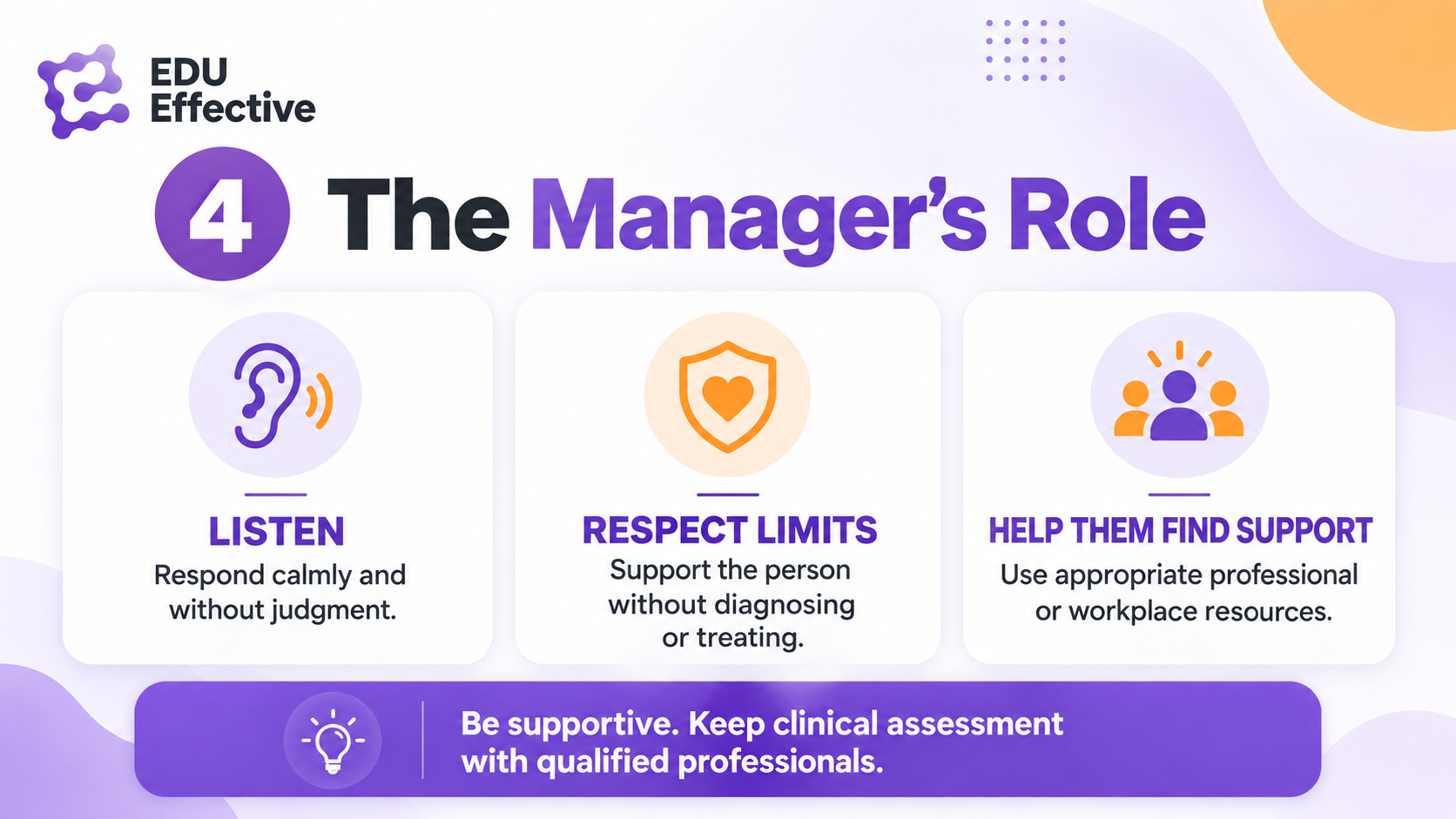
Recommending coaching to a team member. A manager who suggests coaching to someone who is actually experiencing a mental health crisis is not helping — they are delaying appropriate care. Before recommending executive coaching or professional coaching, a manager should have a genuine sense of whether the person is stable and goal-oriented, or whether they may need clinical support first.
Using coaching skills themselves. Many managers develop coaching skills — active listening, open questioning, supporting rather than directing — as part of their leadership approach. This is valuable and well-evidenced. It is not the same as being a coach. The distinction matters when conversations become emotionally intense. A manager using coaching skills with a direct report who starts disclosing significant mental health difficulties is not equipped to manage that clinically — and should not try to.
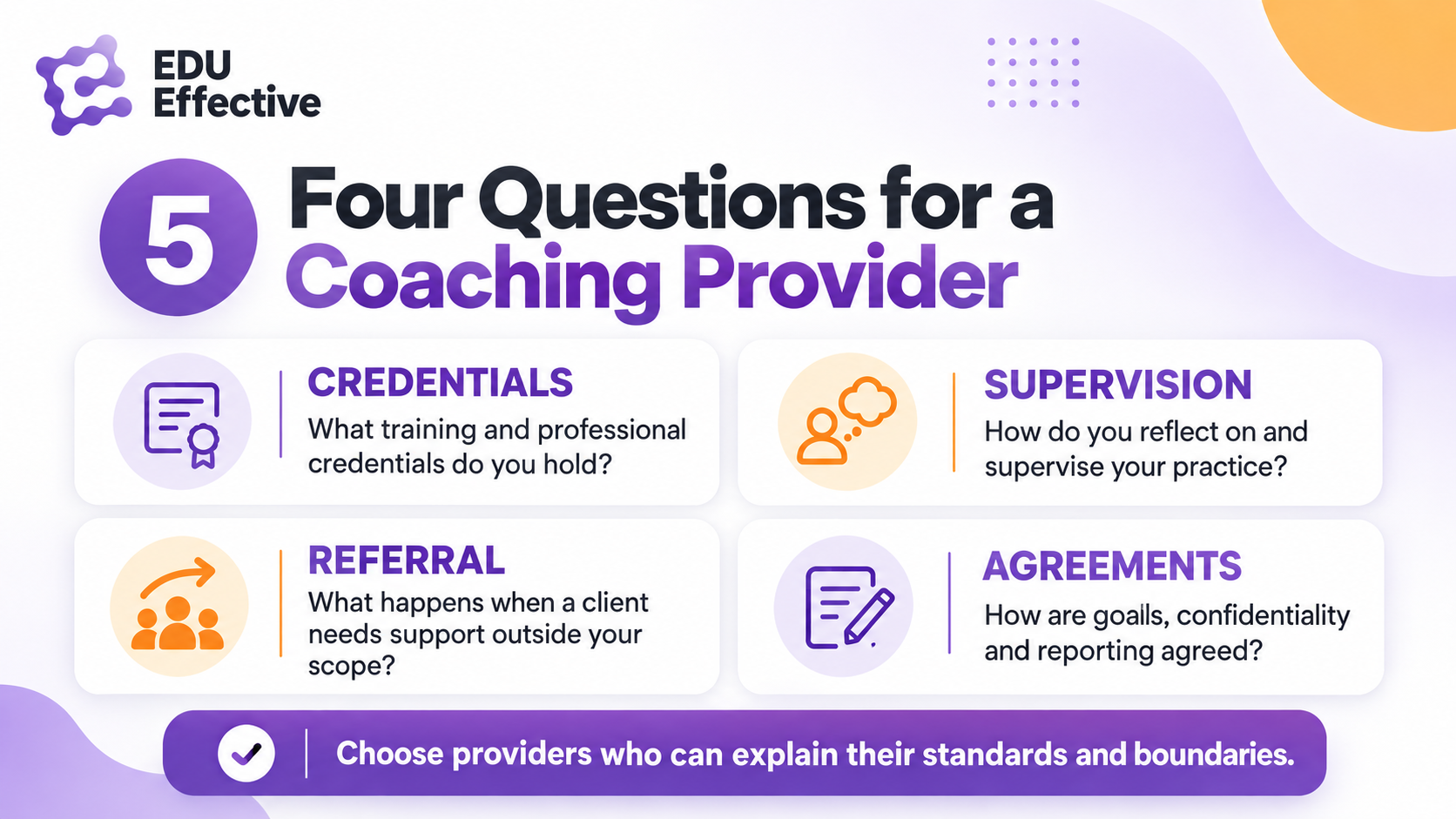
Selecting coaching providers for their organization. When an organization invests in leadership coaching, team coaching, or broader coaching programs, the selection process should include questions about credentials, supervision practices, and what the coach’s referral protocol is when a client presents with clinical need. A professional coach without a clear referral approach is operating in a grey area that carries risk for both client and organization.
What Good Coaching Actually Looks Like
A well-conducted coaching engagement has a few consistent features.
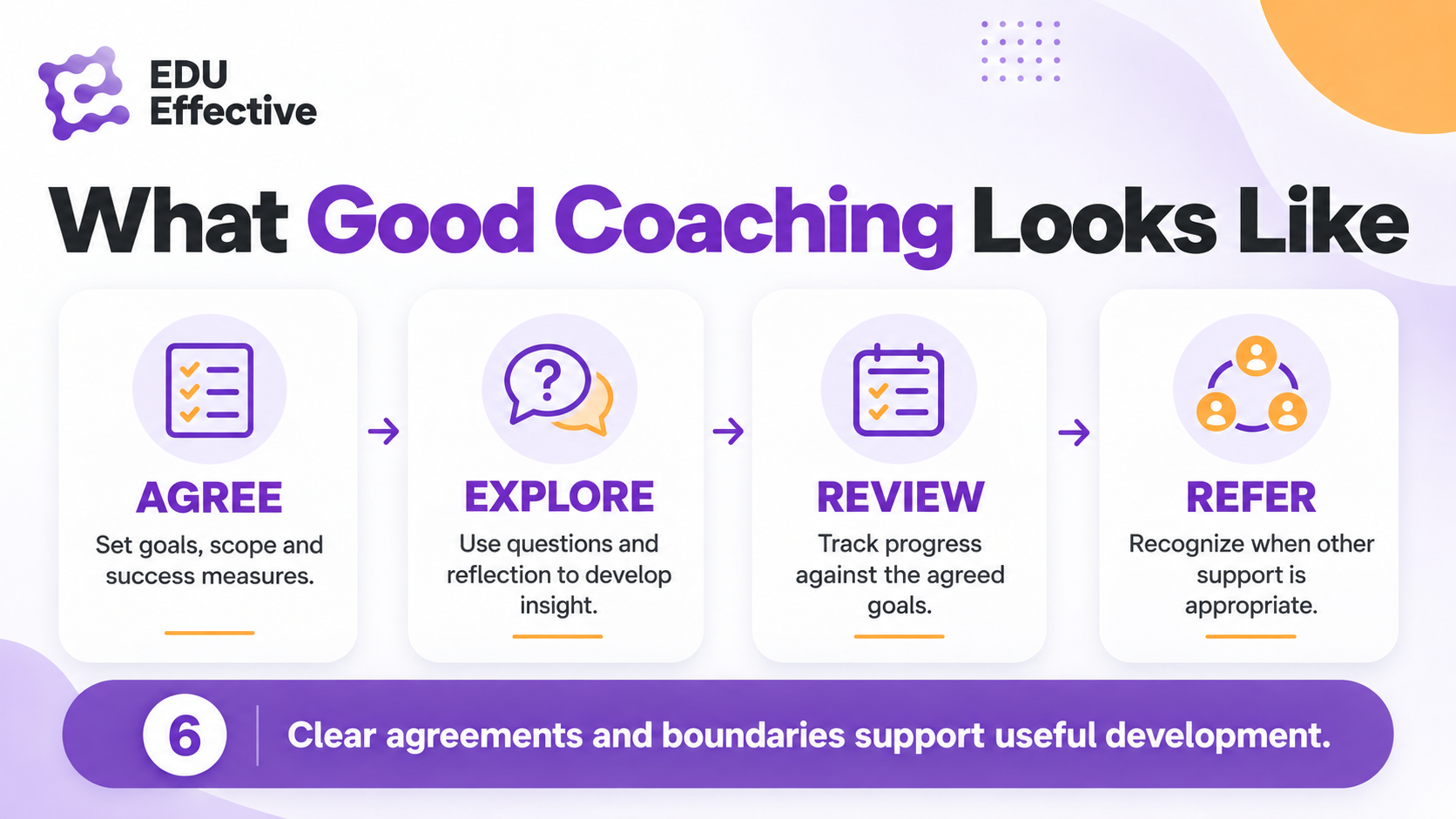
It starts with a clear contracting phase: what are the goals, what is the timeframe, what does success look like, what are the boundaries of the work. ICF standards require that coaches establish explicit agreements with clients, including the nature and scope of the coaching relationship.
The coach asks more than they tell. The non-directive orientation of professional coaching — helping the client discover their own insights rather than providing advice — distinguishes it from mentoring (which is experience-based guidance) and consulting (which is expert advice). In practice, many practitioners blend approaches; the key is transparency about which mode they are operating in.
Progress is tracked against the client’s own goals, not against a diagnostic standard. Success in coaching is whether the client achieved what they came to achieve — better leadership presence, a clearer strategy, stronger relationships with their team — measured by the client and, in organizational contexts, by agreed stakeholder feedback.
And when the work runs into something that falls outside its scope, the professional coach refers. This is not a failure of the coaching — it is the practice working as it should.
About EDU Effective Business School
The Effective MBA: Coaching, Leadership & Mentoring is built around the conversations that shape team performance. Runs on 15 minutes a day, completes in 10 months or less and is ASIC accredited.
Sources
- ICF — Global Coaching Study Executive Summary (survey of 14,591 respondents, 157 countries) https://coachingfederation.org/app/uploads/2023/04/2023ICFGlobalCoachingStudy_ExecutiveSummary.pdf
- ICF — Core Competencies 2025 update (14-month process, 2,784 subject matter experts) https://coachingfederation.org/wp-content/uploads/2025/09/icf-cs-core-competencies-2025.pdf
- ICF — Core Competency definition and coaching definition https://coachingfederation.org/resource/icf-core-competencies-comparison
- Frontiers in Psychology — Meta-analysis of coaching effectiveness in workplace settings https://www.frontiersin.org/articles/10.3389/fpsyg.2023.1204166/full
- Pennsylvania Psychological Association (2026) — “How Coaching Differs from Therapy” workshop handout https://assets.noviams.com/novi-file-uploads/ppa/PPA2026_Handouts/W32_-_How_Coaching_Differs_from_Therapy.pdf