


57% of new managers receive no formal training when they step into their first leadership role, according to DDI's Global Leadership Forecast 2025. They receive a new job title, a calendar invite to their first team meeting, and an implicit expectation that the skills that made them successful as individual contributors will transfer into the fundamentally different work of leading other people.
They rarely do.
The transition from individual contributor to manager is one of the most significant professional shifts most people make — and one of the least supported. The skills that earned the promotion are not the skills the new role requires. A high-performing software engineer is promoted because they write excellent code. Managing a team of software engineers requires almost none of the same capabilities: it requires the ability to develop others, communicate expectations, navigate conflict, make decisions under ambiguity, build trust, and produce results through people rather than through personal output.
60% of new managers fail within their first two years without structured support, according to research across management transitions. The failure is not a character failure. It is a preparation failure — and it is almost entirely avoidable.
The identity shift that every new manager has to make
The most important thing to understand about becoming a manager is that it is not a promotion. It is a career change.
As an individual contributor, your value was in what you personally produced. You were responsible for your own output, your own quality, your own deadlines. Success meant your work was excellent. The feedback loop was direct: effort went in, results came out, and your performance was visible.
As a manager, your value is in what your team produces. You are responsible for other people's output, their development, their engagement, and the clarity and direction they need to do their best work. Success means your team's work is excellent — which may have nothing to do with your own direct contribution. Google's Project Oxygen research — launched in 2008 and updated in 2018 to reflect Google's evolution — found that coaching and empowering team members consistently topped the list of effective manager behaviours. Technical expertise ranked last in both versions of the study.
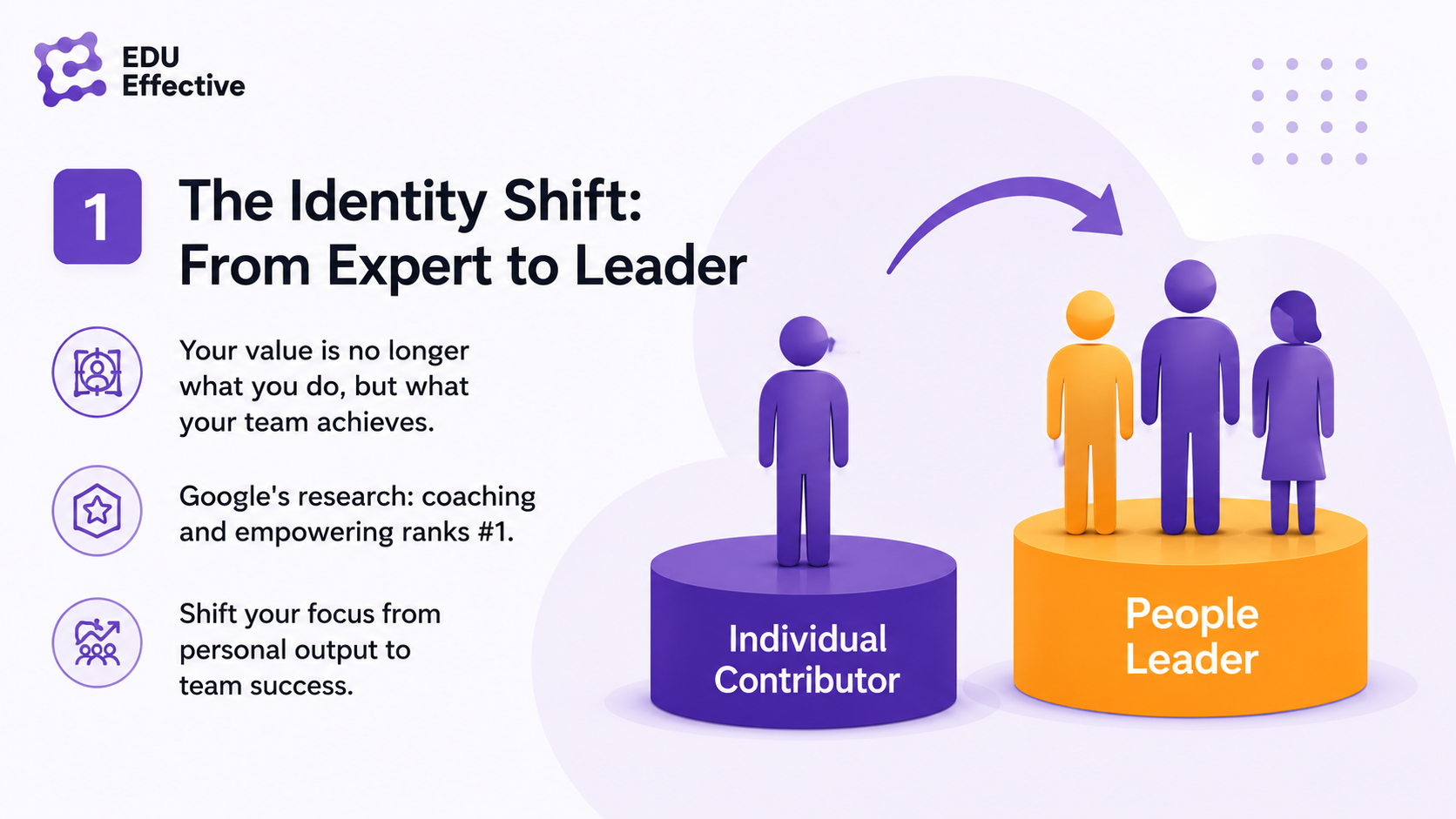
This inversion is uncomfortable for most new managers, particularly those promoted on the basis of deep technical or professional expertise. The expertise that built their credibility is now a potential liability if it causes them to default to doing the work themselves rather than developing the team's capability to do it. The most common early failure mode of new managers is not incompetence — it is reverting to individual contributor behaviour when under pressure, because that is where their confidence and identity still live.
The practical question for every new manager in the first weeks of their role is not "what can I contribute?" — it is "what does this team need from me, and how do I create the conditions for them to do their best work?"
The first 30 days: listen before you act
The most reliable research on leadership transitions consistently recommends the same starting point: diagnose the situation thoroughly before attempting to change anything.
This advice runs against the instinct of most new managers, who feel pressure to establish credibility quickly by demonstrating competence, taking decisive action, and showing that the promotion was warranted. The research on why this approach backfires is clear: new managers who arrive with solutions before understanding the problem consistently make early changes that damage the trust they were trying to build, because those changes are based on incomplete information and signal that the manager values their own perspective above the team's accumulated knowledge.
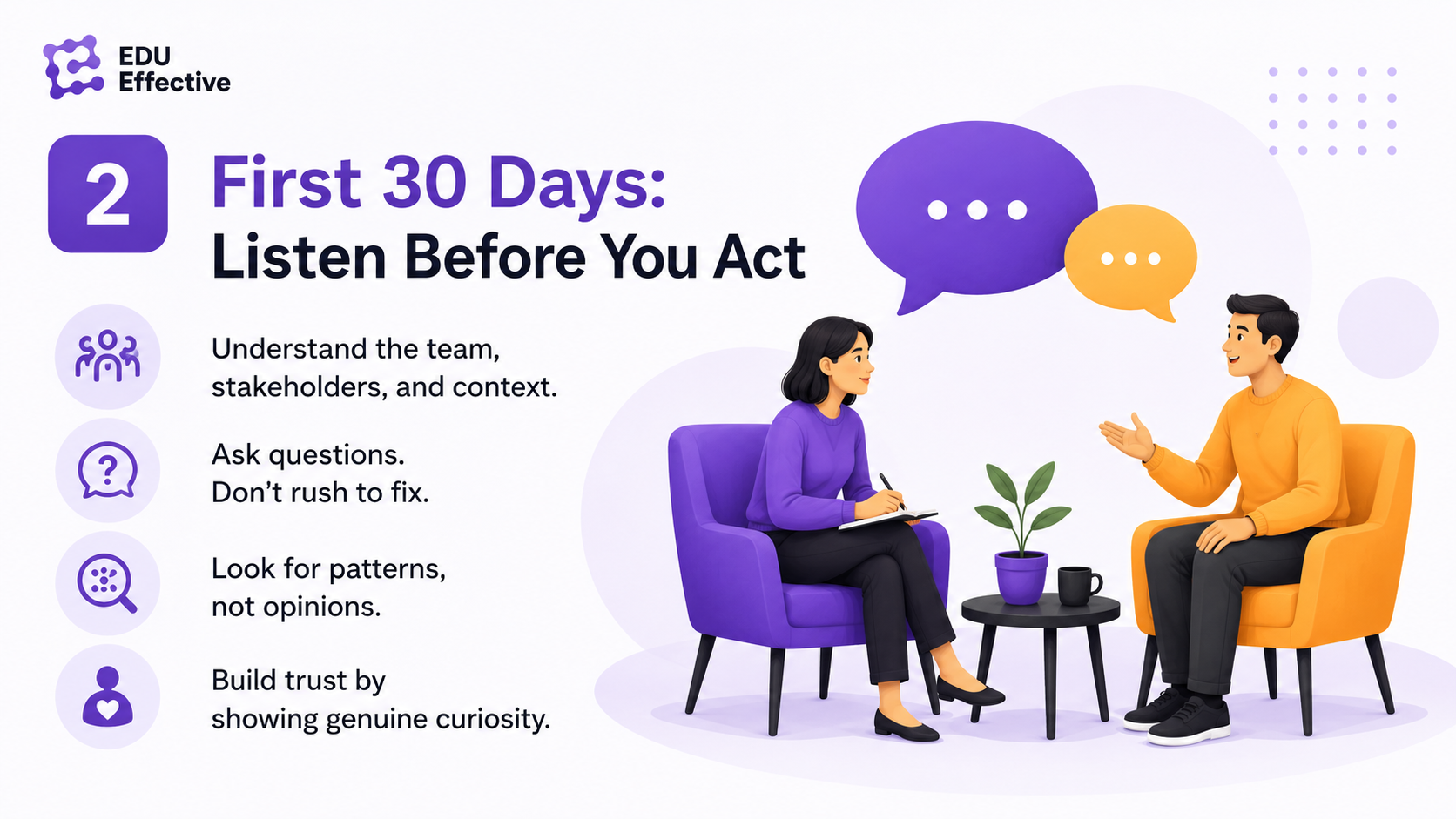
The first thirty days have one primary objective: understand the system before attempting to change it. The practical tools for this are one-to-one conversations with every team member and relevant stakeholder — not task updates, but genuine discovery conversations.
The questions that produce the most useful information are simple. What is going well that I should protect and build on? What is getting in the way of your best work? What would you change if you had the authority to do so? What do you wish previous managers had done differently? What are you most proud of from the past six months? These conversations serve three purposes simultaneously: they produce the information needed to make informed decisions; they demonstrate genuine interest in each team member's perspective, which is itself a trust-building signal; and they establish a conversational pattern — the manager as someone who listens and asks questions rather than directs and decides — that will define the management relationship going forward.
The information from these conversations should be synthesised before drawing conclusions. Patterns that emerge across multiple team members are more reliable signals than individual perspectives. And conclusions should be held loosely: early impressions of team dynamics, performance, and culture are frequently revised as understanding deepens.
The first 60 days: establish clarity and earn trust through small wins
By the end of the second month, the diagnostic work of the first month should translate into two specific outputs: clarity about expectations, and a small number of visible improvements that demonstrate the manager's commitment and competence.
Establishing clarity about expectations is the management capability most consistently underestimated by new managers and most consistently cited as missing by their direct reports. Gallup's research shows that only 50% of employees strongly agree they know what is expected of them at work — which means half of all employees are operating without clear expectations. Unclear expectations are one of the most reliable predictors of underperformance, disengagement, and avoidable conflict. A new manager who makes expectations explicit — about objectives, about standards, about how decisions will be made and communicated, about what good performance looks like and how it will be assessed — removes one of the most significant structural barriers to team performance.
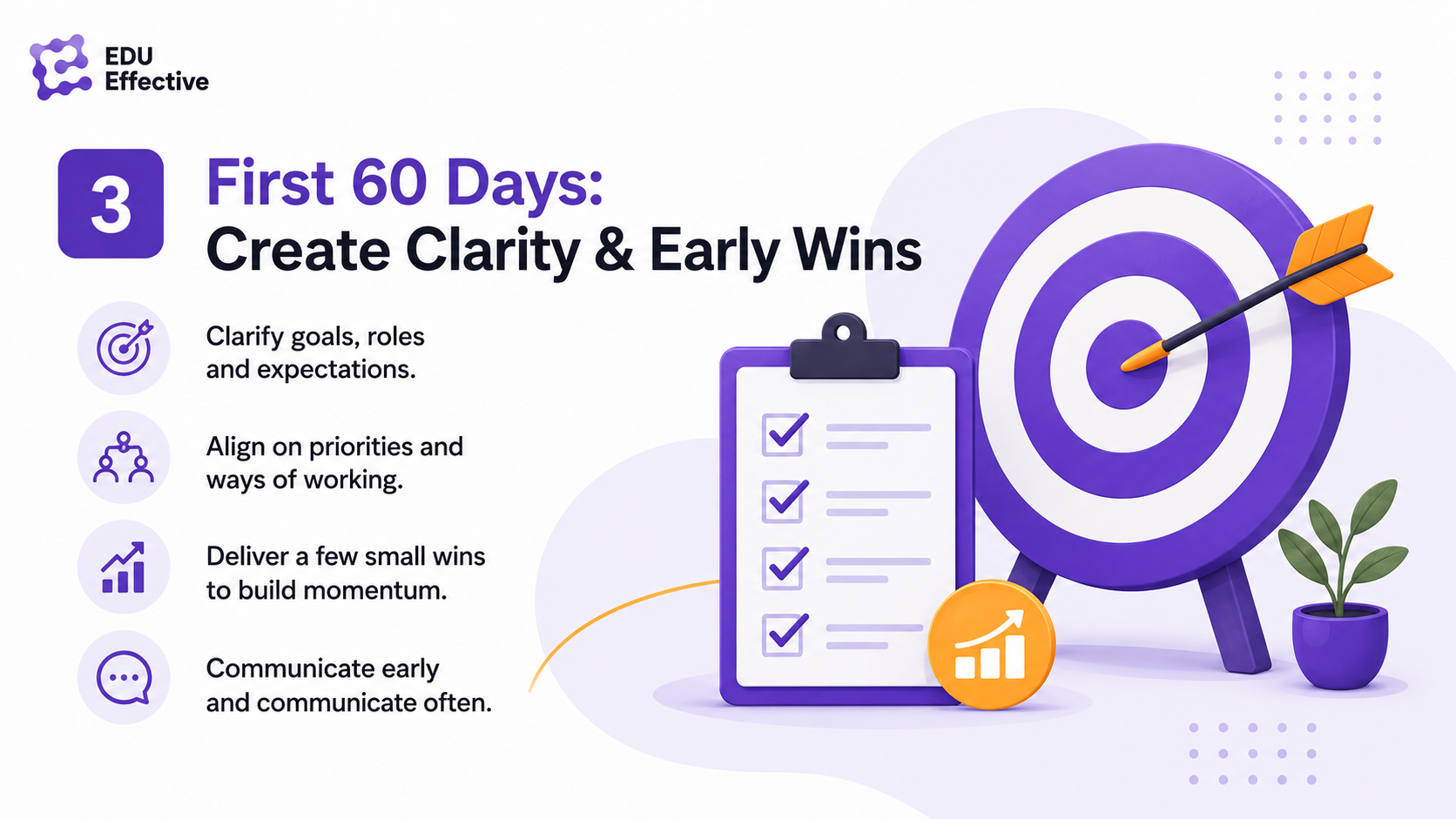
Clarity about expectations operates at two levels. At the team level, it means establishing shared understanding of the team's objectives, priorities, and how success will be measured. At the individual level, it means ensuring every team member can specifically articulate what they are responsible for, how that connects to the team's objectives, and what the criteria for good performance in their role are. These conversations are not one-way — they involve listening to what team members think their priorities should be, what they understand their responsibilities to include, and where they see ambiguity or conflict.
Delivering small, collaborative wins builds credibility more reliably than dramatic early changes. The win that matters most is one where the manager identified a specific, visible problem the team had been experiencing, worked collaboratively with the team to address it, and gave the team credit for the result. This pattern — identifying and removing obstacles rather than directing solutions — is the management behaviour that builds the kind of trust that produces team performance.
The first 90 days: build the systems that sustain performance
By the end of the third month, a new manager should have established the rhythms and structures that will define the team's working culture going forward. These are not complex, but they require deliberate design rather than the default patterns that emerge without intention.
Regular one-to-one meetings with each direct report are the highest-return management practice available. Research on manager effectiveness consistently identifies the quality and frequency of one-to-one conversations as one of the strongest predictors of team member engagement, development, and retention. The effective one-to-one is not a status update — it is a structured conversation that addresses current work, obstacles and support needs, development, and genuine human connection. Weekly or biweekly cadence is appropriate for most roles. The manager who cancels one-to-ones when time is short is communicating, accurately, that the team member is lower priority than other demands.
Psychological safety is the team condition that determines whether the quality of the team's collective thinking matches the quality of individual members' private thinking. Google's Project Aristotle — the most comprehensive study of team effectiveness ever conducted, covering 180 Google teams — found psychological safety to be the single strongest predictor of team performance, above talent composition, technical skill, and every other variable studied. Teams where psychological safety is high surface problems earlier, share information more freely, take the risks required by innovation, and recover from mistakes more quickly. Teams where it is low suppress the honest communication that performance requires.
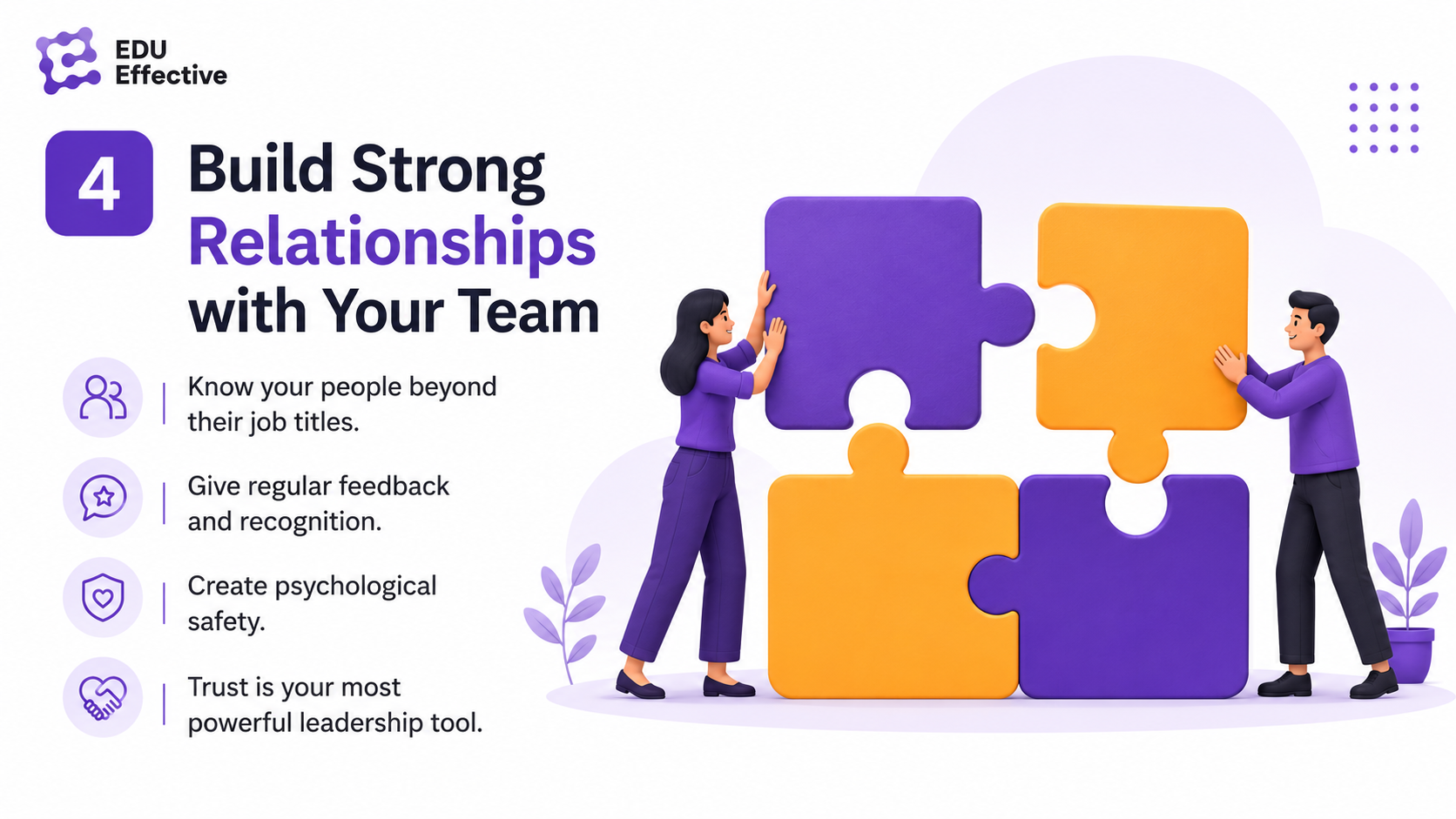
New managers build psychological safety primarily through how they respond to problems and mistakes. A manager who responds to a team member's admission of a mistake with curiosity rather than blame, who acknowledges their own uncertainty and errors openly, and who actively invites perspectives that differ from their own is building the psychological safety that will define the team's capability. A manager who responds to bad news with criticism, who discourages challenge, or who attributes mistakes to individual failure rather than system problems is destroying it — often without realising it.
Feedback rhythms should be established early rather than waiting for formal review cycles. The manager who gives specific, timely feedback — both positive and developmental — consistently throughout the year is developing their team more effectively than one who accumulates observations for an annual performance review. The SBI framework (Situation-Behaviour-Impact) provides a structure that makes feedback both specific and constructive. The habit of giving feedback immediately after the relevant situation, while both parties can engage with the specific details, produces more development than deferred, accumulated observations.
The most common mistakes new managers make — and how to avoid them
Managing former peers as you were managed by them. The shift from peer to manager of the same people is one of the most socially complex transitions in professional life. Some former peers will adapt easily. Others will resent the change in dynamic, test the new manager's authority, or try to leverage existing personal relationships for preferential treatment. The most effective approach is to acknowledge the transition explicitly, maintain professional warmth while establishing professional boundaries clearly, and apply standards consistently across the team regardless of personal history.
Shielding the team from all difficulty. A new manager's instinct to protect their team from organisational pressure, difficult feedback, or unwelcome changes is understandable and frequently counterproductive. Teams that are not given honest information make decisions based on incomplete pictures. People who are protected from feedback do not develop. A manager's job is not to remove all friction from their team's environment — it is to ensure that the friction the team experiences is productive rather than pointless.
Making decisions alone that should be collaborative. New managers frequently overcorrect from their previous peer relationships by becoming more directive than the situation warrants — as a way of establishing that they are, in fact, the manager. This tends to produce compliance without buy-in, decisions without full information, and a team that stops offering input because it has learned that input is not genuinely welcomed. The decisions worth making alone are those where speed is essential, where the manager genuinely has information the team does not, or where accountability requires a clear individual decision-maker. Most other decisions benefit from genuine input, and the manager who creates the conditions for that input makes better decisions and builds a more engaged team.
Neglecting upward management. The new manager who focuses exclusively on their team and ignores the relationship with their own manager is missing one of the most important structural requirements of their new role. Their manager controls the context, resources, and political capital that the team needs to do its work. Understanding what their manager needs, keeping them appropriately informed, and actively building the relationship that produces confidence and support from above is as important as building trust downward into the team.
What leading a team well looks like — the long view
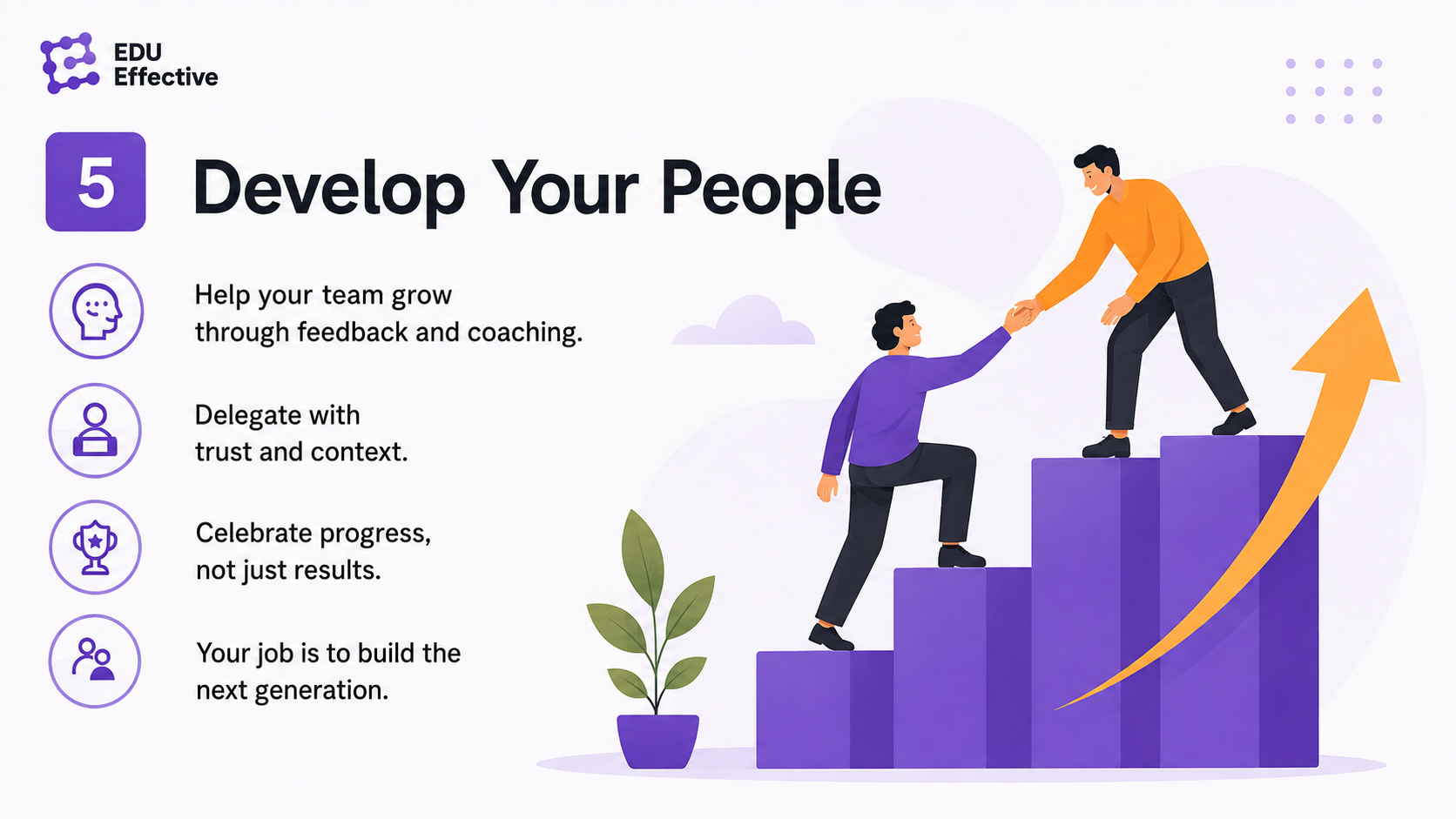
The research on what distinguishes excellent managers from average ones, across industries and organisational types, consistently identifies the same pattern: excellent managers invest consistently in their team members' growth, provide clear expectations and genuine feedback, create environments where people can do their best work, and hold themselves accountable for team outcomes rather than individual contributions.
DDI's 2026 research found that trust in immediate managers has fallen to 29% globally — down from 46% in 2022. The manager who builds genuine trust, develops their people's capabilities, and consistently creates the conditions for their team's success is operating in a small minority. That minority produces measurably better outcomes — in performance, engagement, retention, and the development of the next generation of leadership that every organisation needs.
The transition into management is not a destination. It is the beginning of a different professional development journey — one where the subject matter is human rather than technical, where the feedback loops are longer and less immediate, and where the compounding effects of consistent, deliberate practice show up most clearly over years rather than weeks.
At EDU Effective, the Effective MBA: Executive Management & Leadership is built for exactly this transition — developing the leadership, management, and coaching capabilities that turn individual contributors into effective team leaders. Explore the programme →
EDU Effective Business School — professional development for your long-term success.
All five Effective MBA programs are built on the same educational model — designed for working adults who need learning that fits real professional life:
- Effective MBA: Executive Management & Leadership
- Effective MBA: Applied Artificial Intelligence
- Effective MBA: Coaching, Leadership & Mentoring
- Effective MBA: Mastery in AI
- Effective MBA: Online Marketing
Every programme runs on 15 minutes a day, completes in 10 months or less, is ASIC accredited, and starts from €990.
These are professional programmes, not academic ones — built for working adults to apply what they learn directly in their own business, not to collect a scholarly credential.
Join more than 9,000 students in over 120 countries who are investing in their professional development and career success. Read the experiences of our graduates here.
Apply now — from €990 · Talk to a Study Advisor
Study with NO risk: 14-day money-back guarantee, no questions asked.
Sources
- DDI — Global Leadership Forecast: First-Time Manager Preparation and Stress Data (10,796 leaders, 50 countries) https://www.ddiworld.com/research/global-leadership-forecast-2025
- Gallup — State of the Global Workplace 2026 (263,810 respondents, published May 2026) https://www.gallup.com/workplace/349484/state-of-the-global-workplace.aspx
- Gallup — The Manager Factor: 70% of Team Engagement Variance https://www.gallup.com/workplace/236927/employee-engagement-drives-growth.aspx
- Gallup — How to Improve Employee Engagement: Only 50% of Employees Know What Is Expected https://www.gallup.com/workplace/285674/improve-employee-engagement-workplace.aspx
- McKinsey & Company — Leadership Transitions: Structured Onboarding Produces 2.5x Performance https://www.mckinsey.com/capabilities/people-and-organization/our-insights/successful-transformations
- Google re:Work — Project Oxygen: Ten Behaviours of Effective Managers https://rework.withgoogle.com/guides/managers-identify-what-makes-a-great-manager/
- Google re:Work — Project Aristotle: Five Keys to a Successful Google Team https://rework.withgoogle.com/intl/en/guides/understand-team-effectiveness
- Deloitte — Human Capital Trends 2026: Continuous Learning and Manager Effectiveness https://www2.deloitte.com/us/en/insights/focus/human-capital-trends.html