

There is a version of this question that gets asked by students and early-career professionals: why does marketing matter? And there is a version asked by business owners and executives: how do we justify the marketing budget in this quarter's board meeting?
Both deserve a real answer — not an inspirational statement about marketing being "the backbone of business," but a clear-eyed explanation of what marketing actually does, what measurable value it creates, and why the organisations that treat it as a cost to be minimised consistently underperform those that treat it as a driver of growth.
In 2026, the data on marketing's importance is clearer than it has ever been — and some of it is counterintuitive.
What marketing actually is — before asking why it matters
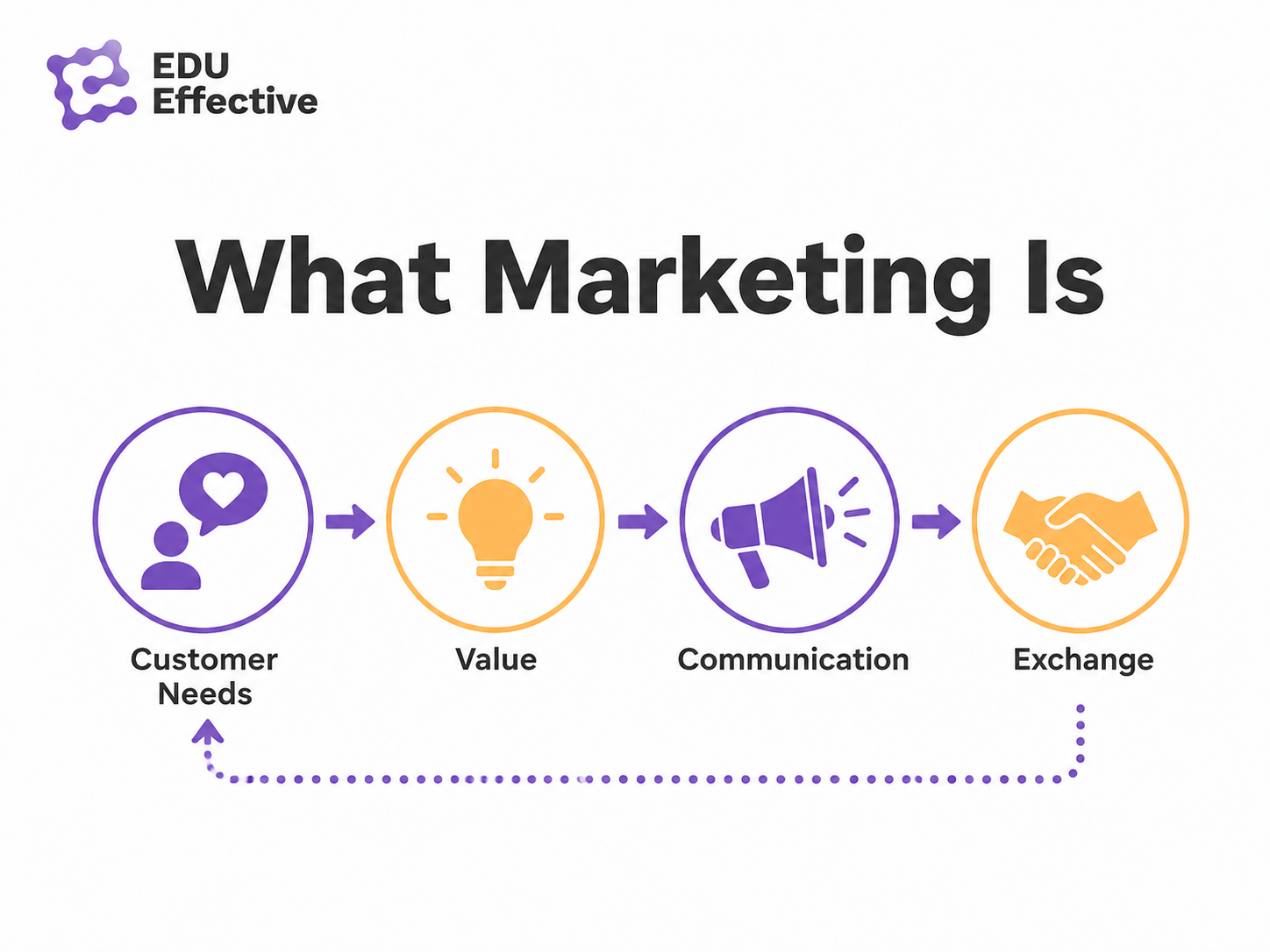
Philip Kotler, whose work remains the most referenced framework in marketing education, defined marketing as the science and art of exploring, creating, and delivering value to satisfy the needs of a target market. The key phrase is "delivering value" — not "promoting products" or "running campaigns."
This distinction matters enormously when answering why marketing is important. If marketing is only promotion, then it is a cost that competes for budget against other costs. If marketing is the entire process of identifying what customers need, creating something that satisfies those needs, and communicating it clearly, then it is the commercial activity that everything else in the business depends on.
The American Marketing Association's current definition reflects this: marketing is the set of activities, institutions, and processes for creating, communicating, delivering, and exchanging offerings that have value for customers, clients, partners, and society. It encompasses market research, product development, pricing strategy, distribution, promotion, and customer relationship management — not just advertising.
1. Marketing is the primary driver of revenue growth
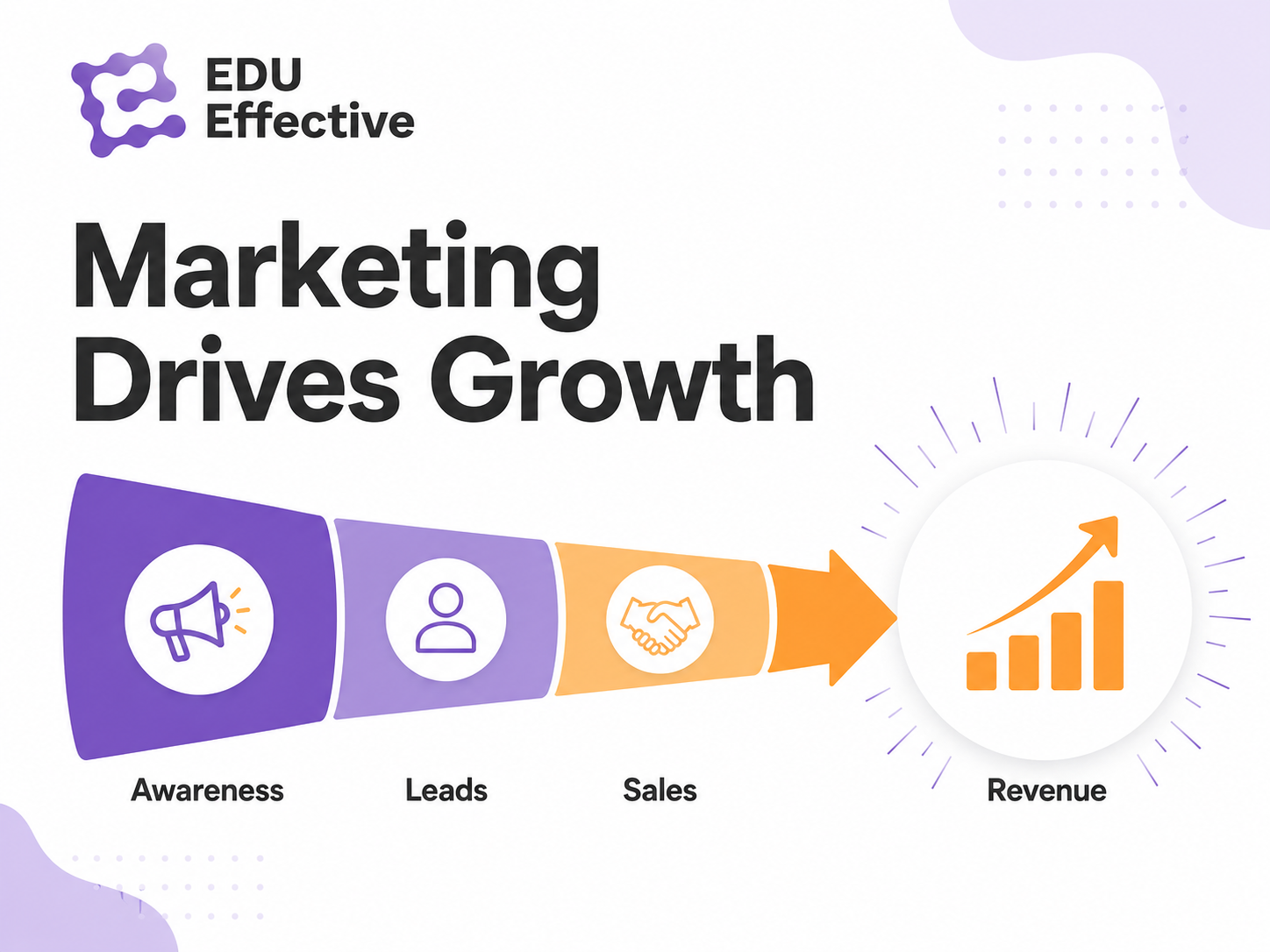
The most fundamental reason marketing is important is the most direct: well-executed marketing generates revenue that would not otherwise exist.
Companies that allocate approximately 11% of annual revenue to marketing grow at 2.5 times the rate of those that spend below that threshold. Marketing automation with AI is now delivering a 50% reduction in customer acquisition cost (CAC) alongside a 40% cut in overhead for businesses that have implemented it systematically. And AI-integrated marketing strategies that focus on Customer Lifetime Value prediction generate 41% higher marketing ROI on average compared to businesses using traditional segmentation approaches.
The revenue relationship runs in both directions: marketing creates demand, and demand creates revenue. But it also creates something that accounting systems cannot easily capture — the accumulated customer preference, brand recognition, and market position that determines how much demand a business can generate in the future.
2. Marketing makes customer acquisition possible — and sustainable
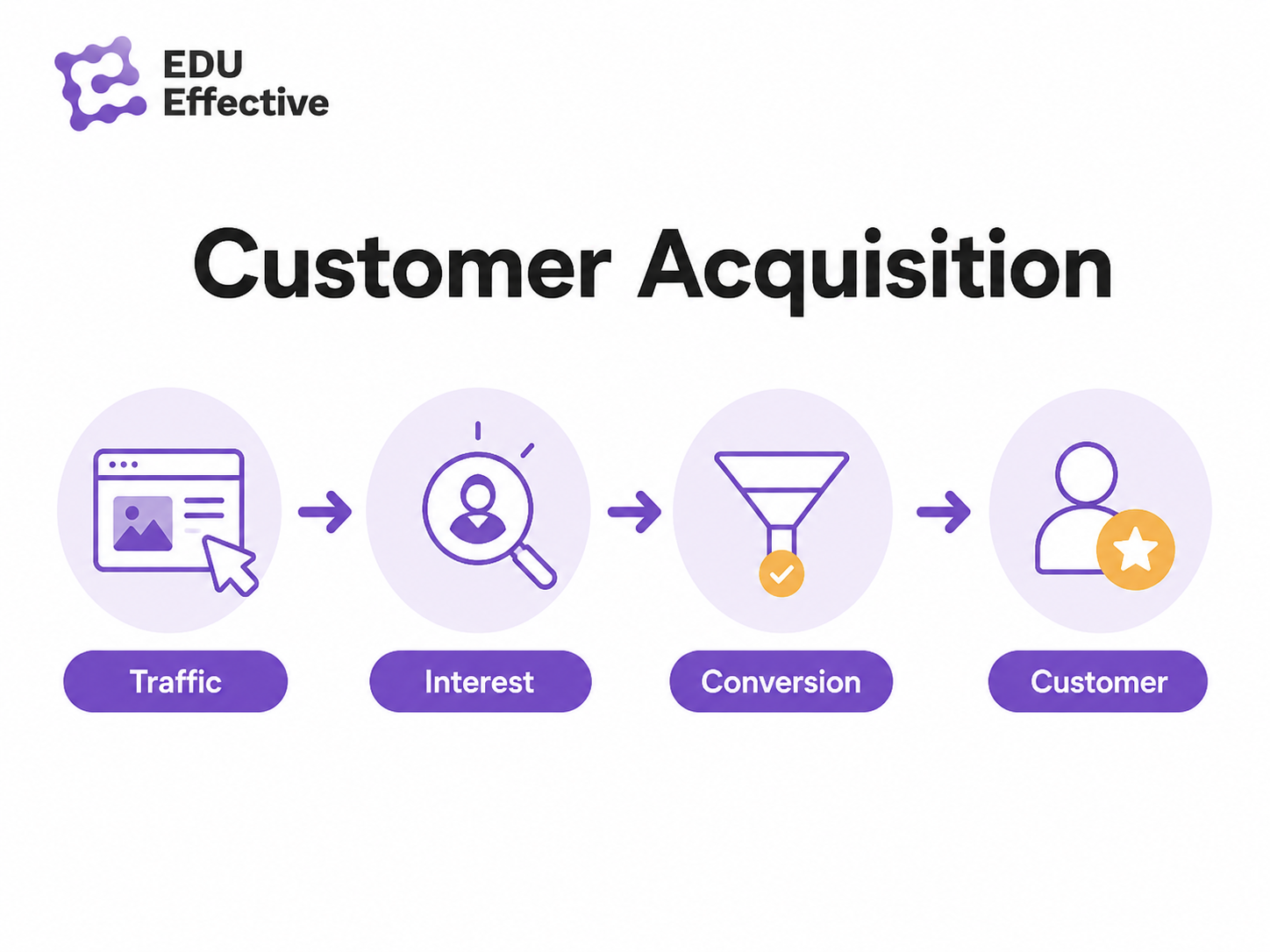
A business without marketing cannot grow beyond its existing network. Marketing is the systematic mechanism by which a business finds and converts people who have never heard of it into paying customers.
Customer acquisition cost (CAC) — the total sales and marketing spend required to acquire one new customer — is one of the most closely watched metrics in any growth-oriented business, and in 2026, 73% of marketers report that acquisition costs rose in 2025. This makes the efficiency of marketing spend more important than ever: the businesses growing fastest are not those spending the most on acquisition, but those spending it most intelligently.
The importance of marketing in customer acquisition is also visible in its absence. Businesses that rely entirely on word-of-mouth or repeat customers without any systematic acquisition activity are structurally dependent on existing relationships. When those relationships end — through customer churn, market shifts, or competitive disruption — the business has no mechanism to replace them.
3. Marketing builds brand value — a compounding asset
Brand is one of the most misunderstood concepts in business, frequently dismissed as intangible and therefore not worth taking seriously. The evidence in 2026 does not support that dismissal.
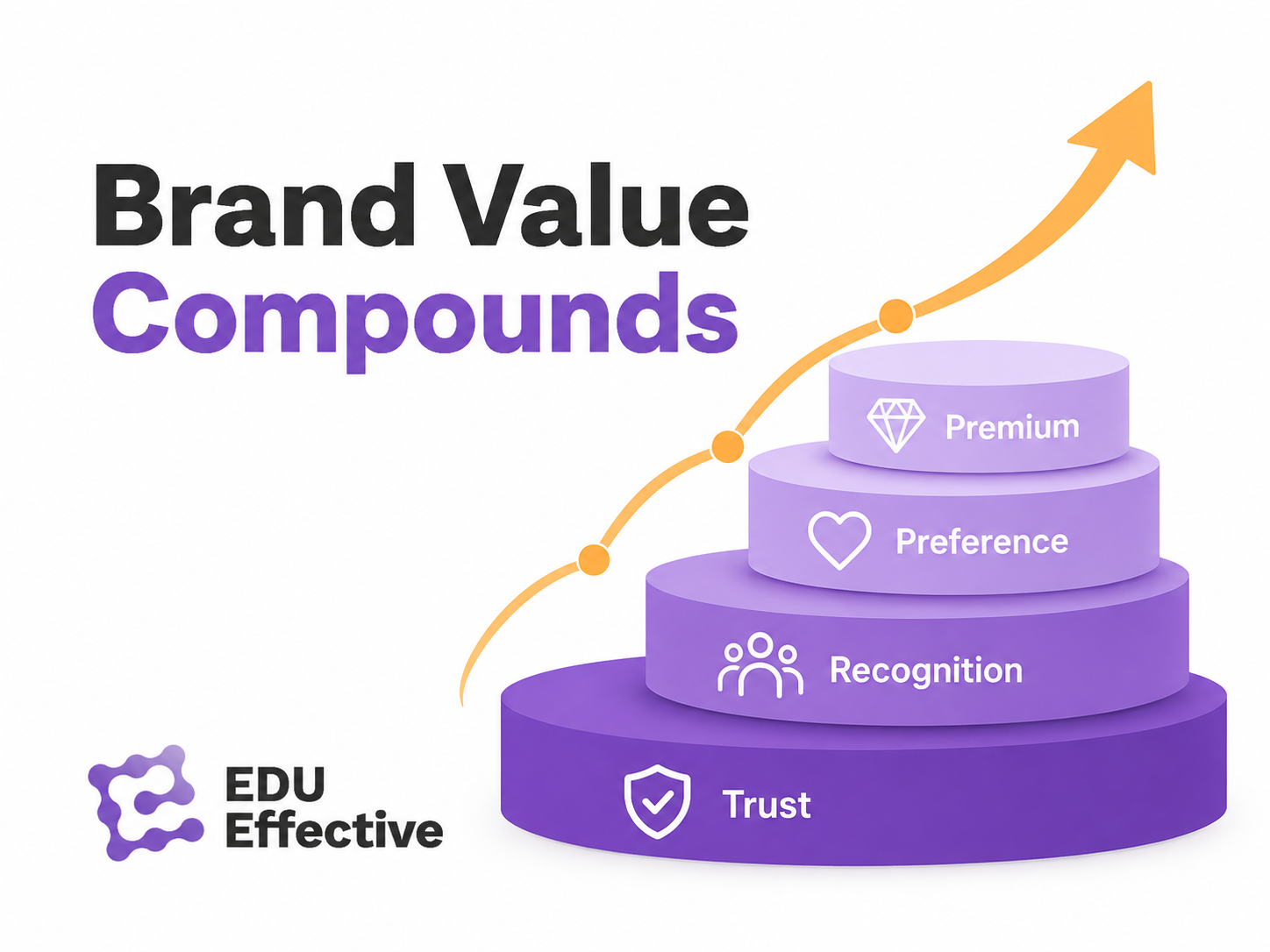
Brand value compounds over time in a way that individual campaigns cannot replicate. A customer who has a positive association with a brand makes purchase decisions faster, researches alternatives less, pays more willingly, and is more forgiving when things go wrong. Customers who interact with brands across multiple channels — a behaviour that strong brand marketing makes possible — have 3.1 times higher lifetime value and are retained at 3.2 times the rate of those who interact through a single channel.
The purpose of marketing that builds brand is not immediate conversion but accumulated preference. When a category need arises, the customer reaches for the brand they already know and trust — which means that every brand-building marketing investment made in advance of that moment has compounding commercial value.
4. Marketing enables customer retention — which beats acquisition on ROI
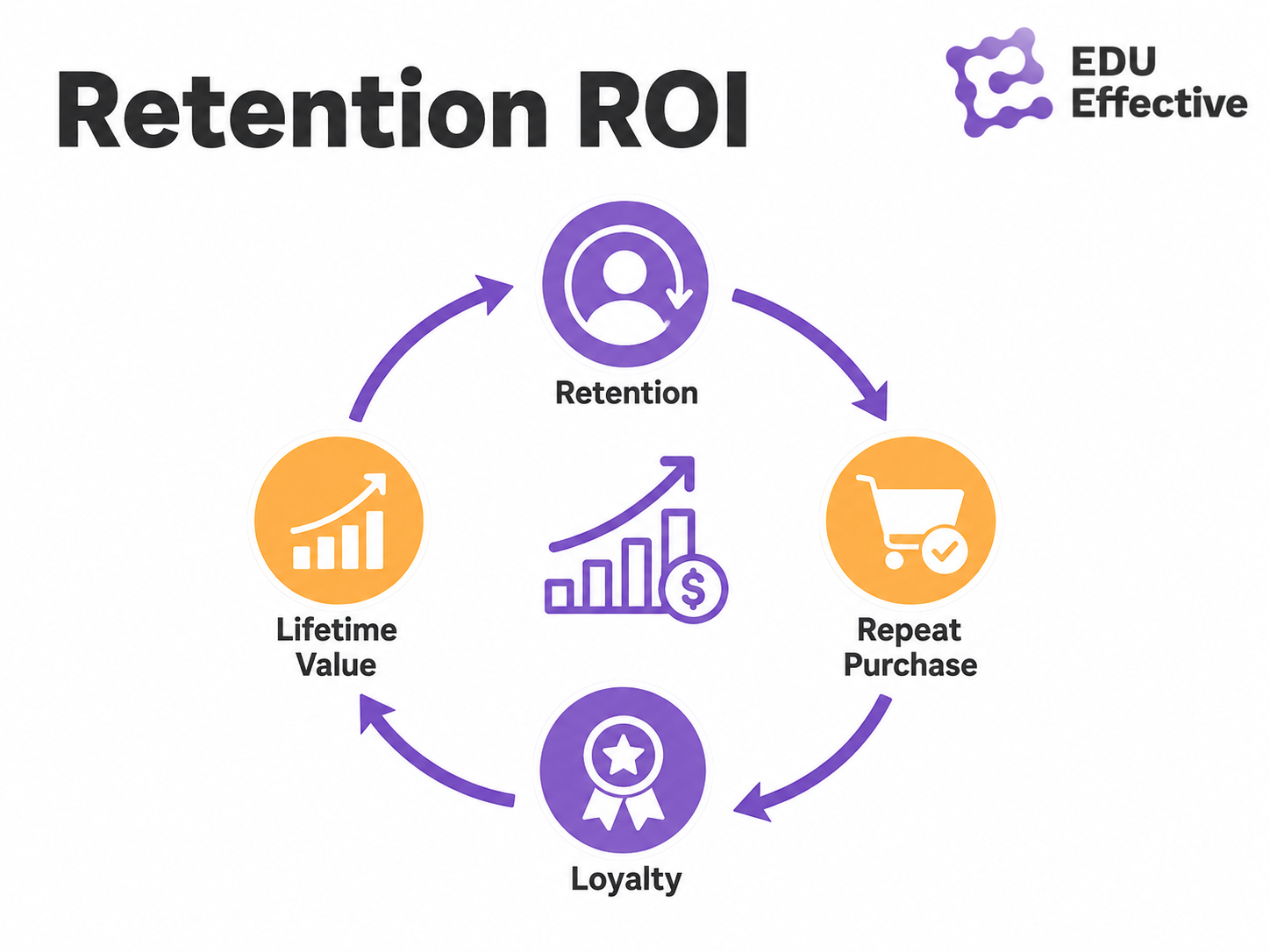
One of the clearest and most consistently documented findings in marketing research is that retaining existing customers is significantly more cost-effective than acquiring new ones. A 5% increase in customer retention can boost profits by up to 95%. Loyal customers spend approximately 67% more over time than new customers. And loyalty programmes deliver 4.8x to 5.3x ROI on average — among the highest returns of any marketing investment category.
In 2026, with customer acquisition costs rising for the majority of businesses, the importance of marketing's retention function has increased correspondingly. Marketing that builds ongoing customer relationships — through personalisation, loyalty programmes, relevant communication, and consistent brand experience — creates the compounding commercial value that one-time customer acquisition never can.
The businesses in 2026 that are growing most sustainably have recognised this shift and redirected meaningful budget from acquisition toward retention. They are using marketing to maximise customer lifetime value rather than simply to generate the next transaction.
5. Marketing provides the intelligence that the whole business needs
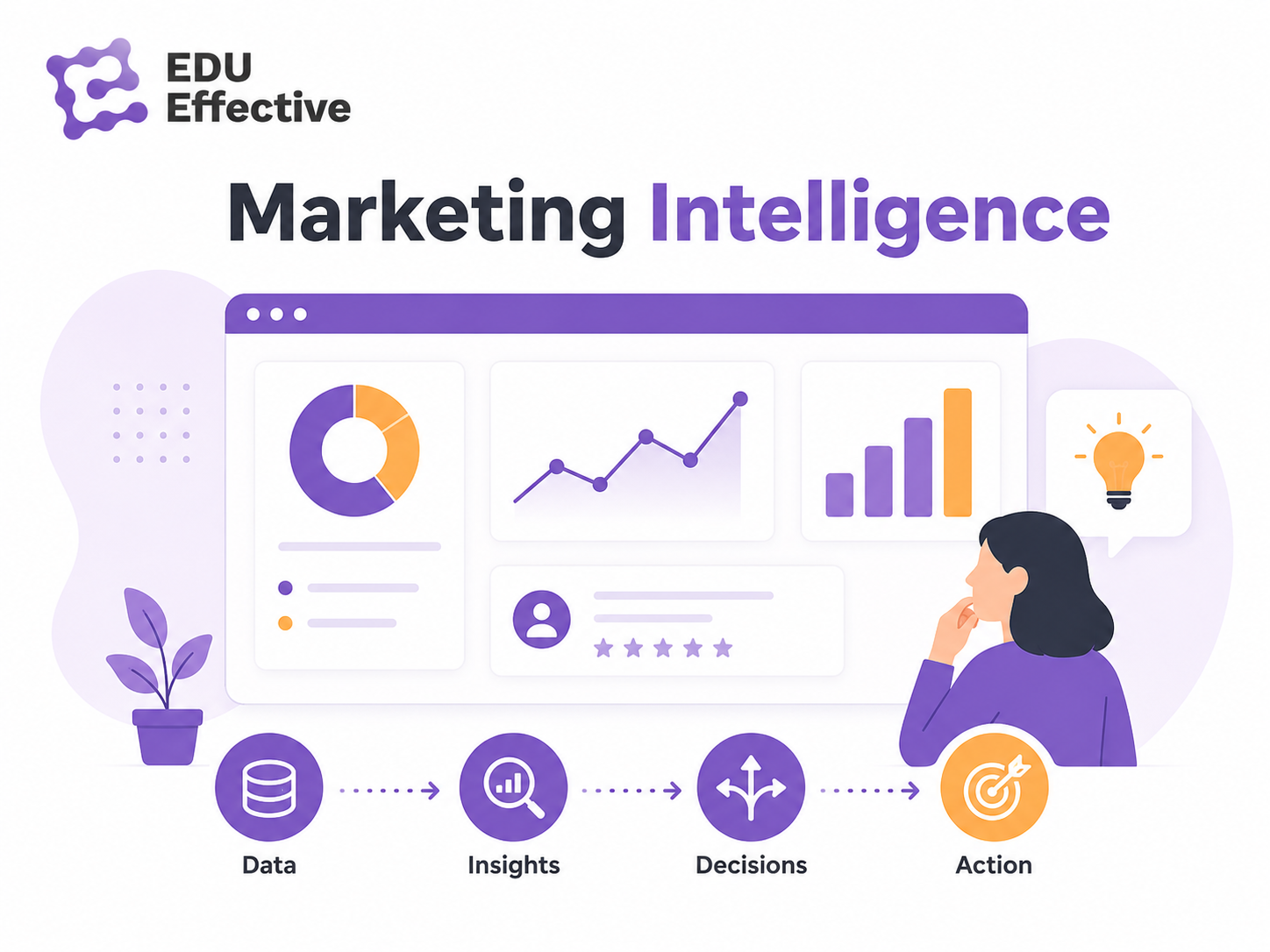
Marketing is the function most directly in contact with customers and markets. It collects data on what customers want, what they respond to, what they complain about, and what they are willing to pay. That intelligence — when collected systematically and shared across the organisation — improves decisions in product development, pricing, operations, and customer service, not just in the marketing function itself.
Market research conducted through marketing activities identifies unmet needs that can become new products. Customer feedback collected through post-purchase communication identifies quality or experience problems before they generate churn. Competitive monitoring conducted as part of marketing strategy surfaces threats and opportunities before they become crises.
The purpose of marketing, understood fully, is not just to communicate what a business offers — it is to keep the business connected to the reality of what its market actually wants, and to close the gap between the two continuously.
6. Marketing creates competitive advantage — and protects it
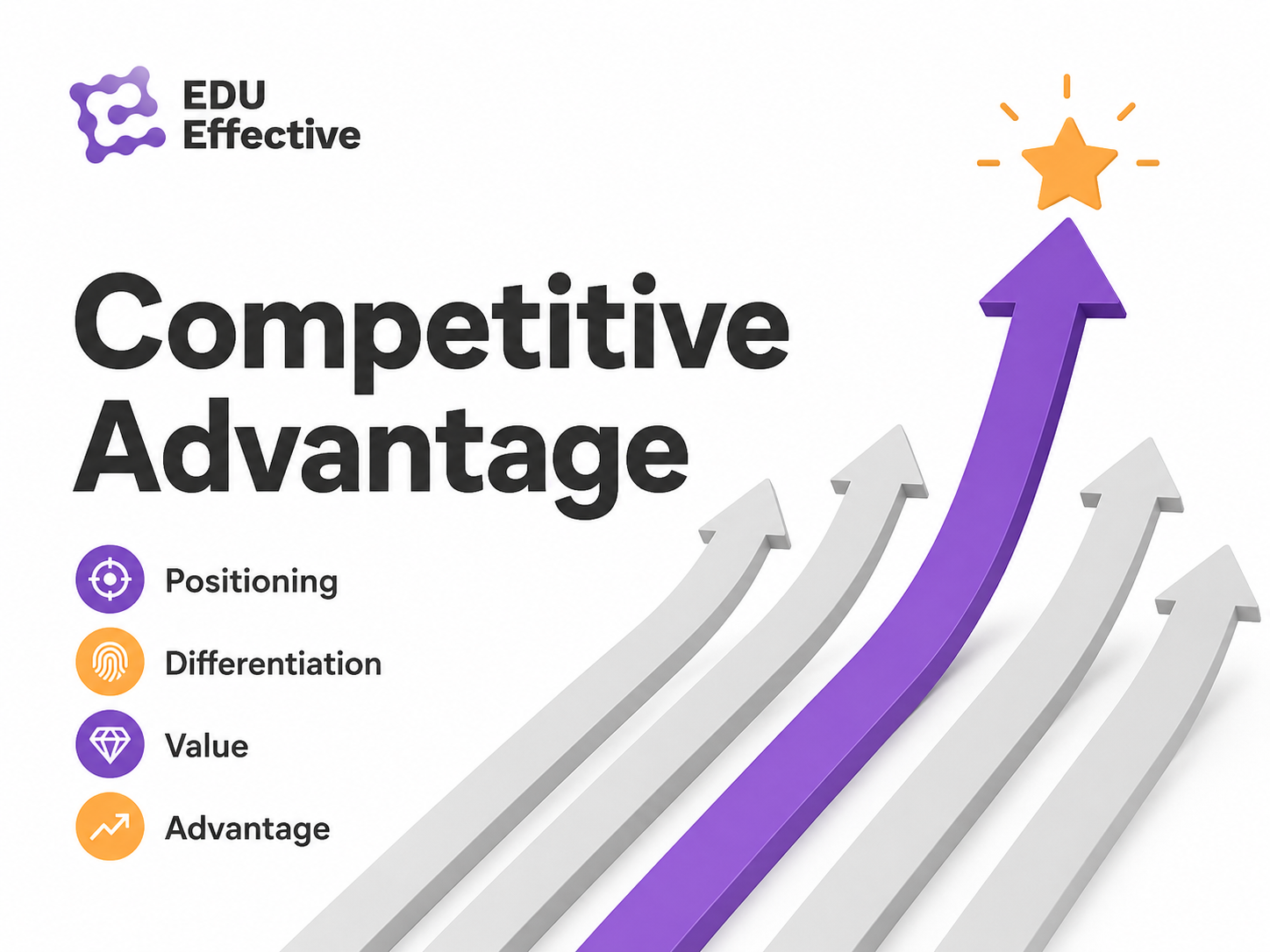
In markets where products are comparable in quality and price, marketing becomes the primary source of differentiation. The brand a customer chooses when other variables are equal is the one that marketing has made most familiar, most trusted, and most associated with the customer's own identity and values.
This is not manipulation — it is the commercial expression of genuine quality, genuine values, and genuine customer relationships. The brands that hold dominant market positions in 2026 did not arrive there through superior products alone. They arrived through years of consistent marketing that built recognition, preference, and loyalty that competitors cannot easily replicate.
And here is the 2026 competitive reality: 63% of businesses have increased their digital marketing budgets, with 72% of total marketing spend now going to digital channels. In this environment, a business that is not investing in marketing is not holding steady — it is losing ground to competitors who are.
The honest case against underinvesting in marketing
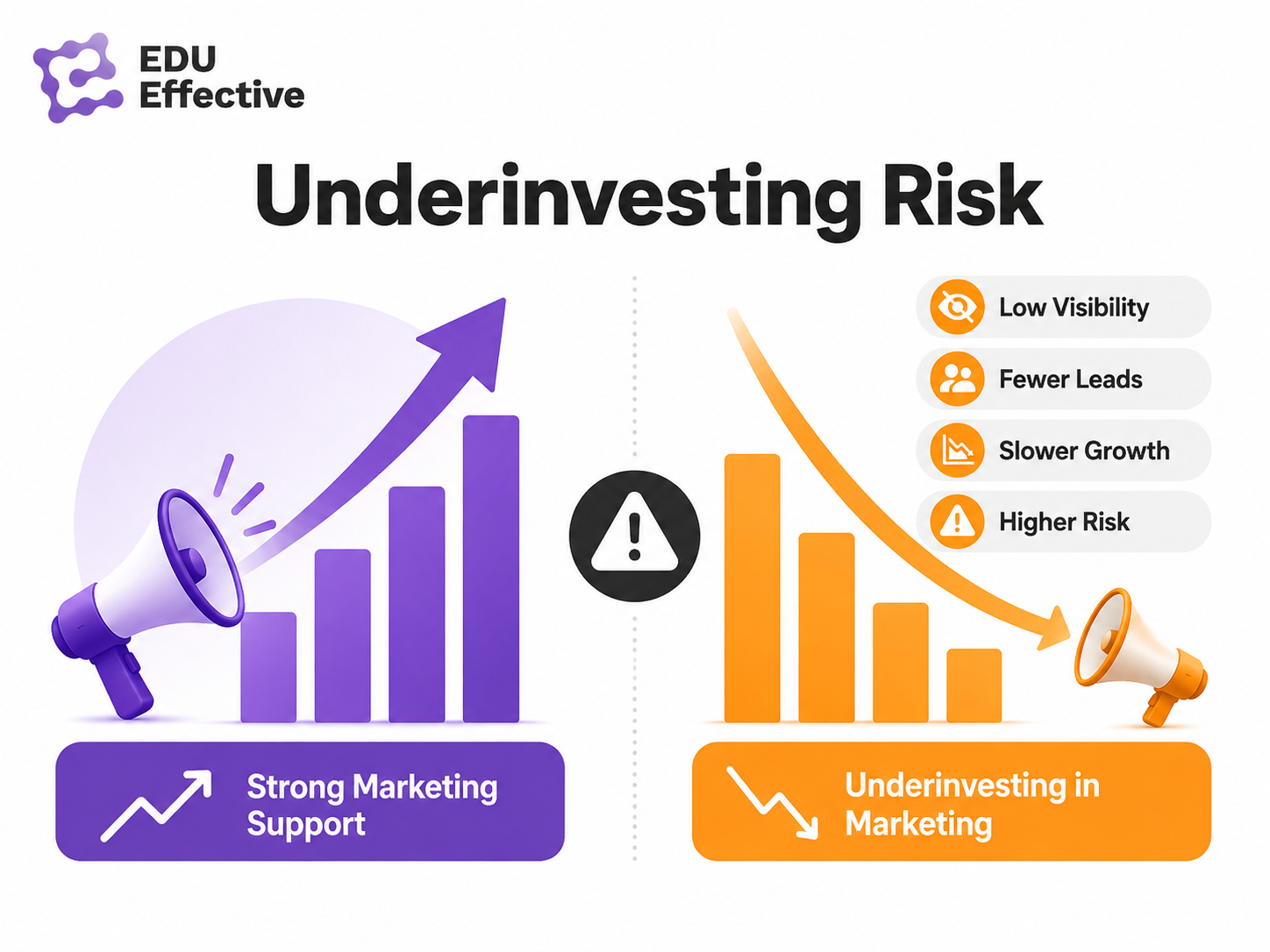
The argument for treating marketing as a cost rather than an investment typically sounds reasonable in the short term: reducing marketing spend in a difficult quarter improves the immediate P&L without an immediate visible cost. The consequence is delayed — but it is real.
Marketing investment builds something that takes time to accumulate and time to erode. A business that cuts marketing for six months will not see the revenue impact in six months — it will see it in twelve or eighteen months, when the pipeline dried by the earlier cut finally reaches the sales stage. By then, the connection between the budget decision and the revenue consequence is harder to see, but it is real.
The purpose of marketing is to create and sustain commercial conditions — customer awareness, preference, trust, and relationships — that make revenue generation possible. Remove those conditions gradually and you remove the conditions for growth. Invest in them consistently and they compound.
At EDU Effective, our Effective MBA Online Marketing program builds the analytical and strategic foundations that help professionals understand marketing's full role in business — and make better decisions about where and how to invest in it. Explore our programs →
EDU Effective Business School = professional development for your long-term success
All best-selling Effective MBA programs:
- Effective MBA: Executive Management & Leadership,
- Effective MBA: Applied Artificial Intelligence,
- Effective MBA: Coaching, Leadership & Mentoring,
- Effective MBA: Mastery in AI,
- or Effective MBA: Online Marketing
are based on the same educational model, which is beneficial for working adults:
These are professional programs, not academic ones — built for working adults to apply what they learn directly in their own business, not to collect a scholarly credential.
Join more than 9,000 students in over 120 countries around the world to further your personal development and career success.
You can read the feedback and experiences of our students and the stories of our graduates here.
The easiest way to start working on your personal development and success today:
Apply now — from €990 · Talk to a Study Advisor
Study with NO risk: 14-day money-back guarantee, no questions asked.
Sources
- Coupler.io — Marketing ROI Statistics 2026
https://blog.coupler.io/marketing-roi-statistics/ - Amra & Elma — TOP 20 Marketing ROI Statistics 2026
https://www.amraandelma.com/best-marketing-roi-statistics/ - Ivan Vislavskiy — Marketing ROI Statistics and Trends in 2026
https://ivanvislavskiy.com/blog/marketing-roi-statistics - Growth-onomics — The Ultimate List of Marketing Statistics for 2026
https://growth-onomics.com/ultimate-marketing-statistics-2026/ - StampMe — Why Customer Retention Matters More Than Ever in 2026
https://www.stampme.com/blog/customer-retention-strategies-2026 - ClearlyRated — Customer Acquisition vs Retention in 2026: Key Differences
https://www.clearlyrated.ai/blog/customer-acquisition-vs-retention