
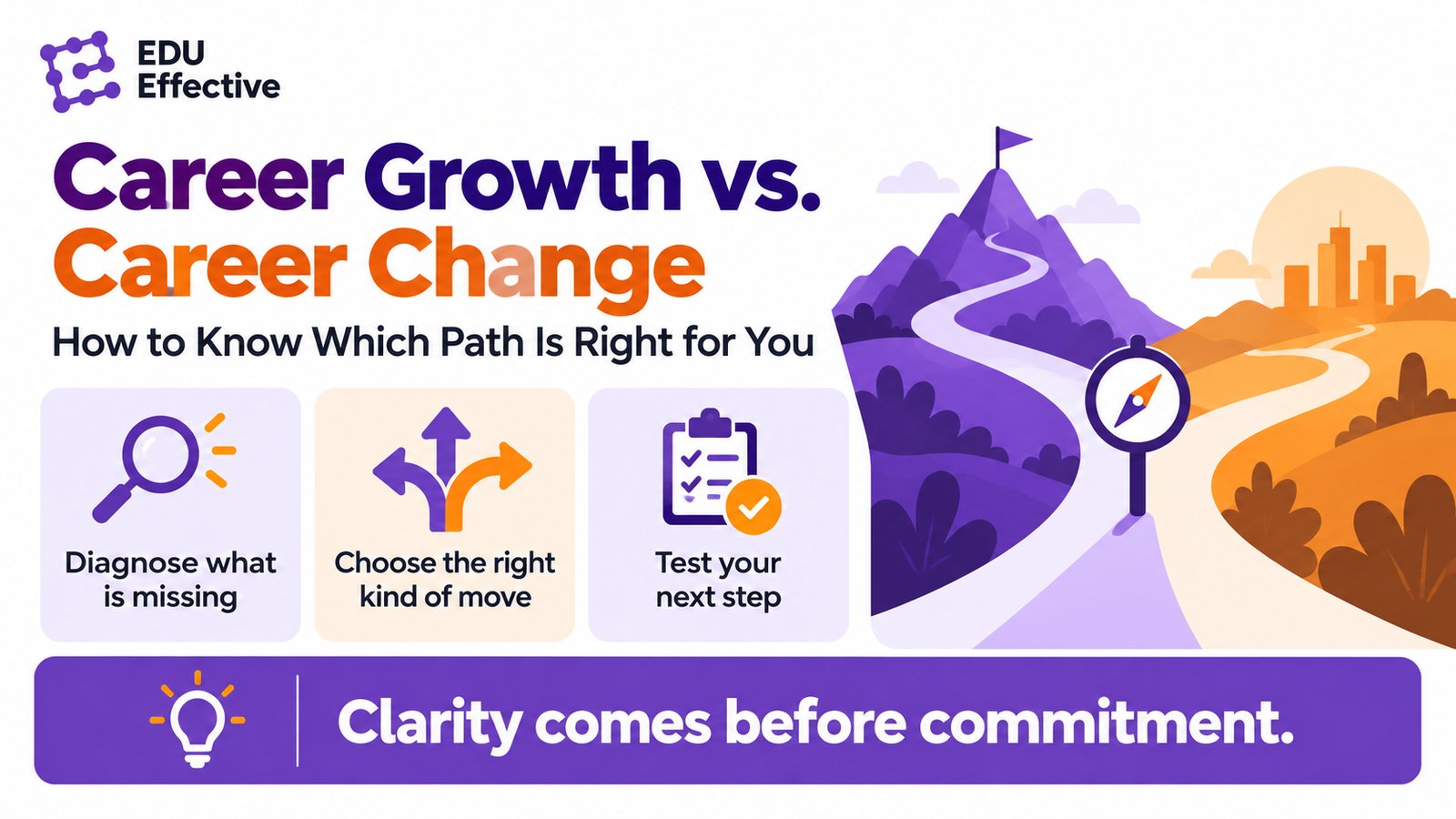

Most people who feel stuck at work jump to the same conclusion: it's time to leave. Find a new company, maybe a new industry, start fresh. The impulse is understandable. What's less clear is whether the problem is the job, or whether the same problem would follow them to the next one.
Career growth and career change are fundamentally different moves, and conflating them leads to decisions that don't solve the actual problem. This article is a framework for telling them apart, and for figuring out which one you actually need.
The scale of the question
The numbers suggest this isn't a niche dilemma. 56% of full-time U.S. workers planned to pursue new job opportunities in 2025, according to a ResumeTemplates.com survey of 1,258 workers. 21% were considering switching industries entirely. A separate Indeed Flex survey from late 2024 found that 33% of UK workers planned to find a new job or make a career change within 12 months.
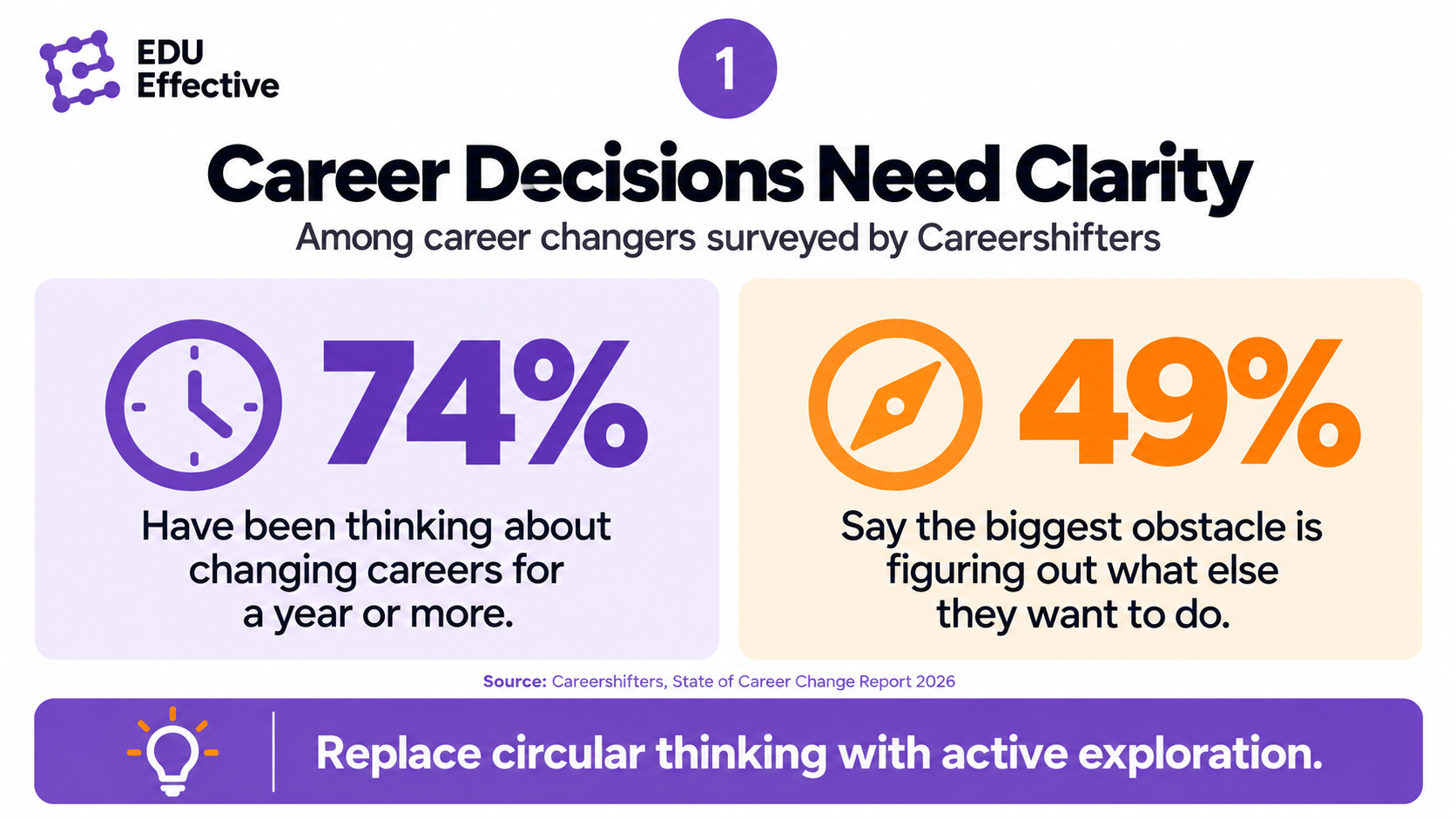
What's striking in the Careershifters 2026 research, which surveyed career changers directly, is the timeline: 74% of career changers had been thinking about it for a year or more before acting. 26% had been thinking about it for three or more years. The decision doesn't happen quickly. It accumulates. And during those years of deliberation, most people don't have a clear framework for what they're actually deciding.
The root cause question
Before anything else, the diagnosis has to be honest. The same feeling, "I need a change," can come from four very different sources:
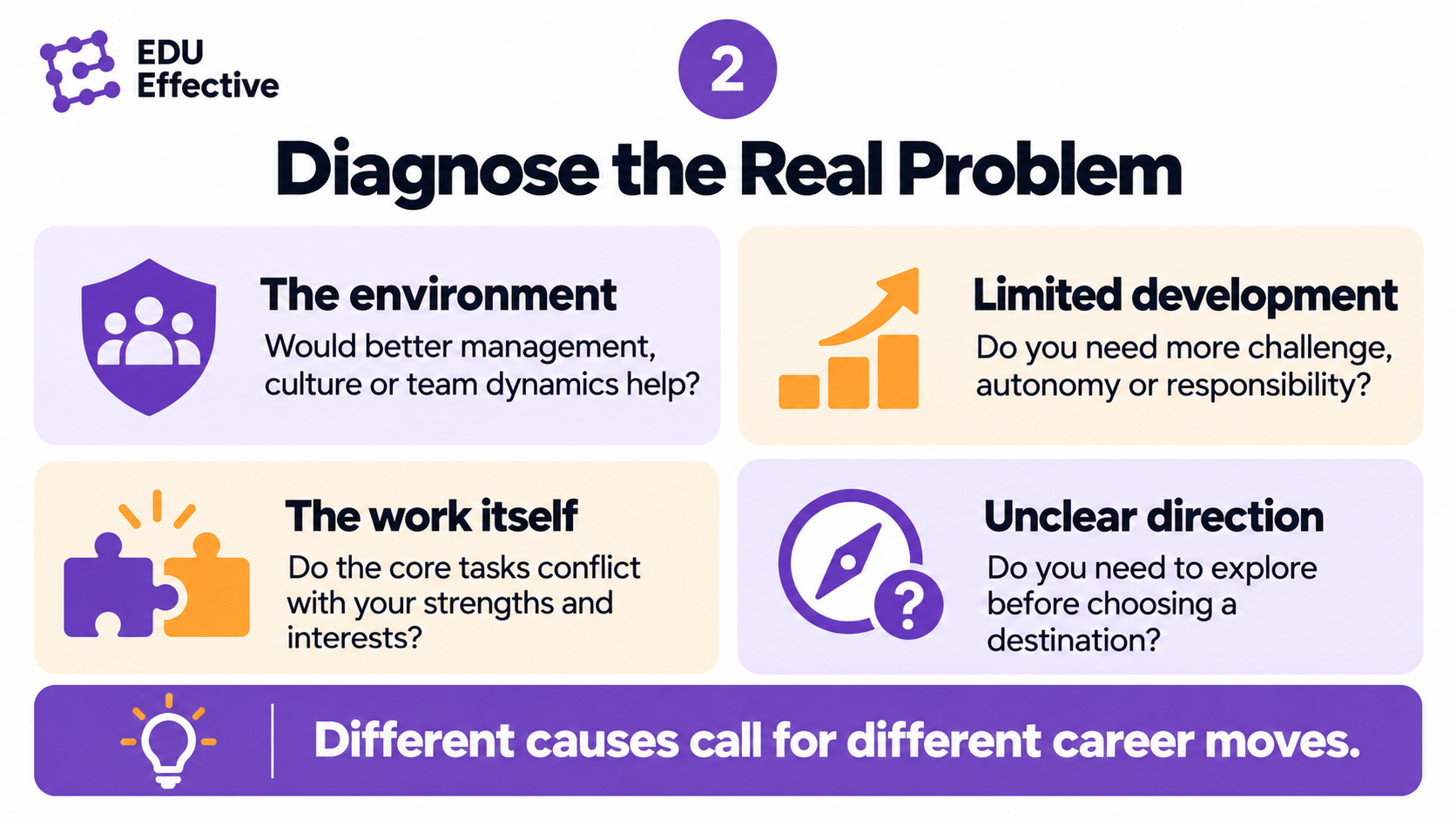
The environment is the problem. The manager is poor, the culture is toxic, or the team dynamic is dysfunctional. The Careershifters research found that the top reasons for wanting a career change were an unsupportive or unhealthy work environment (43%), poor work-life balance (41%), and values or purpose misalignment (40%). Notably, pay came in at 30%, well below environment and wellbeing.
The role has stopped developing you. You've learned what this role can teach you. The work is competent but no longer challenging. This is a career growth problem, not a career change problem. The solution is advancement, a lateral move to a more complex role, or a stretch assignment, not a new industry.
The work itself doesn't fit who you are. The skills and tasks required by the role are genuinely misaligned with your strengths and interests. This is different from boredom; it's a deeper mismatch between what the work demands and what you're wired to do well and find meaningful. This is a real signal toward a career change.
You don't know what you want. The Careershifters survey found that 49% of would-be career changers say their biggest obstacle is figuring out what else they want. Only 12% cite finances. The bottleneck isn't external. It's the absence of a clear direction, which makes any move feel risky and any option seem as good or bad as any other.
Honest diagnosis here is everything. A person who leaves a bad manager for a new industry will find that industries have bad managers too. A person who leaves a role that's stopped growing them and walks into a similar role at a different company has solved nothing.
Signs you need career growth, not a career change
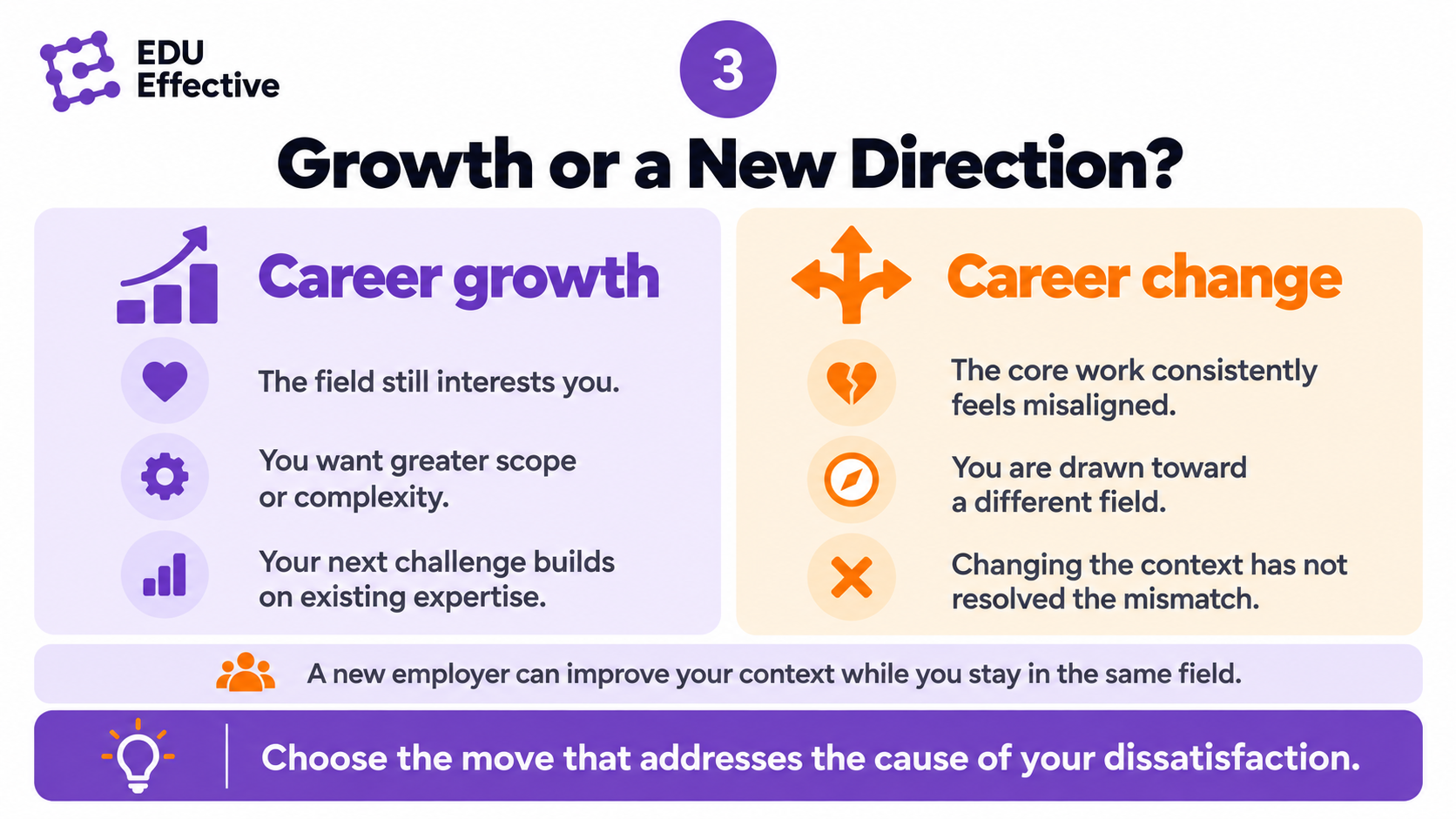
Career growth, moving upward or into greater complexity within your current field, is the right answer when:
You still find the work interesting. Boredom with a specific role is different from disengagement with the field itself. If you'd be energized by more responsibility, more autonomy, or a more senior set of challenges in the same domain, the domain isn't the problem.
Your skills are genuinely valuable in the market. If your expertise is in demand and you've been building real capability, leaving the field means voluntarily starting over in competitive positioning. The career capital you've accumulated, your network, your domain reputation, your track record, doesn't transfer easily.
The environment is the constraint, not the work. If you can imagine doing essentially the same kind of work and being engaged if the management, culture, or team were different, you're describing a job change within a field, not a career change.
You haven't yet reached the level where the work becomes most interesting. Many careers have a threshold: the first five years are execution-heavy and narrower in scope; the next five involve strategy, influence, and higher-stakes decisions that are genuinely different. Leaving before reaching that threshold means leaving before seeing what the career can actually offer.
The practical move here is to be specific about what's missing. Is it a title? Compensation? Scope of decision-making? Direct reports? A clearer development path? Each of these has a targeted solution that doesn't require starting over.
Signs a career change is the right answer
Career change is the right answer, not just a change of employer, when:
The work itself drains rather than energizes you. Not occasionally, not after a difficult project. Consistently. If you regularly feel depleted by the core tasks of your job, not the administrative load or the difficult colleagues, but the actual work, that's a misalignment signal worth taking seriously.
Your values and the industry's incentive structures are in persistent conflict. Every industry has implicit values built into how it rewards people and what it asks of them. If those values conflict with yours at a level that isn't negotiable, no employer within that industry solves the problem. Careershifters found that 59% of career changers left primarily to find a better values fit, not for pay or advancement.
You're genuinely curious about a different field. Not anxious escape from the current one, but genuine pull toward something else. Curiosity is durable; dissatisfaction is temporary. The career changes that succeed tend to be driven by pull, not just push.
You've already tried the alternatives. If you've changed employers, negotiated scope changes, moved to a different team, and the same fundamental dissatisfaction persists, the issue is the work itself, not the context.
The cost of a career change, what the data shows
Career changes are not free. The Learning & Work Institute research found that career changers face an average pay penalty of 14% lower hourly pay when starting in a new sector, roughly £3,731 per year in the UK context. Retraining full-time for a year can cost around £40,000.
These are real costs that need to be factored into the decision, but they're also context-dependent. A career change made at 35 to a higher-ceiling field can yield returns over a 30-year horizon that dwarf the short-term income penalty. A career change made to escape a bad manager has a very different expected outcome.
Time is the less-discussed cost. The Careershifters data found that 74% of career changers thought about it for over a year before moving. That deliberation time isn't wasted, it's how clarity develops. But passive deliberation is less productive than active exploration: conversations with people in the target field, skill experiments, freelance or volunteer projects, structured self-assessment.
The framework for deciding
Three questions to answer honestly before making either move:
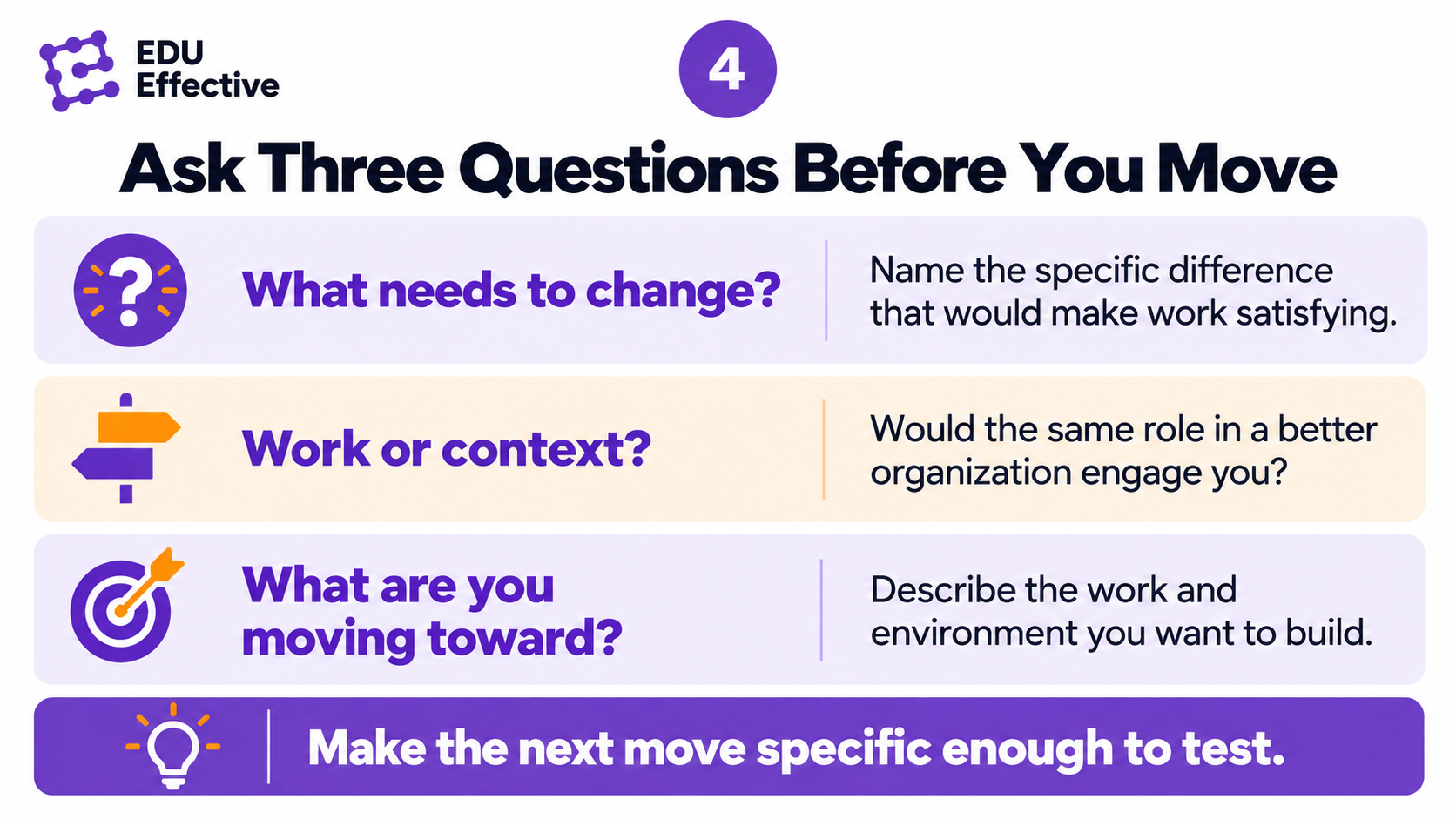
Question 1: What specifically would need to be different for you to feel engaged and satisfied? Be concrete. "Something different" is not an answer. If the answer is more responsibility, a better manager, higher compensation, or clearer progression, that's a career growth problem. If the answer is a fundamentally different kind of work, a different set of daily tasks, a different relationship with what you produce, that points toward a career change.
Question 2: Is the dissatisfaction with the work or with the context? Test this mentally: if you had the same role in a different organization, better culture, better management, better team, would you be engaged? If yes, the problem is context. If no, the problem is the work itself.
Question 3: What are you moving toward, not just away from? The ResumeTemplates.com survey found that 1 in 3 job seekers would leave their current role without another offer lined up. That level of urgency is understandable when the environment is genuinely toxic. For most situations, having a clear direction before making a move significantly improves outcomes. Career changes driven primarily by escape tend to land people in a new context with the same unresolved questions.
Making either move strategically
For career growth within your current field:
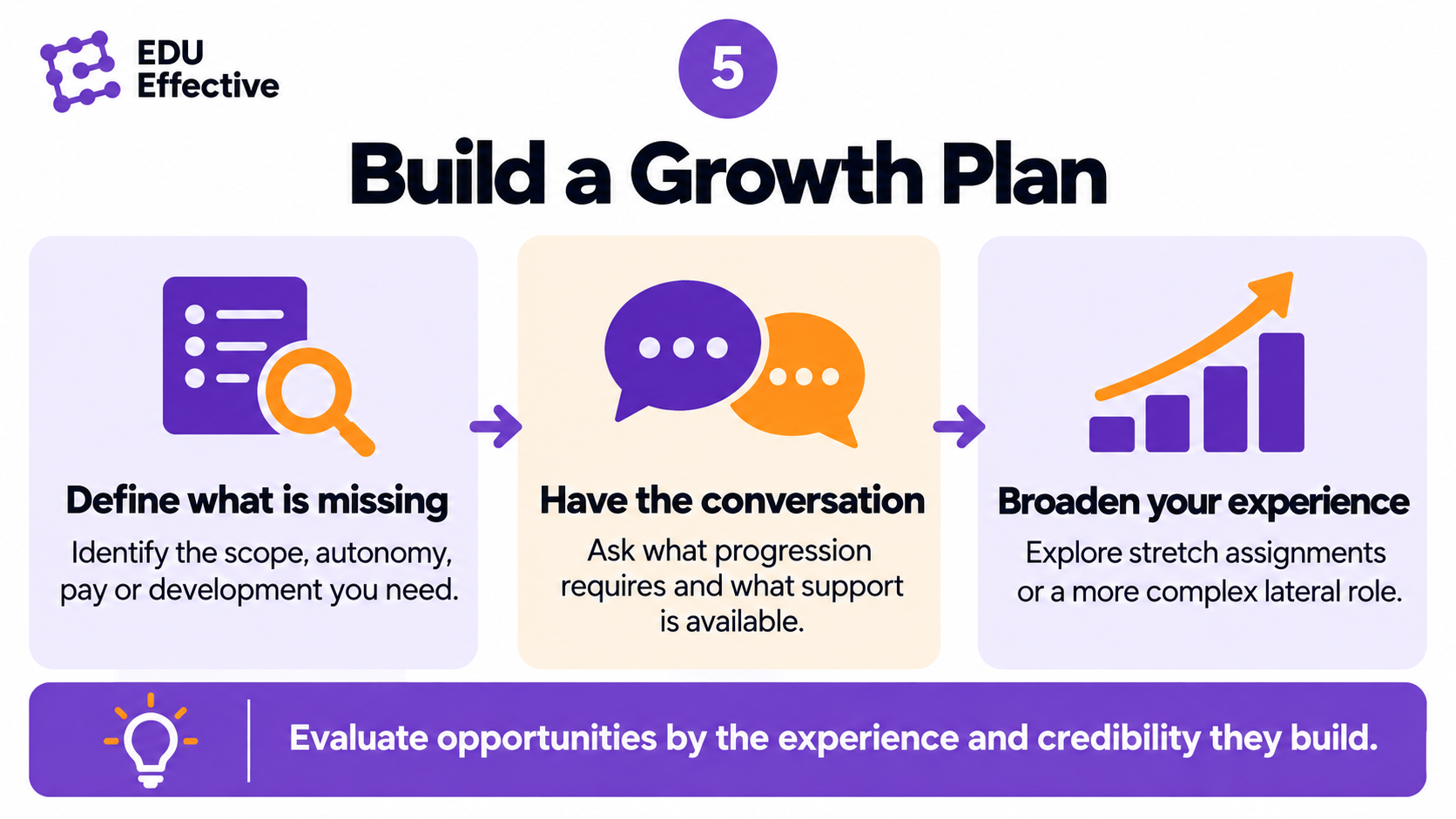
The most direct path is often the hardest to take: a direct conversation with your manager about your development trajectory, what advancement looks like, and what you would need to demonstrate to get there. Most people avoid this conversation. The ones who have it get useful information, either a realistic path forward or clarity that the organization can't provide what they need.
If internal advancement isn't available, targeted lateral moves, to a role with greater complexity, broader scope, or more strategic influence, build the career capital that opens the next door. Titles matter less than the experience and credibility they represent.
For a genuine career change:
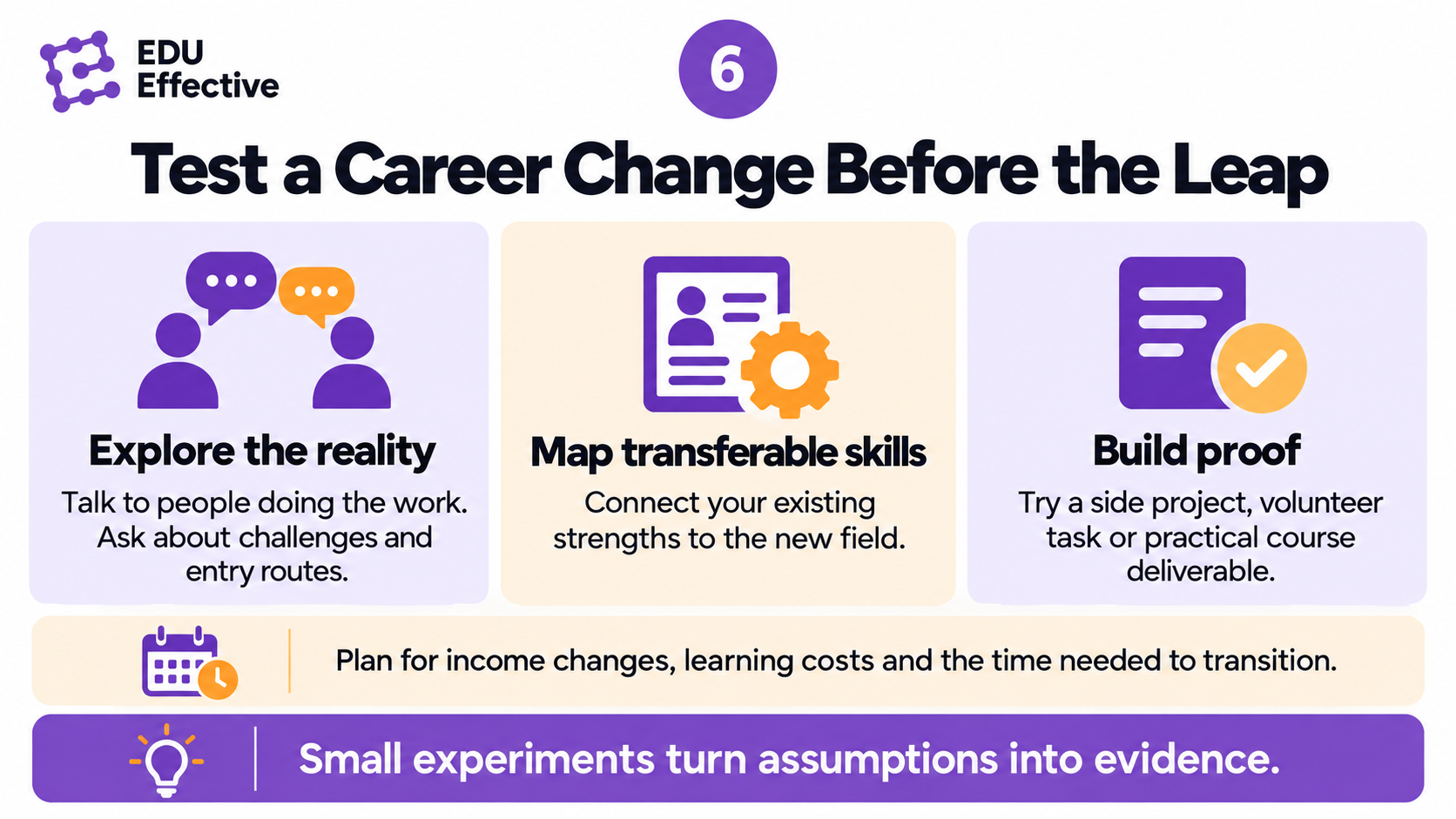
Start with exploration before commitment. Talk to people actually working in the field you're drawn to, not HR representatives, not LinkedIn posts, real conversations with people doing the day-to-day work. Ask what they find hard, what they wish they'd known, and what a realistic entry path looks like for someone with your background.
Identify transferable skills explicitly. Most career changers underestimate how much of their existing expertise transfers. Project management, stakeholder communication, analytical thinking, team leadership, these move across industries. The skills gap is usually narrower than it feels from the outside.
Build proof before the leap. A side project, a freelance engagement, a course that leads to something deliverable, these reduce risk and generate real signal about whether the new direction fits. The goal isn't to have everything figured out before moving; it's to reduce the decision to a manageable level of informed risk.
The role of development in both paths
One thing both paths share: continuous skill development is no longer optional in either direction.
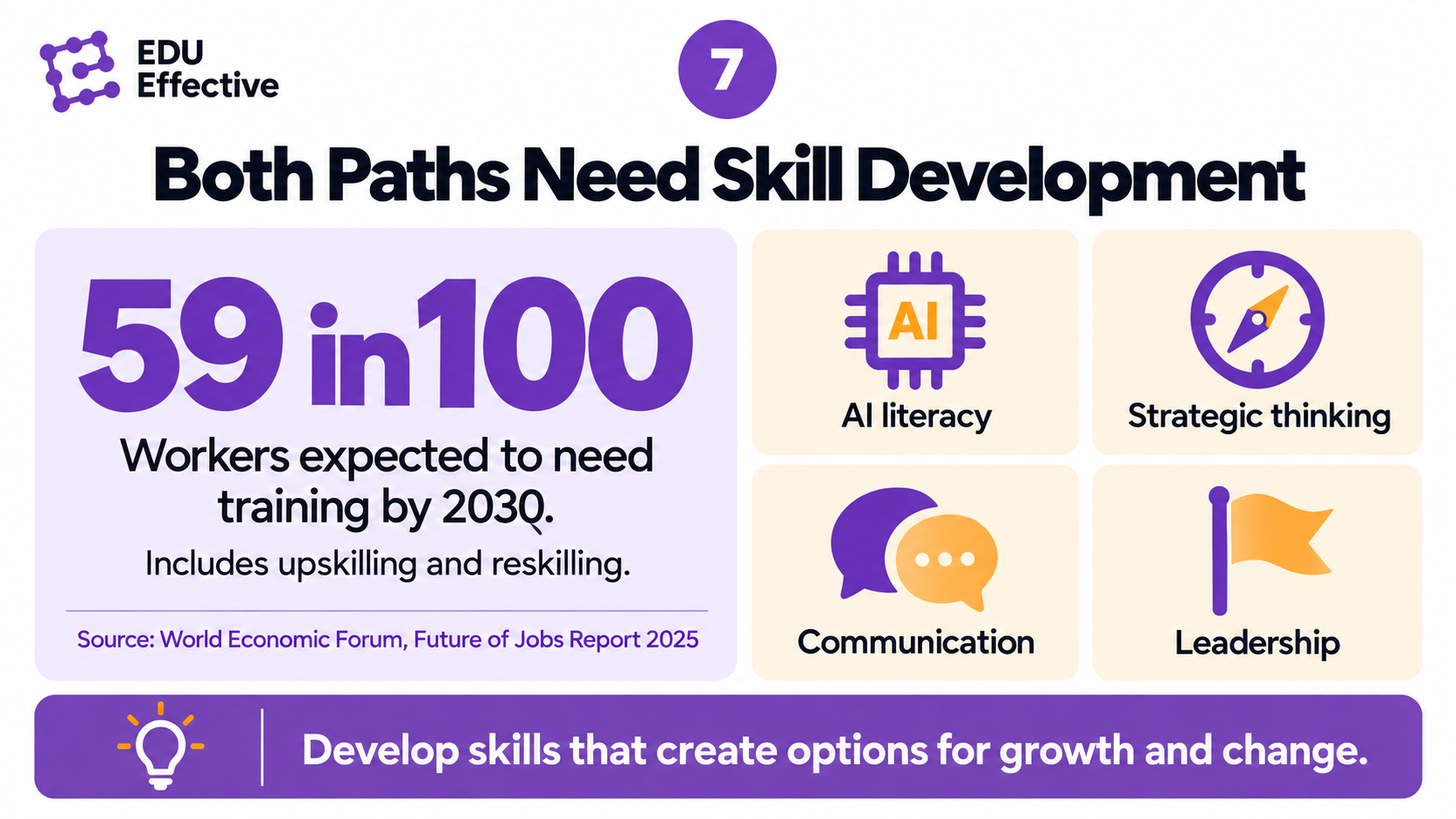
The World Economic Forum's Future of Jobs Report found that 59% of workers will need significant reskilling by 2030. That applies whether you stay in your field and grow within it, or change fields entirely. The skills landscape is shifting fast enough that standing still, maintaining your current skill set without active development, is itself a form of falling behind. Our breakdown of which skills to build before 2027 covers the specifics.
AI literacy, strategic thinking, communication, and leadership capability are transferable and in demand regardless of field. Building them now creates optionality, the ability to grow within your current path or credibly pivot to a new one, because you have capabilities that hold value across both.
Key takeaways
Career growth and career change solve different problems. Growth is the right answer when the work itself still fits but the context or progression is the constraint. Change is the right answer when the work itself is the misalignment, not the environment or the employer. 74% of career changers deliberated for over a year before acting; most of that time is better spent on structured exploration than circular thinking. The three questions that clarify the decision: what specifically would need to be different; is the dissatisfaction with the work or the context; and what are you moving toward, not just away from. Both paths require active skill development, and the labour market in 2026 rewards neither stagnation nor blind change.
About EDU Effective Business School
EDU Effective Business School keeps its programs short, practical and directly applicable at work. Runs on 15 minutes a day, completes in 10 months or less and is ASIC accredited, with tuition from €990. Every enrollment carries a 14-day money-back guarantee, no questions asked.
See all five Effective MBA programs · What students say · Apply now
Sources
- ResumeTemplates.com, 6 in 10 Workers Eye New Jobs https://www.resumetemplates.com/
- Careershifters, Career Change Statistics 2026 https://careershifters.org/career-change-statistics
- Indeed Flex, Career Change & Job Search Survey https://www.indeedflex.co.uk/
- Learning & Work Institute, Career Change Pay Penalty Research https://learningandwork.org.uk/
- World Economic Forum, Future of Jobs Report https://weforum.org/press/2025/01/future-of-jobs-report-2025-78-million-new-job-opportunities-by-2030-but-urgent-upskilling-needed-to-prepare-workforces/