
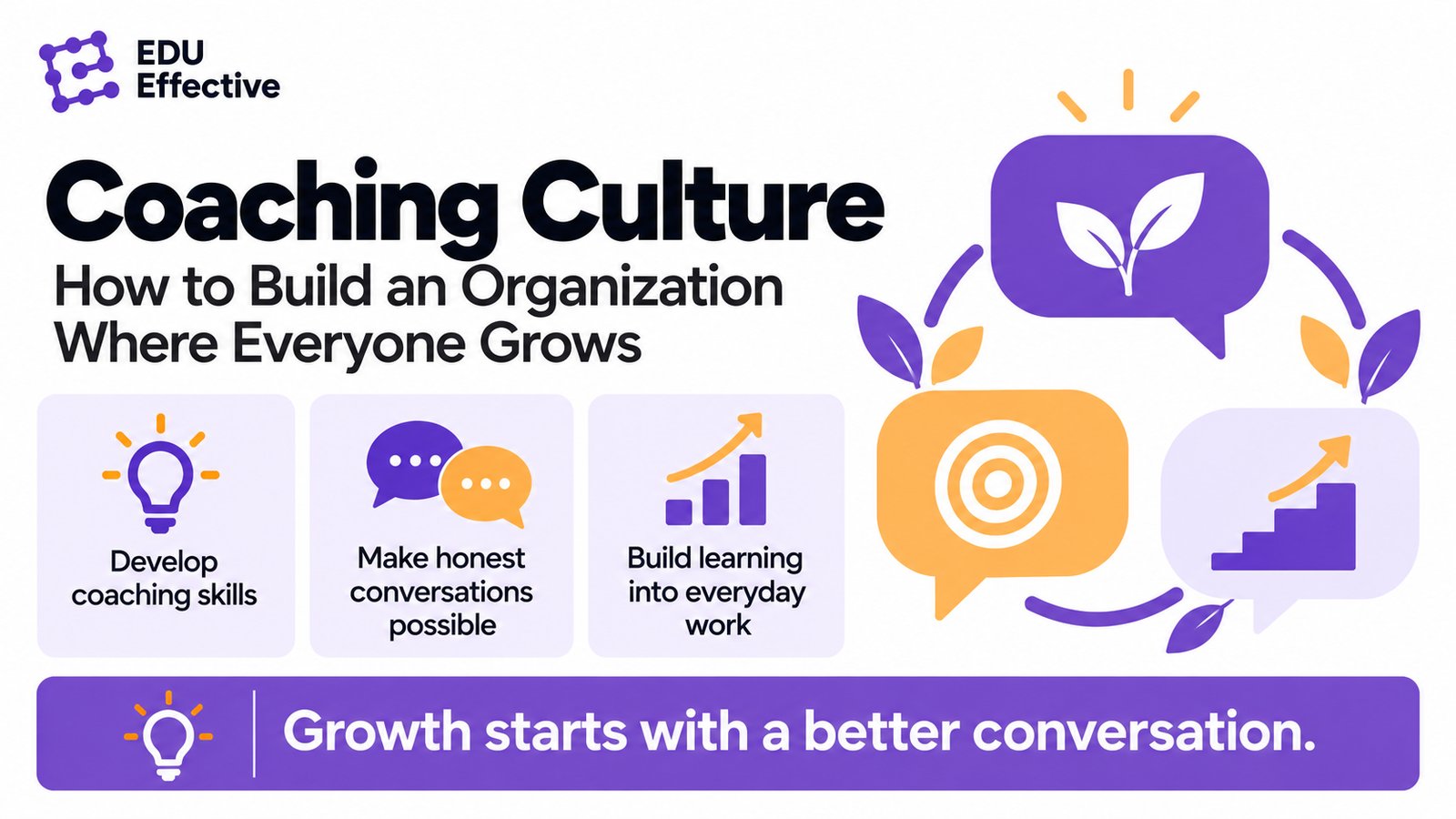

Most organizations say they value development. They send managers to trainings, buy LinkedIn Learning licenses, run annual performance reviews. And then they wonder why talent keeps leaving and middle management keeps struggling.
The difference between organizations where people grow and organizations where people stagnate is rarely budget. It's whether coaching is treated as a program or as a culture.
A coaching culture means something specific: the day-to-day way people give feedback, ask questions, and develop each other is built on coaching principles. It's not reserved for executives or high-potentials. It's how the organization operates.
This article explains what a coaching culture actually requires, why it produces measurable results, and how managers can start building one, regardless of whether leadership has signed off on a formal initiative.
What the data says about coaching in organizations
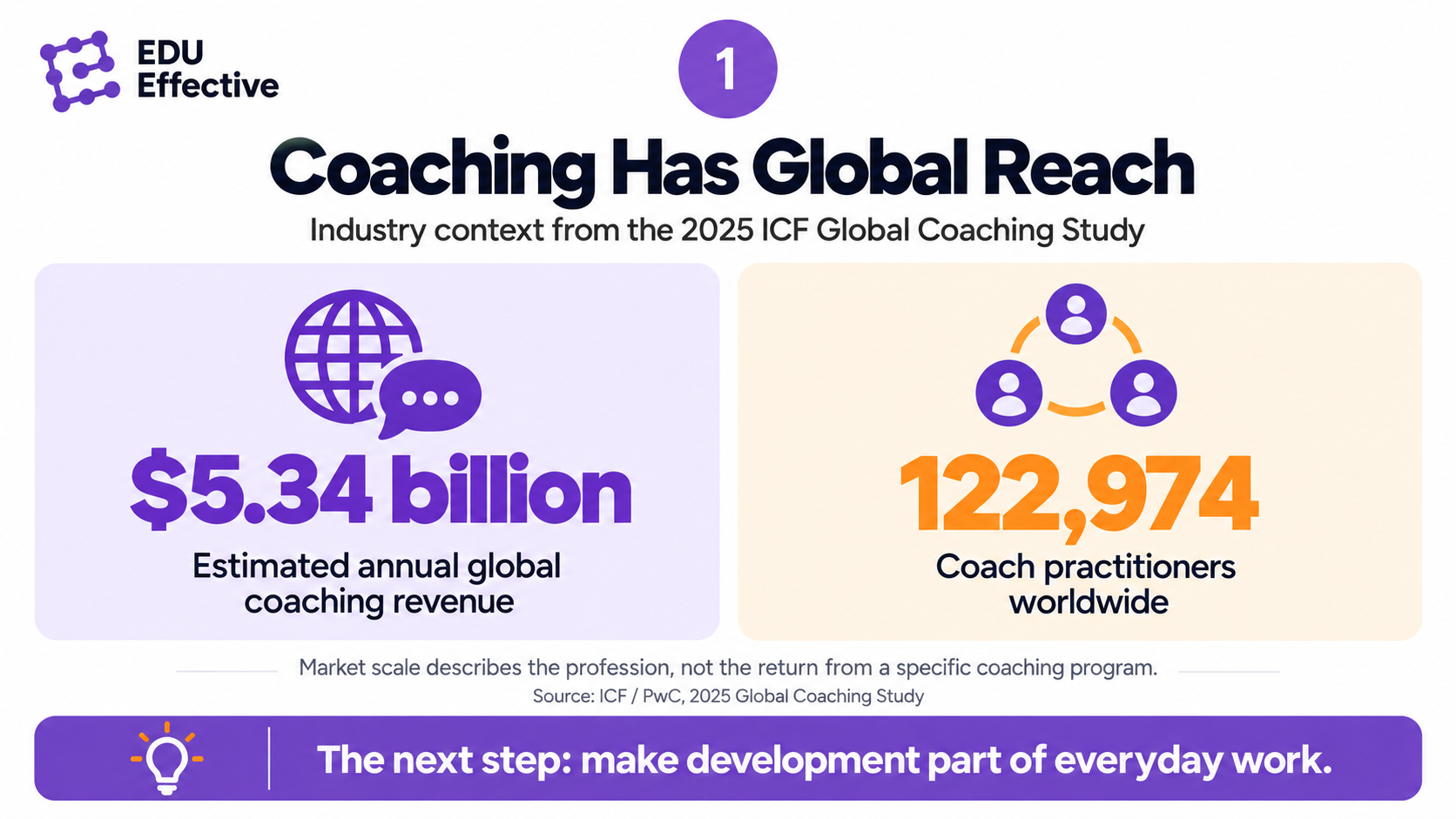
The International Coaching Federation (ICF) Global Coaching Study, conducted by PwC, puts the global coaching market at $5.34 billion USD annually, up 17% since 2023. There are now 122,974 coach practitioners worldwide, a 13% increase from the prior study. Nearly six in ten coaching clients are now sponsored by their employers, which means organizations aren't just tolerating coaching, they're funding it.
The ROI case is strong. A global survey by PwC and the Association Resource Centre found an average return of seven times the cost of employing a coach. 87% of respondents in an FMI survey agreed executive coaching has a high return on investment. Intel's internal coaching initiative reportedly adds roughly $1 billion USD a year to operating margin.
But the most relevant data isn't at the executive level. ICF's Defining New Coaching Cultures report found that 72% of respondents acknowledged a strong link between coaching and higher employee engagement. Approval of coaching runs high among both senior executives (78%) and employees (73%). At AstraZeneca, 45% of participants in a coaching program reported a more positive view of trust and safety within their teams.
One organization-level case makes the systemic argument cleanly. Saudi Electricity Company runs more than 800 employees annually through 11 coaching programs, reaching 85% of its leadership pipeline. Talent retention sits at 95% organization-wide and 98% for leaders. Coached leaders saw a 22% increase in internal promotions. Operational cost reductions totaled 100 million SAR, over $26 million USD.
That's not a soft benefit. That's a structural competitive advantage.
What a coaching culture is not
Before building one, it helps to name what doesn't work.
Coaching culture is not a coaching program. A program has a start date, an end date, and a cohort. A culture is what happens between programs: in one-on-ones, in hallway conversations, in how a manager responds when a team member makes a mistake.
Coaching culture is not performance management relabeled. Performance management asks: did you hit the target? Coaching asks: what did you learn, and what will you do differently? They can coexist, but confusing them destroys both. When employees fear that coaching conversations will end up in their performance file, they stop being honest.
Coaching culture is not the manager always having the answer. The most common failure in manager-as-coach models is managers who ask coaching questions and then answer them immediately after. The question is a formality. Real coaching means sitting with the employee's thinking long enough for something to actually surface.
Coaching culture is not optional for senior leaders. If the CEO asks coaching questions but the VP of Sales runs command-and-control, the culture message is the VP. Senior leaders who visibly model coaching behavior, including receiving coaching themselves, are the single biggest signal about whether this is real.
The four building blocks
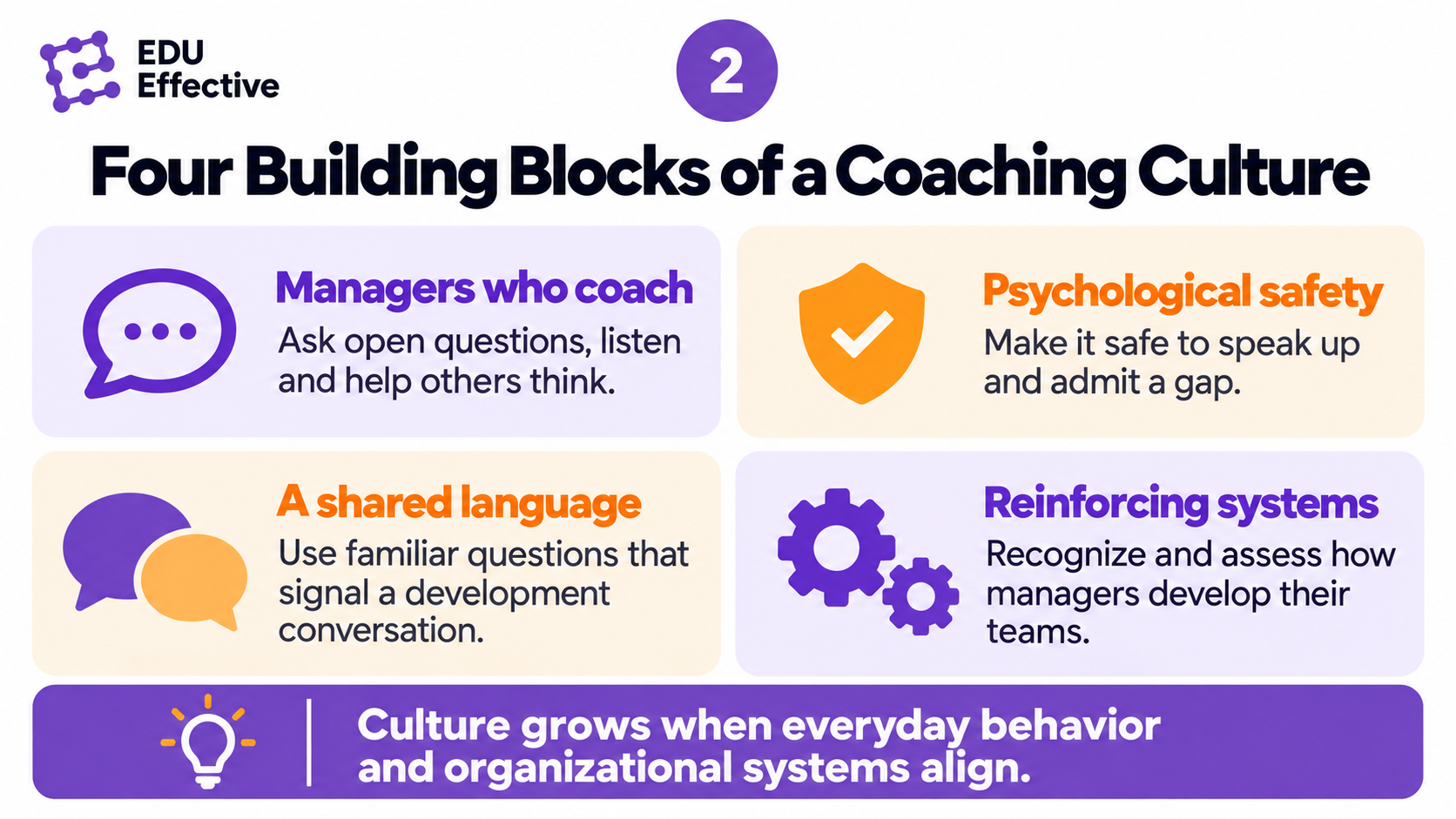
1. Managers who coach, not just manage
The manager-as-coach role is the engine of any coaching culture. It requires a specific skill set most managers were never taught: asking open questions, listening without steering, reflecting back what they hear, and resisting the urge to solve.
This isn't natural for most high-performers promoted into management. They got promoted because they were good at solving problems. Coaching asks them to stop solving and start developing. That's a genuine behavioral shift, not a mindset adjustment. A skill change.
Coaching skills for managers include:
- Distinguishing between a coaching conversation and a task conversation, and starting the right one
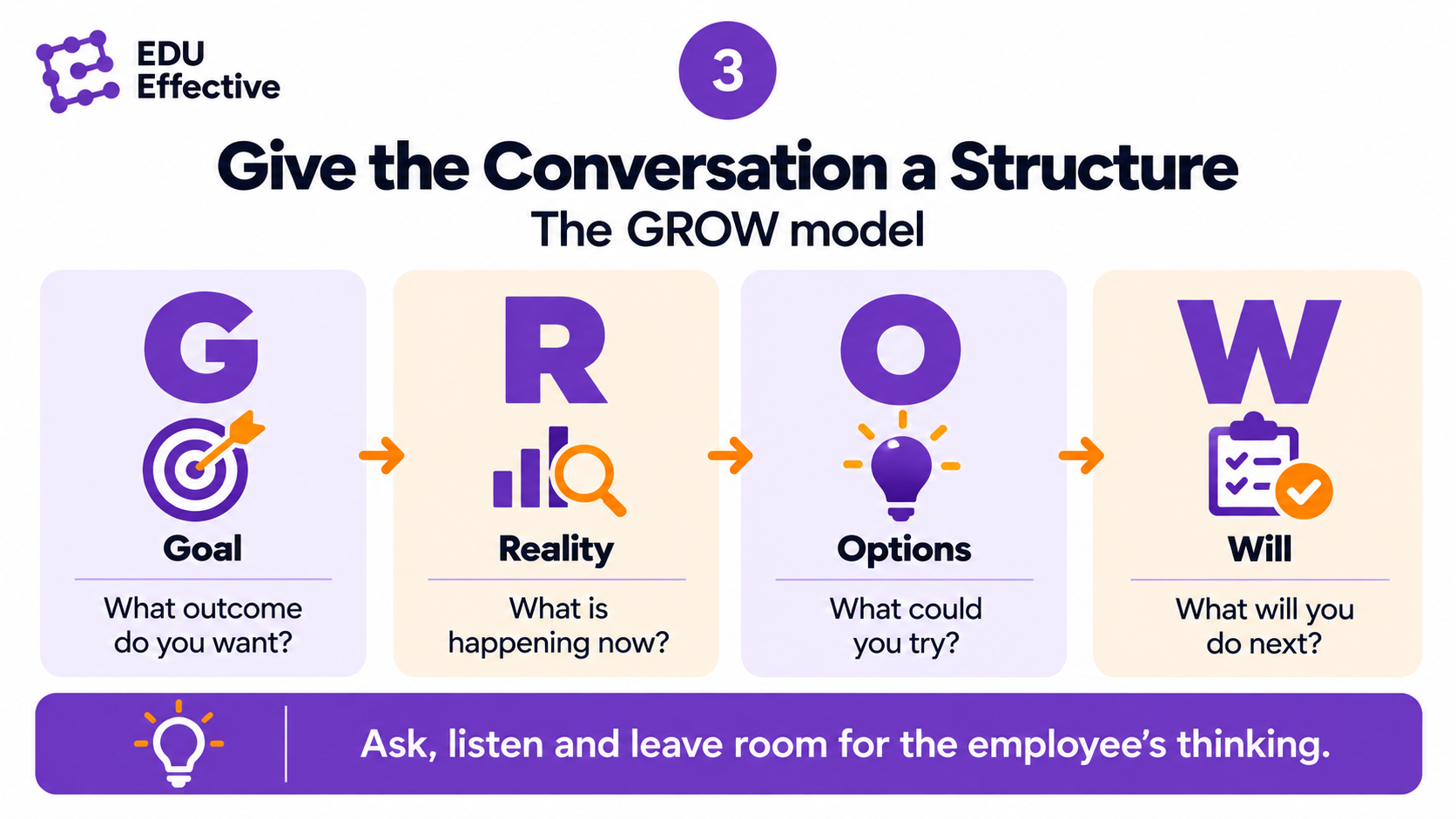
- Using the GROW model (Goal, Reality, Options, Will) as a basic conversational structure
- Asking questions that open thinking rather than confirm their own hypotheses
- Giving feedback that is specific, behavioral, and forward-looking
- Tolerating silence long enough for the employee to think
Organizations that train managers in these skills and then hold them accountable for using them see different outcomes than organizations that train and walk away.
2. Psychological safety as a precondition
Coaching conversations require honesty. Honesty requires psychological safety, the belief that speaking up, admitting a gap, or sharing a bad idea won't result in punishment or ridicule.
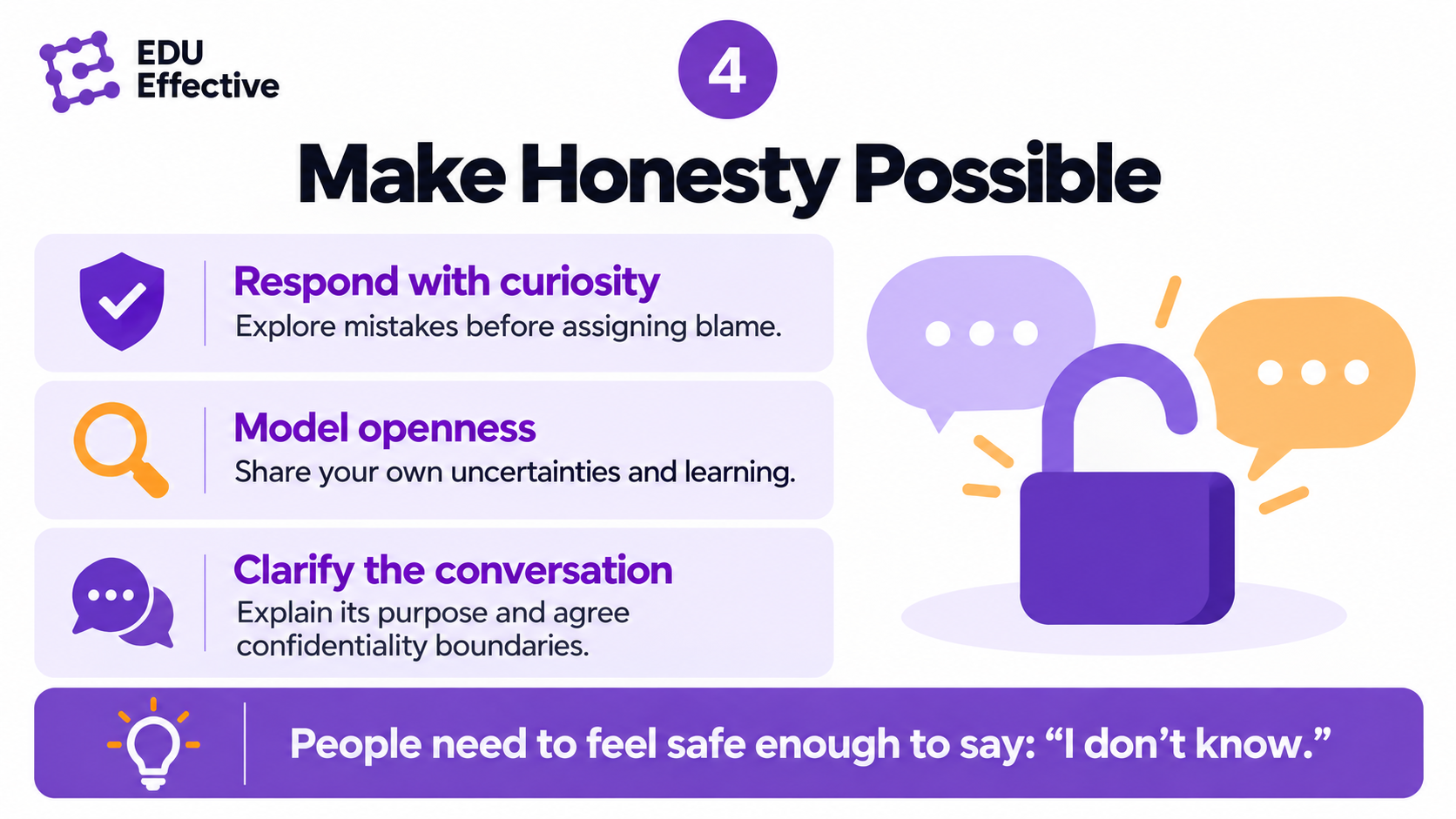
Google's Project Aristotle, their multi-year research into what makes teams effective, found psychological safety to be the single most important factor in team performance. Not talent density. Not process clarity. Whether people felt safe enough to take interpersonal risks.
Without psychological safety, coaching becomes interrogation. Employees give answers they think managers want to hear. The coaching question "What do you think you could have done differently?" becomes a trap rather than a development opportunity.
Building psychological safety is slow and fragile. It requires leaders who respond to mistakes with curiosity rather than blame, who share their own uncertainties openly, and who never use information shared in coaching conversations to evaluate or penalize.
3. A shared language of development
Coaching cultures have a vocabulary. Phrases like "let me ask you a coaching question," "what outcome are you looking for," or "what's getting in the way" signal a mode of conversation that both parties recognize.
This shared language does two things. It reduces ambiguity: the employee knows this is a development conversation, not a performance conversation. And it distributes the coaching role: when the language is common, peers coach each other, not just managers.
Building this language takes time. It starts with consistent training, then gets reinforced by leaders using it publicly, in team meetings, in all-hands Q&As, in how they talk about their own development.
4. Systems that reinforce coaching behavior
Culture is what gets rewarded. If manager effectiveness is measured only by team output and never by team development, managers will optimize for output. If coaching skills are listed as a competency in performance reviews but never actually assessed, they become decoration.
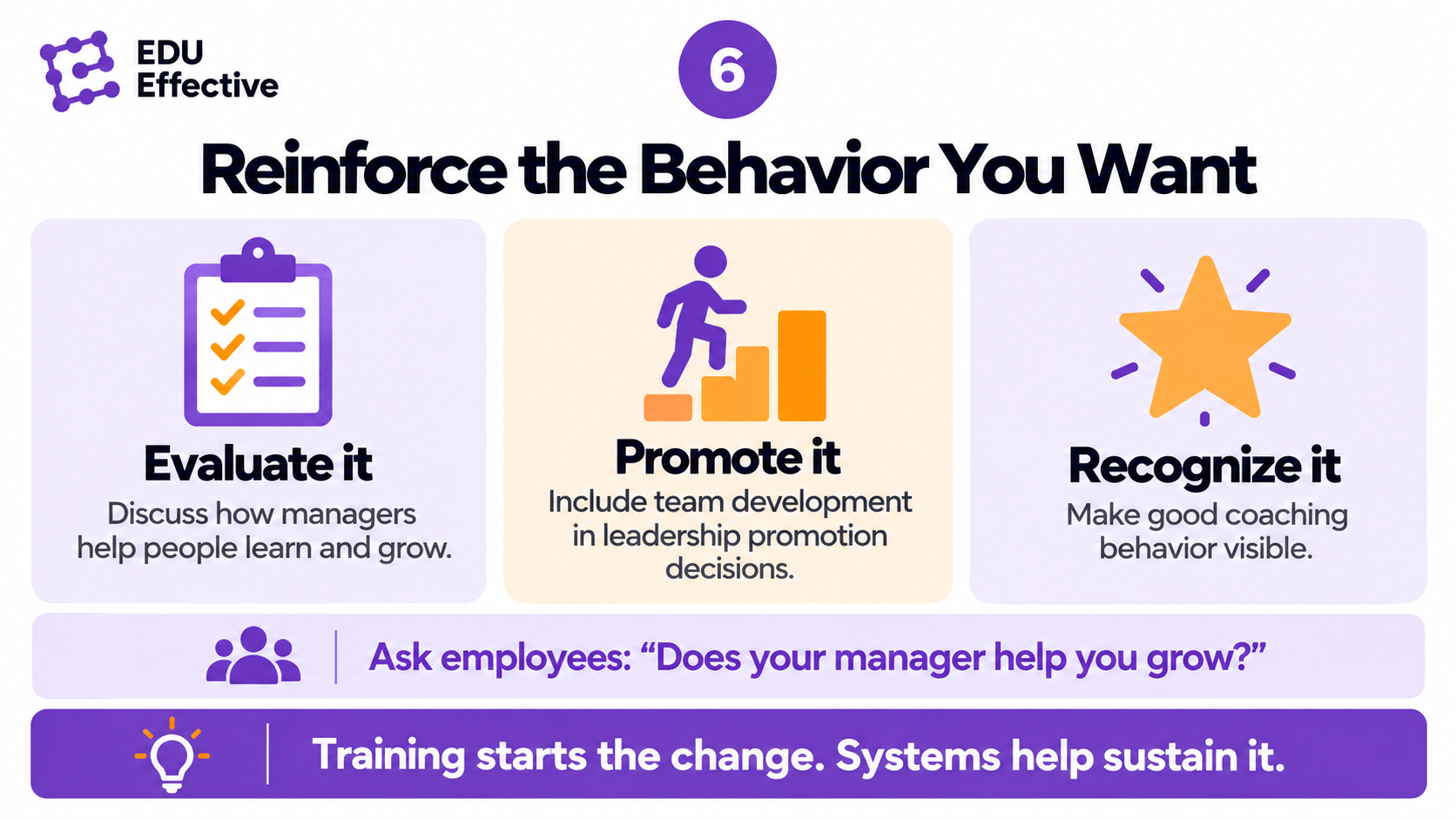
Organizations that build real coaching cultures tie coaching behavior to how managers are evaluated. They ask employees in engagement surveys: "Does your manager help you grow?" They include leadership development as a criteria in promotion decisions. They make it visible when leaders invest in their teams.
This is where most coaching initiatives stall. The training happens, the enthusiasm is real, and then the quarterly review arrives and nobody is measuring coaching behavior. Within six months, managers are back to their default patterns because that's what the system reinforces.
How to start, even without a formal program
Most managers reading this don't have budget for a coaching initiative. They have a team meeting on Thursday and a one-on-one tomorrow. That's where the culture actually gets built.
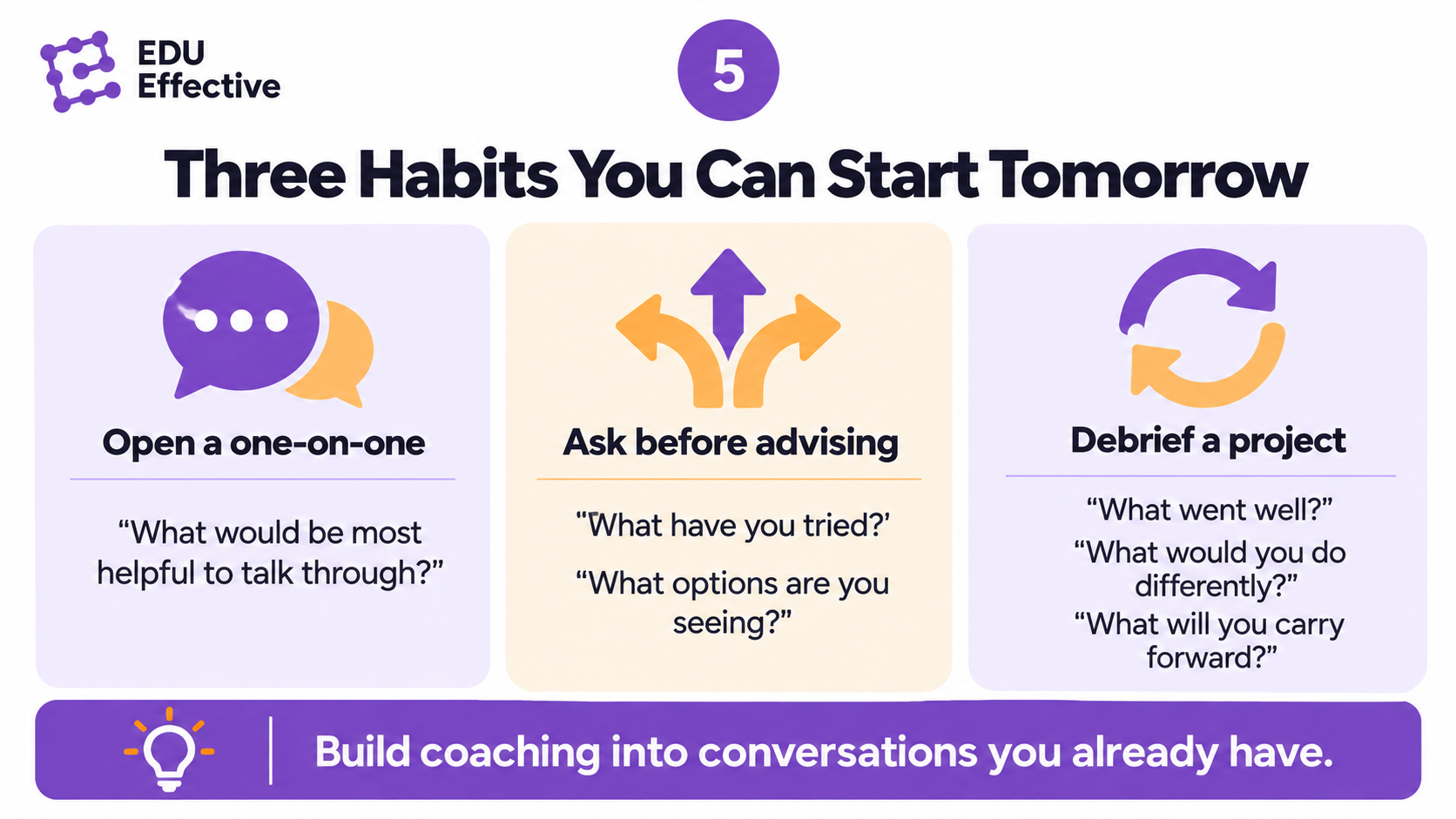
Start with one-on-ones. Change the default structure. Instead of status updates, start with: "What's the most important thing you're working on, and what would be most helpful to talk through?" That's a coaching question. It takes 30 seconds to ask and it signals a different kind of conversation.
Ask before you advise. When a team member brings a problem, resist the immediate solution. Ask first: "What have you tried? What options are you seeing?" You'll be surprised how often they already know the answer. They just needed the space to articulate it.
Debrief after projects. After any significant project or event, hold a 20-minute debrief structured around three questions: What went well? What would you do differently? What will you carry forward? This is coaching embedded in operational rhythm.
Name what you're doing. When you shift into a coaching mode, say so: "I want to ask you a few questions rather than give you my answer right away." This models the behavior and makes coaching visible as a practice, not just a manager's quirk.
Get coached yourself. Managers who receive coaching coach better. The experience of being on the receiving end, sitting with a question, finding your own answer, feeling the difference between coaching and interrogation, is the fastest way to understand what your team members need from you.
The connection to retention
Employee retention is where coaching culture shows up in the P&L. The cost of replacing a mid-level employee typically runs 50-200% of annual salary, depending on role complexity and sector.
The research consistently links management quality to retention. People don't leave companies. They leave managers. More specifically, they leave managers who don't invest in their development, don't listen, and don't treat them as capable adults with their own thinking. If your organization already distinguishes between mentoring and sponsorship, it helps to be clear about which one actually moves careers forward.
A manager who coaches creates the opposite experience. The employee feels seen, challenged, and invested in. That feeling is hard to replicate with a competing salary offer.
The ICF Global Coaching Study finding that nearly six in ten coaching clients are now employer-sponsored reflects a broader shift: organizations are recognizing that professional development embedded in the work relationship is a retention strategy, not just a training benefit.
Coaching culture and organizational learning
There is a second-order benefit that takes longer to see but compounds over time: organizational learning capacity.
Organizations where coaching is embedded learn faster. When mistakes are debriefed rather than blamed, the learning is captured rather than hidden. When managers ask "what are you learning?" as a routine question, teams develop metacognitive habits. They notice what's working and why, not just whether they hit the number.
This learning capacity becomes a competitive advantage in volatile environments. Organizations that can adjust quickly, because they debrief honestly, share knowledge laterally, and develop people continuously, outperform those that optimize for execution at the expense of reflection.
Peter Senge called this the learning organization. The practical mechanism that makes it possible, at the team level, is the coaching conversation.
What to expect: realistic timelines
Building a coaching culture is a three-to-five year project, not a quarter. Here's a realistic arc:
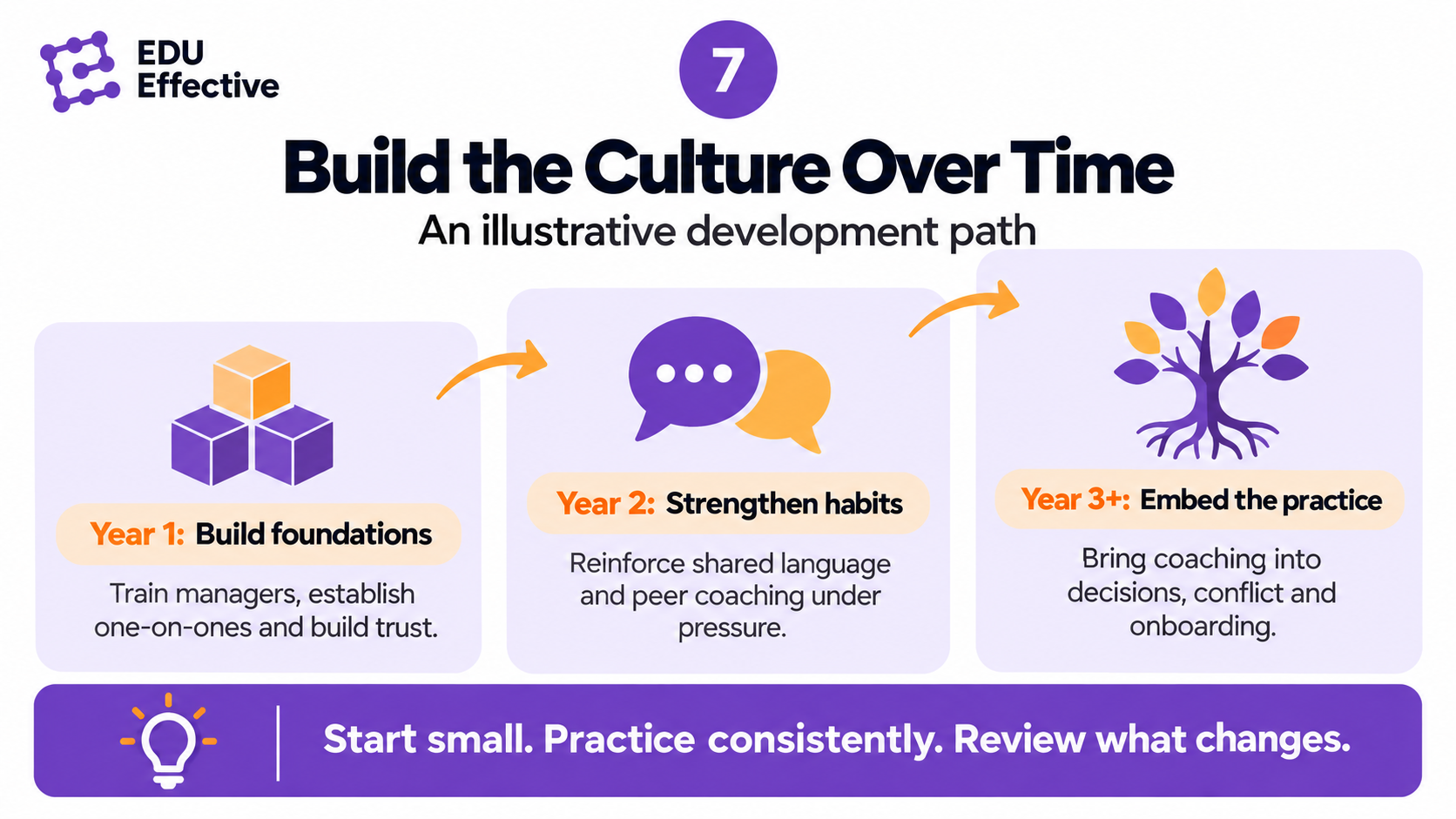
Year 1: Training managers in basic coaching skills, establishing one-on-one norms, beginning to build psychological safety. Resistance from managers who see coaching as soft or inefficient. Early adopters who see immediate results in their team dynamics.
Year 2: Shared language begins to develop. Peer coaching emerges organically. Some managers backslide under performance pressure. This is the critical test of whether the culture is real or cosmetic.
Year 3+: Coaching behavior starts showing up in how the organization makes decisions, handles conflict, and onboards new people. Retention data and engagement scores start to reflect the investment.
The organizations that abandon coaching initiatives in Year 1 because "it's not showing up in the numbers yet" are the ones that end up restarting the same initiative three years later.
Key takeaways
Coaching culture is not a program. It's the day-to-day operating system of how people develop each other. It's built on managers who coach rather than just manage, psychological safety that makes honesty possible, a shared language of development, and systems that reinforce coaching behavior rather than just tolerate it. The ROI is measurable: 7x return on coaching investment, strong links to employee engagement and retention, and organizational learning capacity that compounds over time. It starts not with a budget but with a single better one-on-one question asked tomorrow.
About EDU Effective Business School
The Effective MBA: Coaching, Leadership & Mentoring turns coaching from a technique into a management habit. Runs on 15 minutes a day, completes in 10 months or less and is ASIC accredited.
Sources
- International Coaching Federation (ICF), Global Coaching Study (conducted by PwC) https://coachingfederation.org/blog/coaching-as-a-strategic-advantage-what-the-2025-global-coaching-study-reveals/
- International Coaching Federation (ICF), Coaching Statistics: The ROI of Coaching https://coachingfederation.org/blog/coaching-statistics-the-roi-of-coaching-in-2024/
- International Coaching Federation (ICF), Creating a Coaching Culture https://coachingfederation.org/get-coaching/coaching-in-my-organization/creating-a-coaching-culture/