

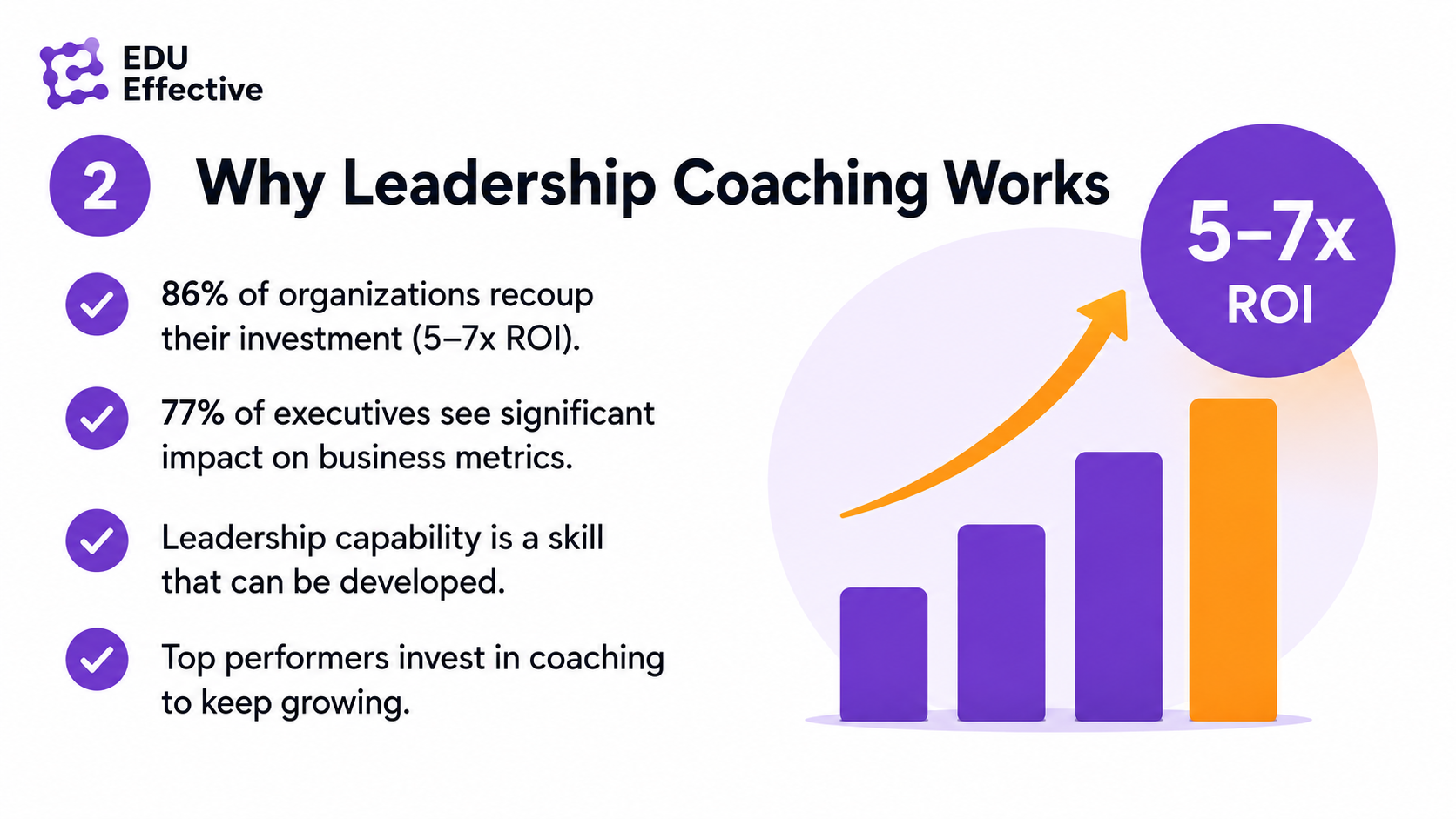
86% of organisations that invested in executive coaching reported recouping their investment, with the median ROI sitting between 5 and 7 times the initial cost, according to the ICF/PwC Global Coaching Client Study 2024 — a survey of coaching clients across 64 countries. 77% of executives say coaching had a significant impact on at least one major business metric, according to MetrixGlobal research. And the global coaching industry reached $5.34 billion in 2023 and is growing steadily, driven by one of the strongest trends in professional development: the recognition that leadership capability is not a fixed attribute people either have or do not have — it is a skill set that can be developed through structured, evidence-based practice.
Leadership coaching is no longer a niche service for executives in difficulty. Approximately 65% to 70% of Fortune 500 companies use external executive coaching, with most maintaining ongoing relationships with multiple coaches or coaching firms, according to ICF and HCI research. The shift is from remedial to developmental: the highest-performing leaders are now among the most likely to invest in coaching — not because something is wrong, but because the returns on deliberate leadership development are too significant to leave to chance.
What leadership coaching is — and what it is not
Leadership coaching is a structured, professional relationship in which a trained coach helps a leader develop their capabilities, address specific challenges, and make deliberate progress toward professional objectives. It is distinct from mentoring, training, therapy, and consulting — though it draws on elements of all of these in practice.
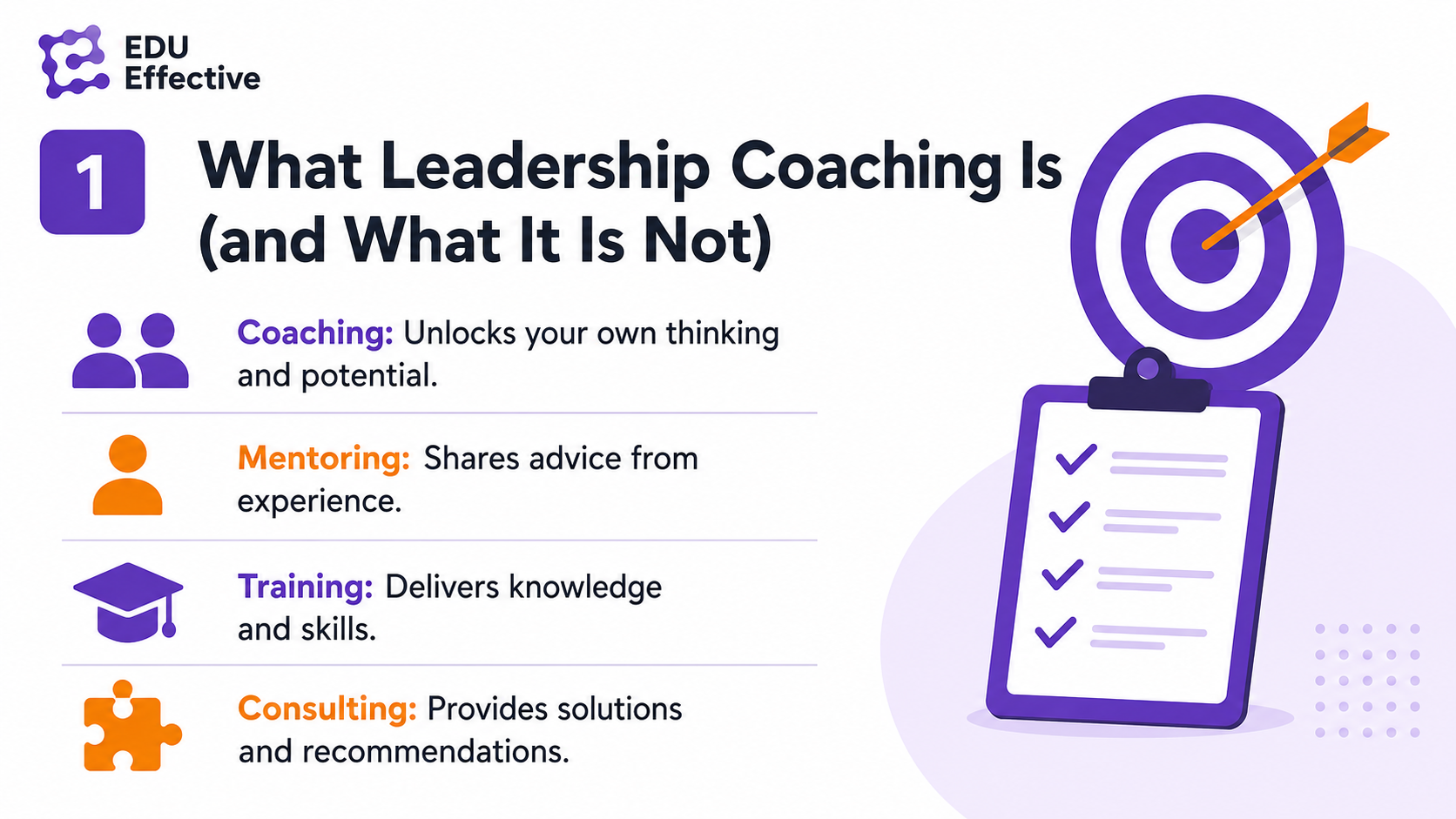
The distinction from mentoring is the most important to understand. A mentor shares their own experience and perspective, drawing on what worked for them to advise someone at an earlier stage of a similar path. A coach does not primarily advise. A coach uses questions, reflection, structured exercises, and evidence-based frameworks to help the leader develop their own thinking, identify their own patterns, and build their own capability to navigate challenges. The coach's expertise is in the process of development, not necessarily in the specific functional domain of the leader being coached.
The distinction from training is equally important. Training delivers specific knowledge or skills through structured content. Coaching is individualised — it addresses the specific leadership challenges, behavioural patterns, and development priorities of a particular person in their particular context. Training can tell a leader that giving effective feedback requires specificity and timeliness; coaching works with that leader on the specific feedback conversations they find difficult and why, in the context of their actual team and relationships.
The distinction from consulting is that a consultant provides expertise and recommendations. A coach facilitates the leader's own development and decision-making. The coach rarely tells the leader what to do; the coach creates the conditions in which the leader develops the clarity, capability, and commitment to act more effectively.
What leadership coaching addresses — the development areas where it produces the most value
Leadership coaching is most effective when it is targeted at specific, observable development priorities rather than general "becoming a better leader." The areas where structured coaching engagements consistently produce the most significant and measurable improvement are those that involve both self-awareness and behavioural change — capabilities that are difficult to develop through training alone because they require sustained practice, honest feedback, and the personalised support to work through the psychological resistance that genuine behavioural change involves.
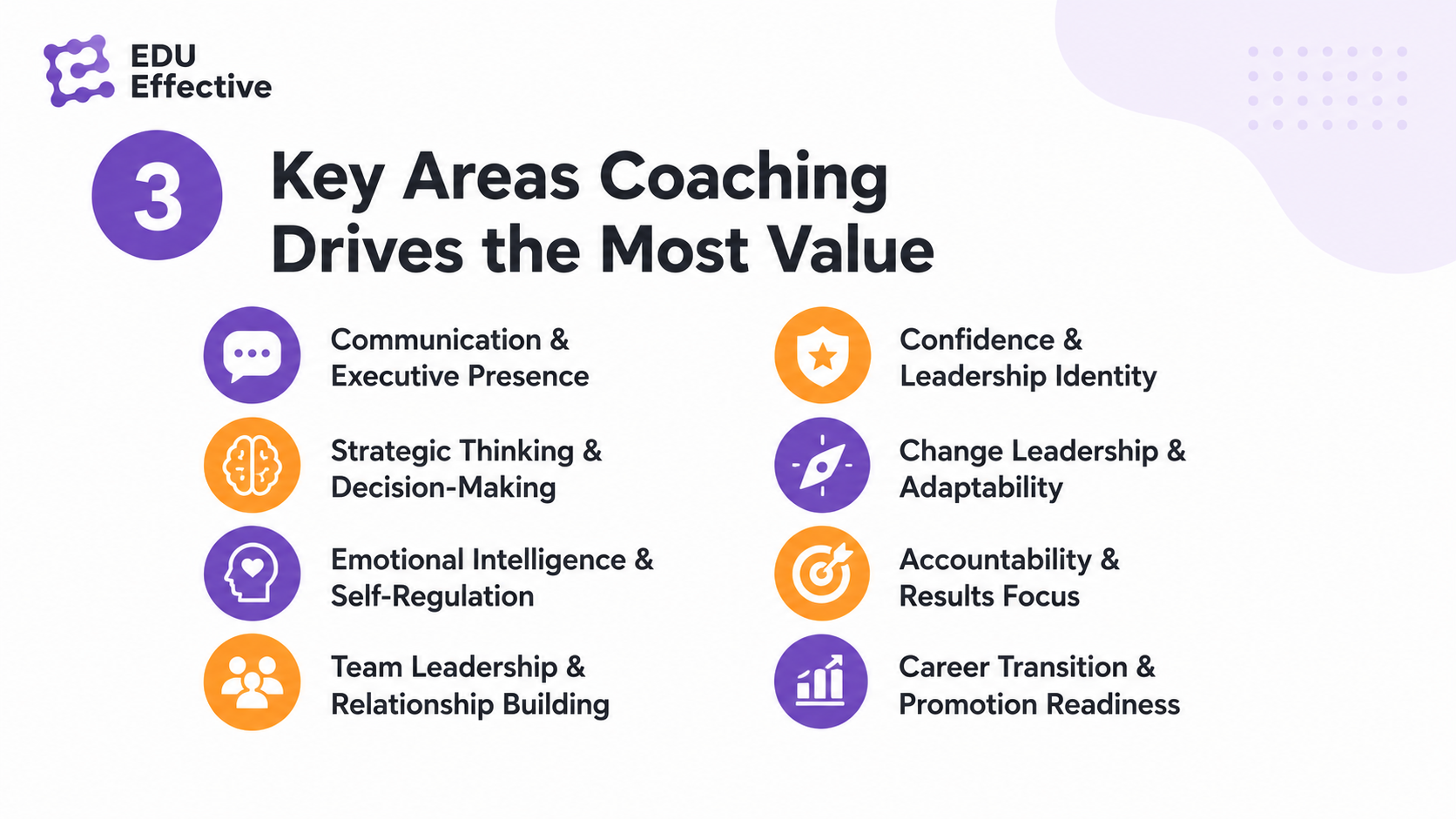
Communication and executive presence are among the highest-impact development areas for leadership coaching. The ability to communicate with clarity, appropriate authority, and genuine connection across diverse audiences — in presentations, difficult conversations, cross-functional negotiations, and external contexts — is consistently rated as a differentiating capability of highly effective leaders and as an area where many technically skilled managers have significant development room.
Strategic thinking and decision-making development through coaching addresses the shift from operational thinking — solving the problems in front of you — to strategic thinking — identifying which problems are worth solving and why. This shift is required at every leadership transition, particularly the move from functional manager to general manager and from senior manager to executive. Leadership coaches help leaders develop the mental habits and analytical frameworks that enable this shift.
Emotional intelligence and self-regulation are foundational to effective leadership and among the most development-responsive capabilities when addressed through coaching. A leader who cannot manage their own emotional responses under pressure — who becomes defensive in challenging conversations, dismissive under stress, or avoidant of conflict — limits their team's psychological safety and their own effectiveness in proportion to how frequently those situations arise. Coaching that addresses these patterns through honest feedback, reflection, and supported practice produces lasting behavioural change in ways that knowledge-based training does not.
Stakeholder management and influence — the ability to build alliances, navigate organisational politics constructively, and achieve outcomes through relationships rather than authority — becomes increasingly critical at senior leadership levels. Many technically excellent managers struggle with this transition. Leadership coaching provides the space to examine specific stakeholder dynamics, identify the leader's patterns of approach and avoidance, and develop more effective strategies for influencing without authority.
Leadership transitions are one of the highest-impact applications of executive coaching. Research consistently shows that 40% or more of executive transitions fail within 18 months — not because the leader lacks the technical capability, but because the interpersonal, political, and strategic demands of the new role are different from those that produced success in the previous one. McKinsey's research on senior leadership transitions confirms that the first 90 to 180 days disproportionately shape long-term outcomes. Coaching during this period produces the most concentrated returns of any coaching engagement — because the leader is most coachable, the stakes are highest, and the cost of an unforced error is largest.
The evidence base for leadership coaching effectiveness
The ROI claims for executive coaching vary widely in the literature — from the ICF/PwC study's 5-7x return to the MetrixGlobal case study's 788% ROI at a Fortune 500 telecommunications firm in 2001. Both figures are real; both require context to interpret.
The honest assessment of the evidence, as synthesised by independent researchers, is this: the behaviour change finding is robust and independently corroborated; the dollar ROI multipliers are real but come primarily from industry studies with self-selection bias that should be interpreted with appropriate scepticism.
The most rigorous independent evidence comes from De Haan and Nilsson's 2023 meta-analysis, published in the Academy of Management Learning and Education — the most methodologically rigorous review of coaching effectiveness to date. It analysed 39 randomised controlled trial samples involving 2,528 participants. The finding: statistically significant positive effects on performance, skill development, goal attainment, and wellbeing across all samples. Coached leaders meaningfully outperformed randomly assigned non-coached counterparts on all measured outcomes. The effect sizes were consistent and held across industries, seniority levels, and geographic contexts.
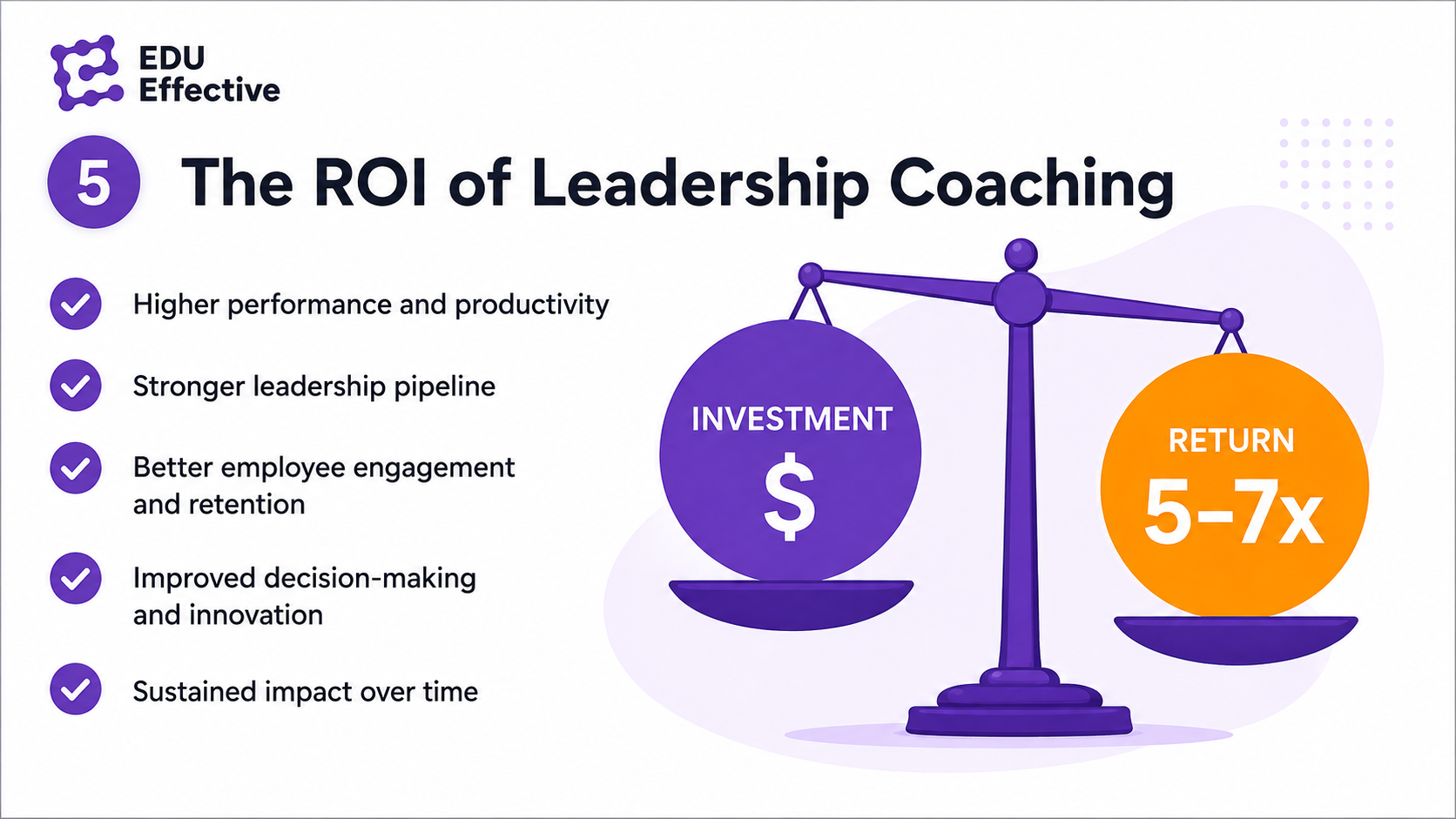
87% of coaching clients across 64 countries reported positive ROI from their coaching engagement, according to the ICF/PwC Global Coaching Client Study 2024. 80% reported improved self-confidence. 70% reported improved work performance. 86% of organisations that tracked coaching ROI reported at least breaking even, with a median return of 5-7x their investment.
The practical implication for managers and organisations evaluating leadership coaching is straightforward: the evidence for meaningful behaviour change and performance improvement is strong, consistent, and independently verified. The specific dollar ROI depends on the seniority of the individual being coached, the specificity of the goals, the quality of the coaching engagement, and how well the organisation supports behavioural change. Treating coaching ROI as a predictable multiple is overconfident; treating coaching effectiveness as scientifically established is accurate.
Leadership coaching vs. manager-as-coach: two different things
An important distinction that is frequently conflated in discussions of leadership coaching is between external executive coaching (a professional coach engaged specifically to develop a leader's capabilities) and manager-as-coach (a manager using coaching skills as part of their regular management practice).
Both are valuable. Both are increasingly expected in effective organisations. But they are different in structure, purpose, and the kind of development they produce.
External executive coaching provides the privacy, independence, and professional expertise that allows senior leaders to explore their most significant development challenges without the political complexity that internal relationships inevitably introduce. A leader can say things to an external coach that they cannot say to their manager, their HR partner, or their mentor. This privacy is not a luxury — it is the condition that makes genuine exploration possible.
Manager-as-coach is the practice of managers using coaching skills — primarily structured questioning, active listening, and development-focused conversation — in their regular management interactions. This is what we cover in detail in our guide to coaching employees. It is the most scalable form of coaching in organisations because it operates through existing management relationships rather than requiring external engagement, and it produces the day-to-day development impact that drives team performance and engagement.
DDI's Global Leadership Forecast 2025 found that employees with managers who are effective coaches are nine times more likely to trust their manager. Trust in immediate managers globally has fallen to 29%, down from 46% in 2022. The gap between the coaching behaviour managers are expected to demonstrate and the coaching behaviour they actually demonstrate is one of the most commercially significant management gaps in 2026.
What makes an effective leadership coaching engagement
The research on coaching effectiveness identifies several structural features that consistently predict whether an engagement produces significant, lasting development.
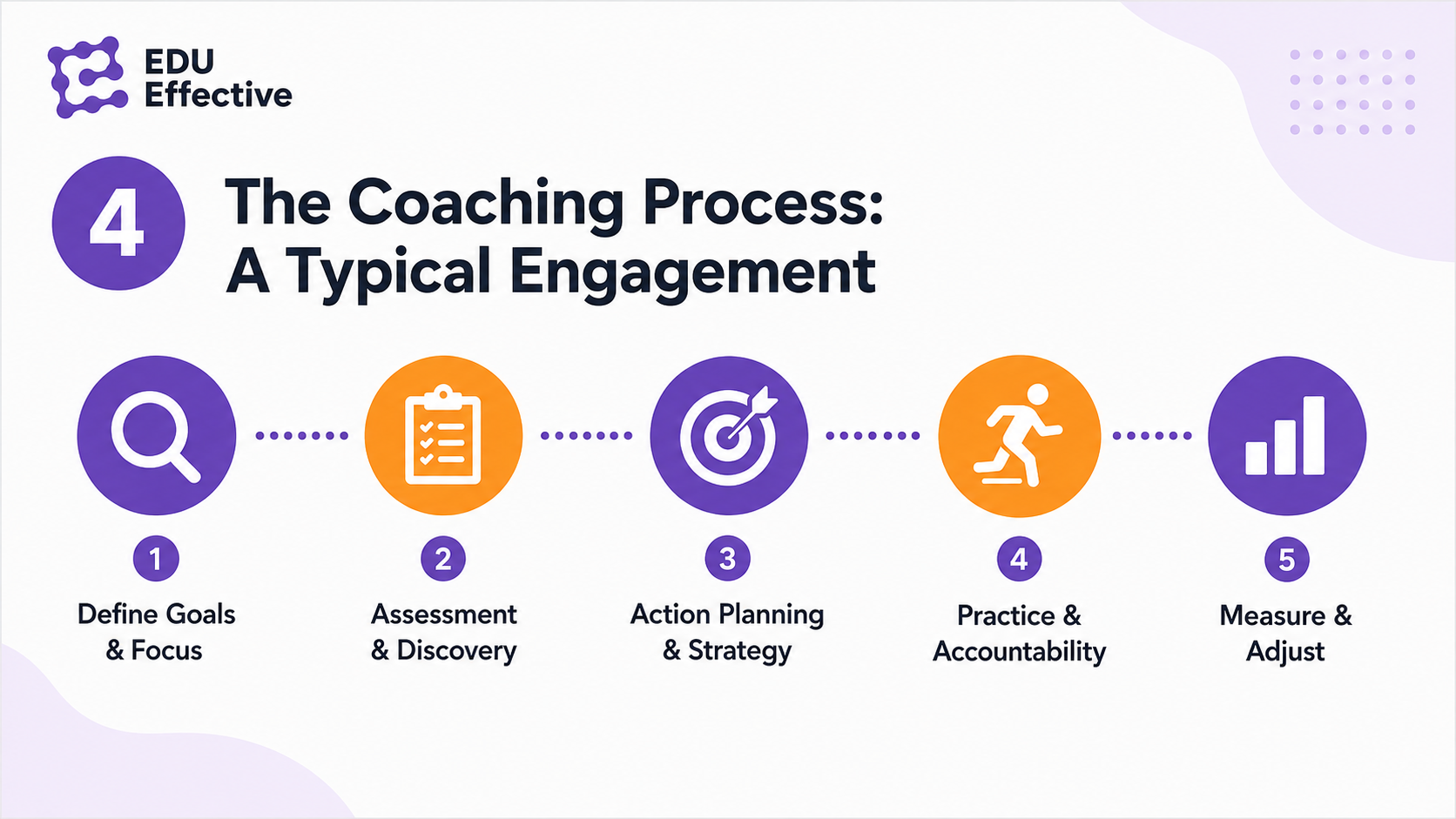
Clear, specific development goals agreed at the start. Vague coaching goals — "become a more effective leader" — produce vague outcomes. Specific, observable, measurable goals — "develop the ability to give direct, specific feedback in one-to-one conversations without softening the message to the point of ambiguity" — produce targeted development that both parties can evaluate. The most effective coaching engagements begin with a structured goal-setting process that identifies two or three specific development priorities and defines what observable change would indicate progress.
Multi-source feedback as a starting point. The most consistent finding in executive coaching research is that leaders who begin with structured 360-degree feedback — honest input from peers, direct reports, and senior stakeholders about their actual impact — achieve significantly stronger development outcomes than those who begin without it. This is because coaching that addresses actual observed behaviour patterns, as reported by the people who experience them, produces more targeted and more meaningful development than coaching that addresses a leader's self-perception of their challenges.
Sufficient duration and frequency. Significant leadership behavioural change takes time. Research on coaching effectiveness consistently shows that engagements of six months or more produce substantially stronger outcomes than shorter engagements — because behavioural change requires practice, feedback, adjustment, and the kind of repetition that embeds new patterns alongside or in place of established ones. The early coaching research by Olivero, Bane, and Kopelman found that coaching combined with training produced 88% productivity improvement — compared to 22% for training alone — because the sustained reinforcement that coaching provides is what converts knowledge into practice.
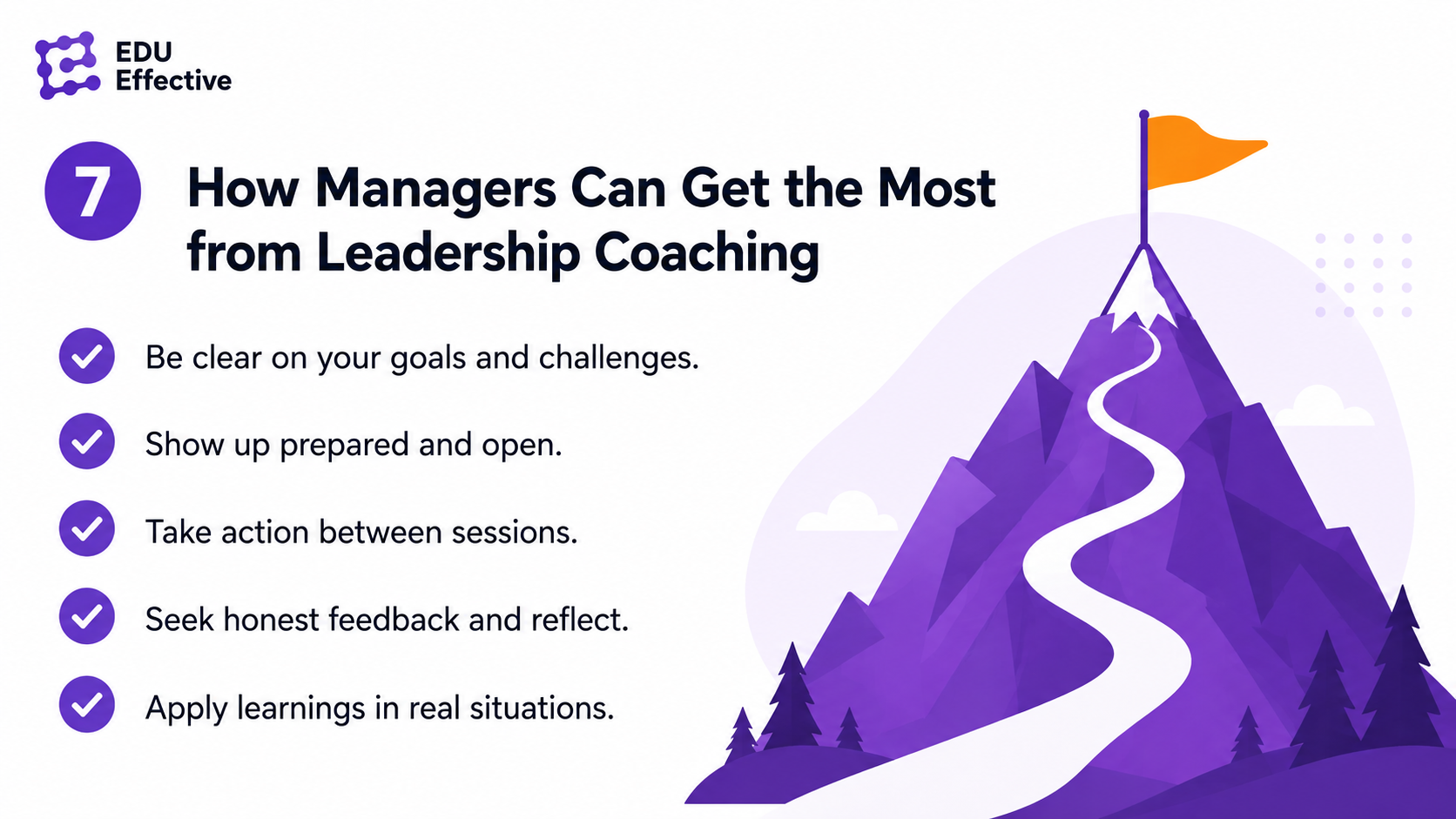
Organisational support for the development being pursued. A leader who is developing more effective delegation skills but whose organisation rewards and recognises only individual contribution will struggle to sustain the new behaviour regardless of the quality of the coaching. The most effective leadership coaching engagements involve the leader's manager in agreeing on the development priorities and in supporting the application of new behaviours in the workplace.
Leadership coaching and professional development for working managers
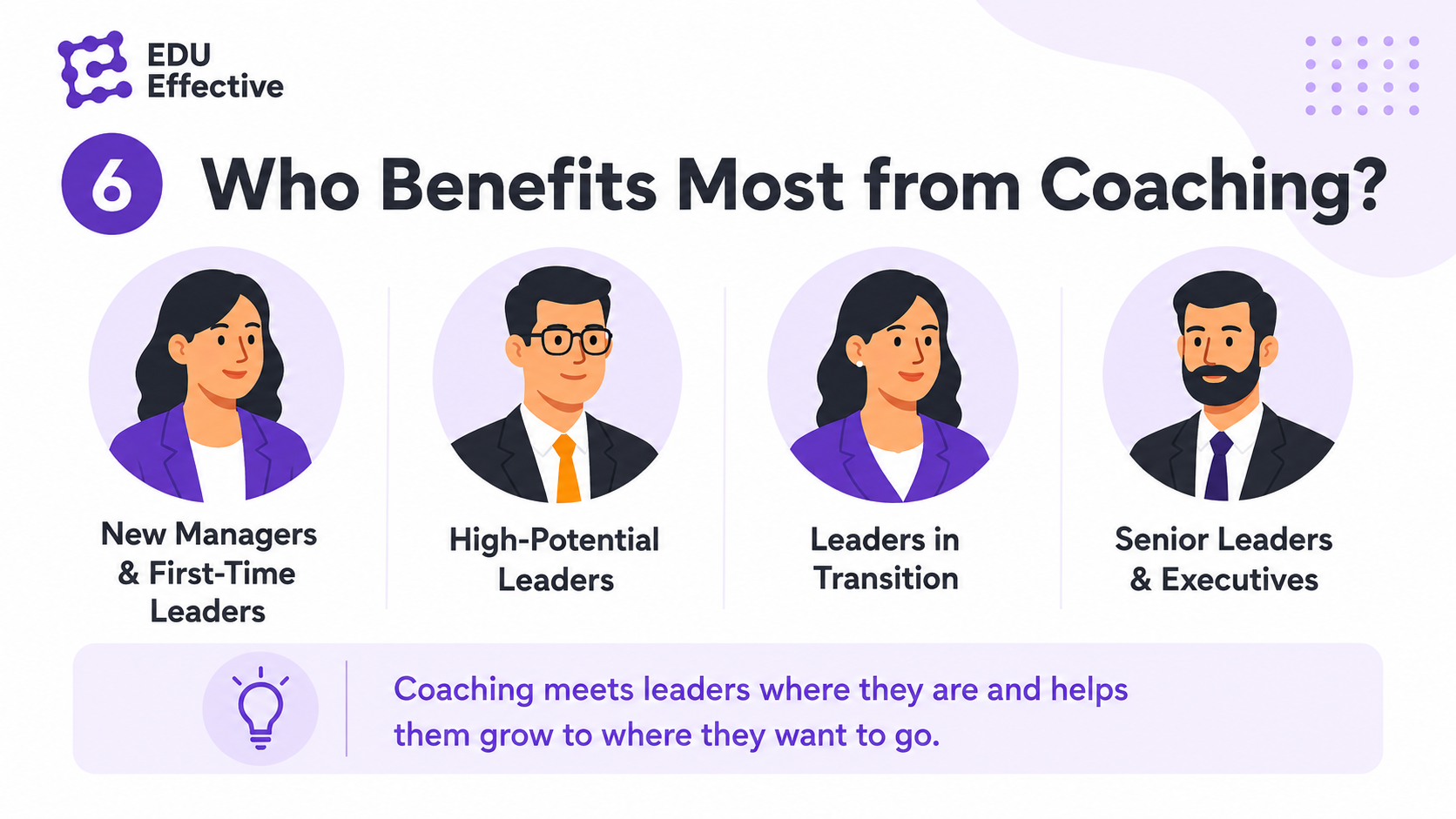
Formal external executive coaching — at investment levels of $7,500 to $25,000 for a six to twelve month engagement at established firms — is most common for senior leaders and high-potential professionals in large organisations. For the majority of working managers and professionals at earlier career stages, leadership coaching skills are most practically accessible through professional development programmes that build both the conceptual understanding of coaching and the practical capability to use coaching skills in management conversations.
The distinction matters because leadership coaching capability — the ability to develop others through structured, growth-oriented conversation — is not only useful for those being coached. It is a core management capability that every effective manager needs to demonstrate with their own team. And it is one of the most consistently identified gaps in management capability across organisations: 60% of employees are not getting the on-the-job coaching they need for skill development, according to Gartner research.
At EDU Effective, the Effective MBA: Coaching, Leadership & Mentoring develops leadership coaching skills alongside the full range of coaching, mentoring, and leadership capabilities — building the practical ability to be both an effective recipient of coaching and an effective coach of others. Explore the programme →
Related articles
How to Coach Employees: A Practical Guide for Managers
Coaching vs. Mentoring: What the Difference Is and When to Use Each
How to Give Feedback at Work: A Practical Manager's Guide
EDU Effective Business School — professional development for your long-term success.
All five Effective MBA programs are built on the same educational model — designed for working adults who need learning that fits real professional life:
Effective MBA: Executive Management & Leadership
Effective MBA: Applied Artificial Intelligence
Effective MBA: Coaching, Leadership & Mentoring
Effective MBA: Online Marketing
Every programme runs on 15 minutes a day, completes in 10 months or less, is ASIC accredited, and starts from €990.
These are professional programmes, not academic ones — built for working adults to apply what they learn directly in their own business, not to collect a scholarly credential.
Join more than 9,000 students in over 120 countries who are investing in their professional development and career success. Read the experiences of our graduates here.
Apply now — from €990 · Talk to a Study Advisor
Study with NO risk: 14-day money-back guarantee, no questions asked.
Sources
ICF / PwC — Global Coaching Client Study: 87% Report Positive ROI; 86% of Organisations Recouped Investment; Median ROI 5–7x; 80% Improved Self-Confidence; 70% Improved Work Performance (64 countries)
https://coachingfederation.org/blog/coaching-statistics-the-roi-of-coaching-in-2024/
DDI — Global Leadership Forecast 2025: Employees with Effective Manager-Coaches 9x More Likely to Trust Manager; Trust in Managers Fallen to 29% from 46% in 2022
https://www.ddiworld.com/research/global-leadership-forecast-2025
Gartner — 60% of Employees Not Getting On-the-Job Coaching They Need for Skill Development
https://www.gartner.com/en/newsroom/press-releases/2025-01-08-gartner-identifies-top-nine-workplace-predictions-for-chros-in-2025
McKinsey & Company — Senior Leadership Transitions Research: First 90–180 Days Disproportionately Shape Long-Term Outcomes; 40%+ Executive Transitions Fail Within 18 Months
https://www.mckinsey.com/capabilities/people-and-organization/our-insights/the-organization-blog/it-really-isnt-about-100-days
Olivero, Bane & Kopelman — Executive Coaching as a Transfer of Training Tool: Effects on Productivity in a Public Agency (Public Personnel Management, 1997): Coaching + Training = 88% Productivity Improvement vs. 22% Training Alone
https://journals.sagepub.com/doi/10.1177/009102609702600405